
Connections between Peshtigo, Chicago fires inspire new novel
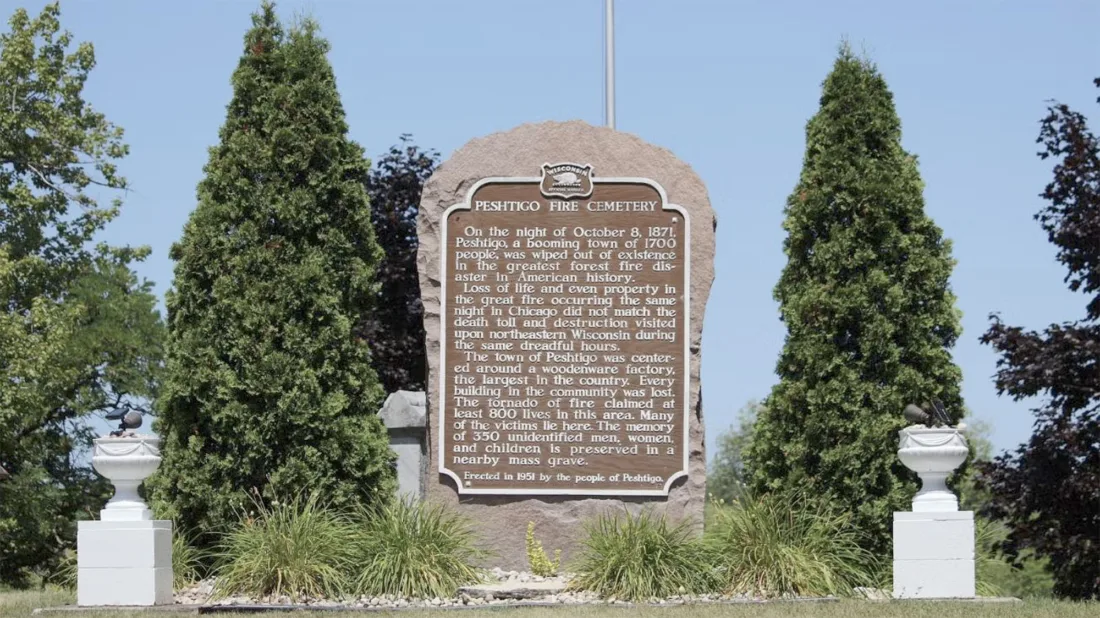
A Wisconsin historical marker for the Peshtigo fire in Peshtigo, Wis. (Photo provided to Wisconsin Public Radio by Melinda Roberts)
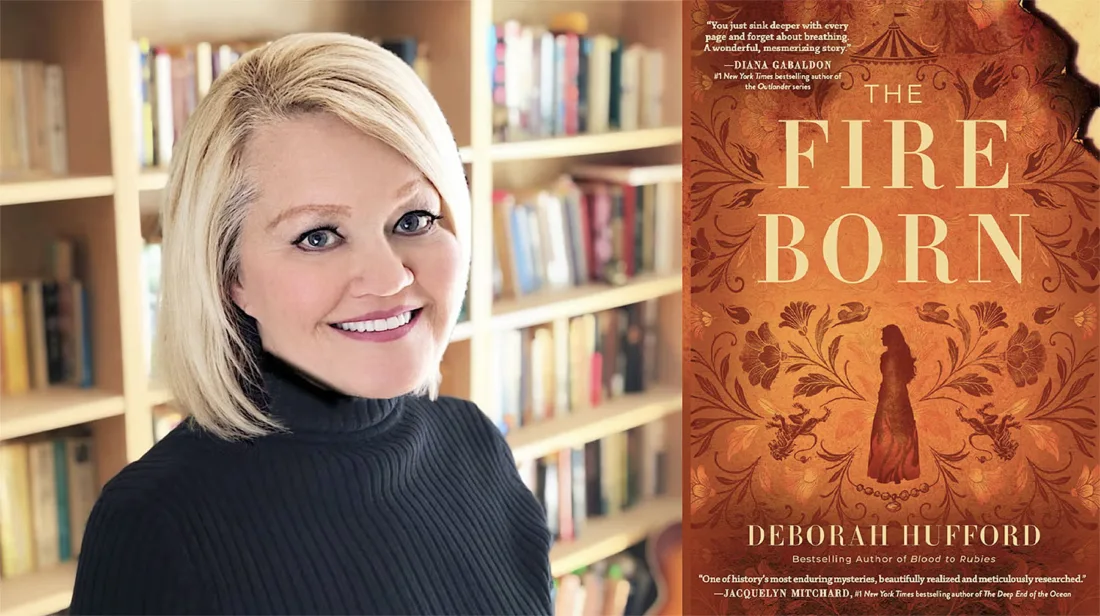
Wisconsin writer and editor Deborah Hufford, left, is the author of the historical fiction novel “The Fire Born” about the 1871 Peshtigo Fire. (Photo courtesy of Deborah Hufford, via Wisconsin Public Radio)
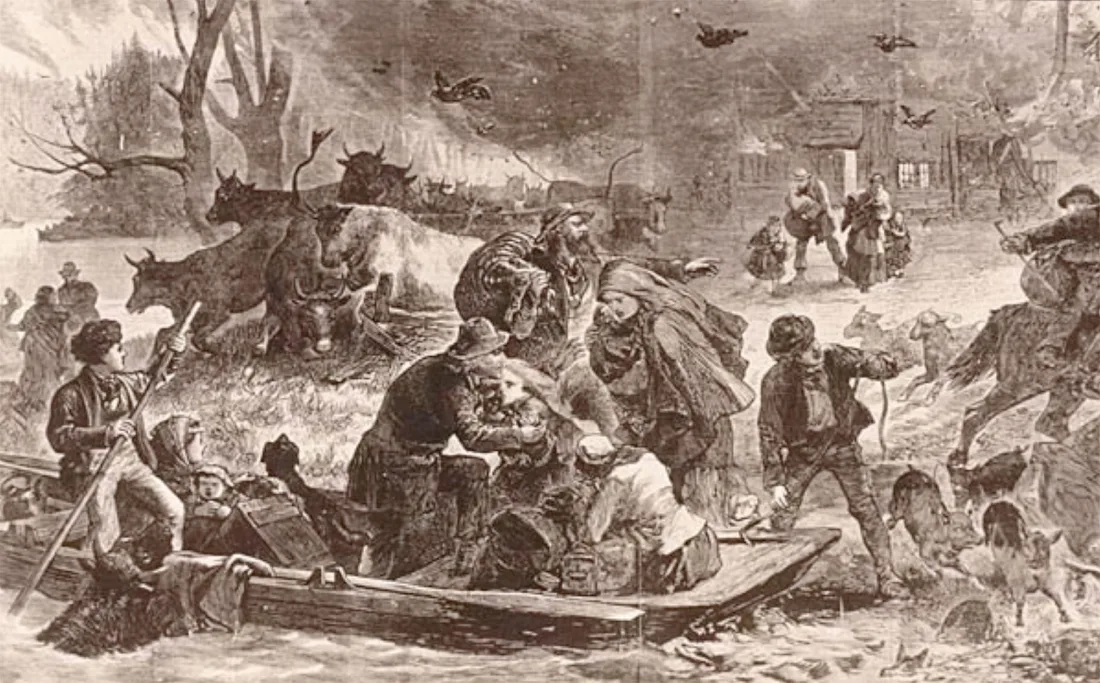
An illustration of the Peshtigo Fire from Harper’s Weekly, Nov. 25, 1871. (Wisconsin Electronic Reader, via Wisconsin Public Radio)
A Wisconsin historical marker for the Peshtigo fire in Peshtigo, Wis. (Photo provided to Wisconsin Public Radio by Melinda Roberts)
Wisconsin writer and editor Deborah Hufford, left, is the author of the historical fiction novel “The Fire Born” about the 1871 Peshtigo Fire. (Photo courtesy of Deborah Hufford, via Wisconsin Public Radio)
An illustration of the Peshtigo Fire from Harper’s Weekly, Nov. 25, 1871. (Wisconsin Electronic Reader, via Wisconsin Public Radio)
Trending
In 1871, the city of Peshtigo and the surrounding area of northeastern Wisconsin were devastated by one of the most destructive wildfires in recorded history.
The fire claimed more than 1,000 lives and burned more than a million acres spanning from the Upper Peninsula of Michigan, down around the waters of Green Bay and over to Door and Kewaunee counties.
Despite the magnitude of its devastation, the Peshtigo fire is far less remembered than the Great Chicago Fire. The two disasters happened on the same day, about 250 miles apart, and share more than just a date in common.
Those connections were the inspiration for a new historical fiction novel about the Peshtigo fire and the lasting impact it had on Wisconsin and the Midwest.
"The Fire Born" is the second book by Milwaukee-area author Deborah Hufford.
She joined WPR's "Wisconsin Today" to discuss the real history of the fire, the story she weaves around it and the lessons that apply to the modern day.
The following was edited for clarity and brevity:
Rob Ferrett: Why is the Peshtigo fire overshadowed? Why doesn't it get more attention?
Deborah Hufford: Well, the easy answer is that it happened the very same night as the Chicago fire, and a third of Chicago burned. It was a catastrophic fire, and Chicago just took all the oxygen out of the media coverage.
The Peshtigo fire was so massive, up to a million-and-a-half acres burned, and it burned all the transportation routes. It burned all the telegraph wires and poles. So there was virtually no way to get any kind of communication out of that area for many days.
RF: What got you interested in making Peshtigo and the fire the subject of your novel?
DH: I've always been a voracious reader and a history lover, and when I discovered the Peshtigo Fire, I was shocked that I'd never heard of it before. Most of the world has not. When I started to read more about it, I discovered that one man owned most of the land that burned, not only in Chicago but also Peshtigo.
Then I knew that I wanted to write a novel about it because that is just crazy. When the two worst fires in America are on the same night, and both in the Midwest, 250 miles from each other, and most of the land is owned by one man. That is a crazy story.
RF: That man is William Butler Ogden, one of the actual historical characters in your novel. What is his dual role in these fires?
DH: He is really an interesting character. He came from a very wealthy logging family in upstate New York. He had heard about the forests of Wisconsin, but also he was most interested in this rough-and-tumble trading camp that they called Chicago, which was actually from a Native American language that meant "Stinking Onion." Not exactly a prestigious name.
So when he was steaming down Lake Michigan, he saw hundreds of miles of the spectacular virgin forests, and he knew that he was going to buy that forest, and that he would probably build Chicago with it, which he did. He saw one other thing too, though: he saw miles of glorious blooming orchards, and those were the orchards of mostly the Potawatomi tribe. They had lived in the area for thousands of years and were very well established with pretty sophisticated agricultural systems.
He bought a quarter of a million acres of virgin forest in northern Wisconsin, and he built the largest lumber mill and woodenware factory in the world in Peshtigo. It employed 1,000 workers, and it was with Wisconsin's virgin forest and his lumber mill in Peshtigo that he built Chicago and much of the midwest. So, one of the reasons that I wanted to write this story is because I want people to understand how pivotal Wisconsin and Peshtigo were in the development of our country and especially the midwest.
RF: Can you set the scene for us of what Peshtigo was like and what your characters had to go through there?
DH: Well, another thing that people don't know about Peshtigo is that it became a major port, not only for lumberjacks and workers, but it also was a major port for immigrants who were going west to farm land in Wisconsin, Minnesota and Iowa. So it was a very rough-and-tumble lumber camp that became a much larger community.
My lumberjack character, a Scottish-born man named Big Mo, comes from upstate New York. And he comes to Peshtigo, and there he meets Delia, who is this young immigrant Swedish woman who has also had a very tough life, and they find solace together in the brothel, but it's not what you think. It's a very engaging story about how they meet and their story during the fire and after the fire.
When I started to do more research about my book, I found out that circuses and freak shows were actually caught in the Peshtigo fire. And so my character Zelda, the lion queen, brings a lot of circus history to readers through her experience, and together all four of these characters are joined in this story together and become acquaintances. So it's multifaceted, really an epic saga of the fire, both in Peshtigo and in Chicago, but also a lot about circus life and frontier life in Wisconsin, Native American life, and the building of the Midwest.
It's also sort of a cautionary tale about power and misuse of power, because in fact, William Ogden's timbering practices and railroad practices, like all the other timber and railroad barons of that age, was partially responsible for his own downfall. He lost all of his empires that night of the Peshtigo and Chicago fires, and it was in great part due to the practices of these big industry barons who left millions of acres of slash and timber and then their railroads went through and their locomotives were spewing sparks everywhere, which caused all kinds of fire, especially in a drought year like 1871. It's a really interesting cautionary tale, with a lot of contemporary parallels today.
RF: What kind of intellectual history and social change came out of this fire and shone through in your book?
DH: This book is not all about death and doom and fire and destruction. There are a lot of rewarding aspects of the aftermath of these fires, because some very big social movements came out of them. Certainly, environmentalism and the transcendentalists, and then the muckrakers. A lot of that movement came out of Chicago after the fire. Workers' rights and lumberjack rights came out of those fires, but also, strangely, the humane society anti-cruelty movement.
In the aftermath of the Chicago fire, the entire downtown and the Gold Coast were completely ashes, and mostly women volunteers would take wagons around and collect wounded and burned animals and pets. But they also collected children, because the humane movement involved children and animals. So Chicago's humane movement really got its start after the Chicago Fire.