
The long journey turkeys took from wild to farmyard
Northwoods Notebook
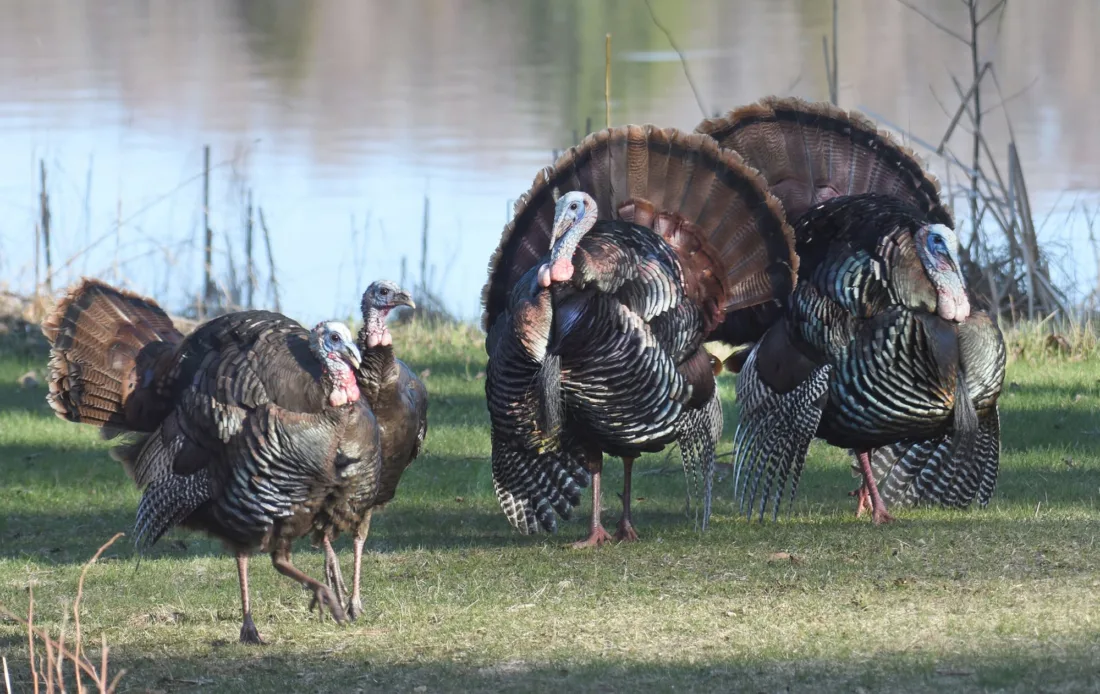
Wild turkeys gave rise to what we now serve on Thanksgiving, but the domestic varieties raised here originally were developed in Europe, taken back from this continent on Spanish ships starting in the early 1500s. They were first domesticated by Mesoamericans. (Betsy Bloom/Daily News photo)
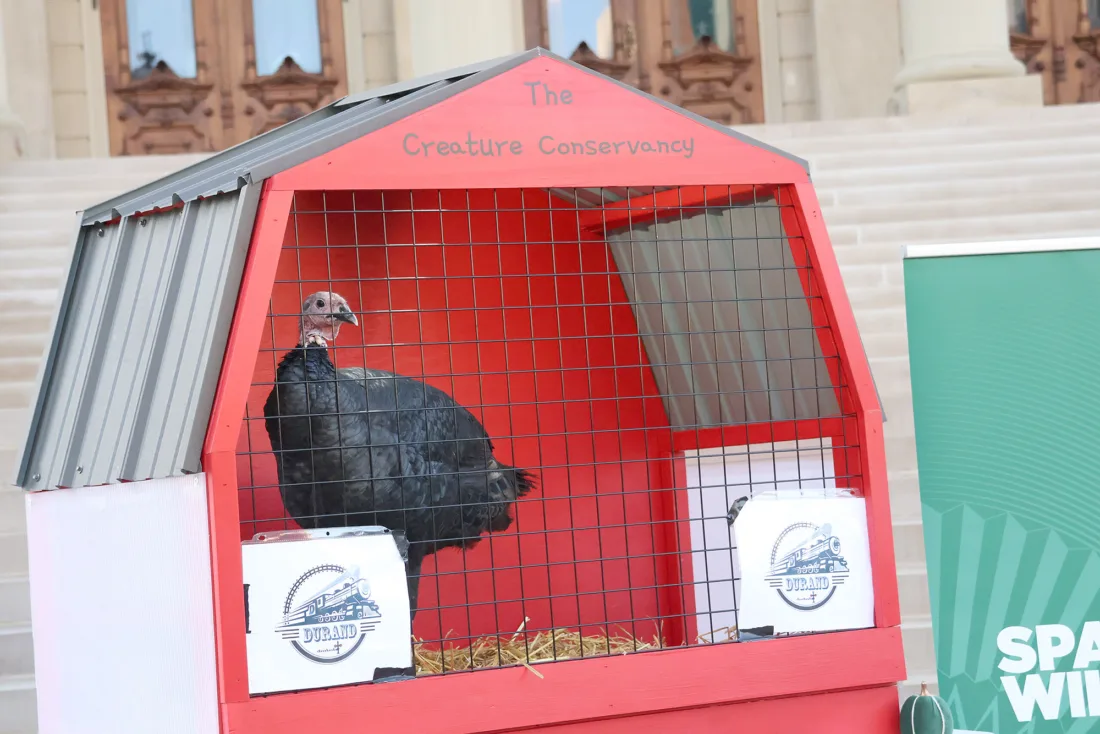
Michigan Gov. Gretchen Whitmer’s final turkey pardon Wednesday went to Sparty, a Norfolk black heritage turkey. This breed is thought to be similar to the variety the Spanish developed after taking turkeys Mesoamericans had domesticated in the New World back with them to Spain. (Photo by Kyle Davidson/Michigan Advance)
Wild turkeys gave rise to what we now serve on Thanksgiving, but the domestic varieties raised here originally were developed in Europe, taken back from this continent on Spanish ships starting in the early 1500s. They were first domesticated by Mesoamericans. (Betsy Bloom/Daily News photo)
Michigan Gov. Gretchen Whitmer’s final turkey pardon Wednesday went to Sparty, a Norfolk black heritage turkey. This breed is thought to be similar to the variety the Spanish developed after taking turkeys Mesoamericans had domesticated in the New World back with them to Spain. (Photo by Kyle Davidson/Michigan Advance)
Trending
This is the time of year to celebrate the only North American animal species to be domesticated: The turkey.
Yes, our native bison, white-tailed deer and elk can be farm-raised, but they remain relatively unchanged from their wild counterparts.
Not turkeys. They’ve gone from the bronzed-brown, leaner, flying form we still see today to a white-plumaged, ample-breasted bird that gets stocked in grocery stores and graces most Thanksgiving tables.
What's even more remarkable: Almost all the domestic turkeys in the U.S. arise not directly from native birds tamed by indigenous tribes but from what was taken to Europe and then carried back across the Atlantic Ocean to the land from which it originated.
Turkeys had been domesticated in Mexico since possibly as early as 800 BCE and by the 15th century "the Aztecs were raising and eating tens of thousands of them," author Rosemary Griggs wrote in an article posted Dec. 12, 2022, on her website at rosemarygriggs.co.uk.
"When the Spanish arrived in the Americas, the native wild turkey (Meleagris gallopavo) soon came to their notice. They described it as 'a kind of peacock with great hanging chins.' … A large bird, easily domesticated, which provides succulent tasty meat and could be dressed for table dramatically with tail feathers intact, it's no wonder that the turkey presented an attractive proposition for Spanish traders," wrote Griggs, who has specialized in Tudor historical fiction.
Other online sources list the Mayans in what is now southern Mexico as the first to domesticate turkeys. And a Nov. 15, 2023, article in Audubon magazine, www.audubon.org/magazine, asserts there's evidence native people in what now is the southwestern United States domesticated turkey independent of their southern neighbors.
But most agree the Spanish are thought to have brought turkeys across the Atlantic to that country around 1519.
The name "turkey" comes from being confused as a form of African guinea fowl, which also has a naked head; guinea fowl in those times were imported from Turkey, so commonly referred to as "turkey fowl," according to a Nov. 26, 2020, article by Julian Humphrys on Britain's History Extra website, www.historyextra.com.
It's unclear when turkeys were first imported to England. Some credit William Strickland, a Yorkshire merchant who traveled to the New World and was thought to have made a fortune from turkeys, so much so his family coat of arms has a turkey on its crest, according to History Extra. But Griggs questions that claim, noting Strickland was not born until about 1530 while the stories of six turkeys being sold in a Bristol market date back to 1526.
In any event, "turkeycocke" by the 1540s likely had a place on English upper-class tables, including the court of King Henry VIII, along with other exotic birds such as peacock and swans for the mid-winter festivals, Griggs wrote.
Think about that for a moment: Turkeys were in England before the pilgrims on the Mayflower landed at Cape Cod in November 1612.
Those early settlers brought a few animals with them, though only two dogs are mentioned in Mayflower journals. But it's thought that chickens, pigs and perhaps goats made the journey as well. Cattle would arrive in 1623, but not horses or oxen until the 1630s and then to the Massachusetts Bay Colony to the north, according to Caleb Johnson's MayflowerHistory.com.
With wild turkeys still being plentiful along with other game, there may have been little reason early on to bring over domestic turkeys. But as wild populations declined, the domestic variety made its way back home.
Those early domestic birds, probably hailing from "Spanish Black" lines, were crossed with wild turkeys to establish some of the current "heritage" varieties: the American Black, the Narragansett, the Broad Breasted Bronze, according to The Livestock Conservancy, https://livestockconservancy.org.
These, along with several other heritage turkey varieties, would begin to wane with the rise of the Broad-Breasted White, developed to have more breast meat and avoid unsightly dark pinfeathers for a cleaner dressed bird. This is now the main turkey in commercial production.
It has one major drawback, however -- that larger breast makes it unable to mate naturally. If purchased at a grocery store, the turkey on Thanksgiving tables almost assuredly came from artificial insemination.
So keeping the heritage breeds that have closer ties to their wild turkey ancestors makes genetic sense, according to The Livestock Conservancy, which works to preserve and expand heritage livestock of all types.
Wild turkeys, too, seemed at risk of fading away, disappearing completely from Wisconsin and Michigan by the early 1900s due to overhunting. But stocking efforts in the 1950s in Michigan and 1970s in Wisconsin -- using birds from Pennsylvania and Missouri, respectively -- proved so successful that wild turkeys are now common, even in the Upper Peninsula where they were thought to originally have been rare.
So when settling in for that Thanksgiving meal, give a thought to the long, circular journey the bird historically made to get to the table for the feast.
Betsy Bloom can be reached at 906-774-2772, ext. 85240, or bbloom@ironmountaindailynews.com.