Beware: Top 10 scams against older adults
The federal government is warning about the most likely ways vulnerable adults may be fooled, intimidated or badgered into giving up their money or valuable information.
The U.S. Senate Special Committee on Aging recently reported the top 10 scams against older adults from 2017 —
— IRS impersonation: The caller claims the older person owes back taxes and fines, threatening that, without immediate payment, the individual may be arrested, deported or face home foreclosure. The callers asked for payment in all forms — certified check, credit card, electronic wire transfer, prepaid debit card, or even gift cards such as iTunes.
— Robocalls or unsolicited phone calls: “Robocalling” by machines rather than humans usually originate overseas; however, the scammers are able to mask the number they are calling from so it appears to be from the government or another legitimate agency, or sometimes even the person’s home state or local area code. Robocalls can be rigged to get around the Do-Not-Call registry.
— Sweepstakes/Jamaican lottery: These convince victims that they have won a lottery and only need to take a few actions to obtain their winnings. The scammers usually contact victims by phone or through the mail to tell them that they have won or have been entered to win a prize. Scammers then require the victims to pay a fee to either collect their supposed winnings or improve their odds of winning the prize. Sweepstakes scams often come from a number beginning with “876” — the country code for Jamaica.
— “Can you hear me?”: In this scam, the caller simply asks, “Are you there?” or “Can you hear me?” to prompt the response, “Yes.” The call then immediately drops or gets disconnected. Scammers record the consumer’s voice to obtain a voice signature, and use the recording to authorize unwanted charges on items such as utility bills, phone bills or even stolen credit cards.
— Grandparent scam: Callers either pretend to be the victim’s grandchild and/or claim to be holding the victims’ grandchild. The scammers claim the grandchild is in trouble and needs money to help with an emergency such as getting out of jail, paying a hospital bill or leaving a foreign country. Sometimes the scammer pretends to be an a police officer, an attorney or a doctor. It also is common for the scammer to impersonate the victims’ grandchildren.
— Computer scam: Callers claim to be with a technology company such as Microsoft, Apple or Dell. They falsely claim that the victims’ computers have been infected with a virus. The scammers convince victims to give them remote access to their computers, personal information, and credit card and bank account numbers so that victims can be “billed” for fraudulent services to fix the virus. In a related scam, individuals surfing the Internet may see a pop-up window instructing them to contact a tech-support agent.
— Romance scam: Older adults may be contacted online through chatrooms, dating sites, social media sites or email. Inevitably, scammers will ask their victims for money, such as travel expenses so they can visit. They also may make up stories about needing emergency money.
— Elder financial abuse: Often, sadly, committed by family members; paid home care workers; those with fiduciary responsibilities, such as financial advisors or legal guardians; or strangers who defraud older adults through mail, telephone or Internet scams.
— Identity Theft: Scammers often can access an existing customer’s account simply by entering that individual’s username, e-mail address or name and correctly guessing the password. This is often referred to as an “account takeover.” The scammer can use this method to access an existing account or use stolen personal information to create a new account.
— Government Grant Scam: Older adults receive an unsolicited phone call claiming to be from the “Federal Grants Administration,” or the “Federal Grants Department” — agencies that do not exist. In another version, scammers place advertisements in the classified section of local newspapers offering “free grants,” and requesting money be wired for processing fees or taxes before the money can be sent.
Editorials
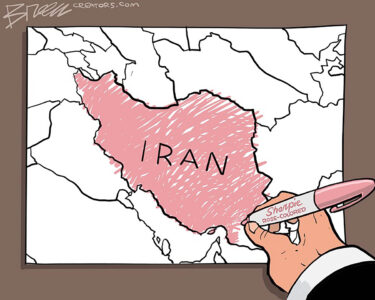
Editorial cartoon for April 4, 2026
State to focus this month on enforcing Hands-Free Law
If you haven't done it already, time to put down the phone when getting behind the wheel — law enforcement will ...
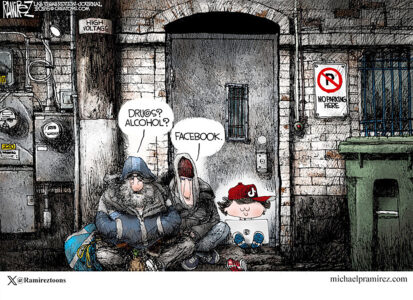
Editorial cartoon for April 3, 2026
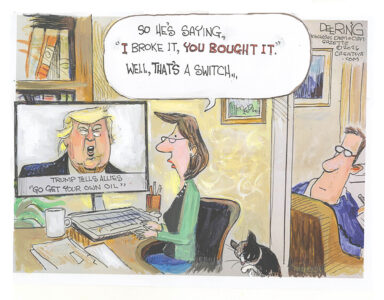
Editorial cartoon for April 2, 2026
Residents encouraged to join organ donor registry
Have you considered becoming an organ donor? It’s admittedly not the most pleasant topic, since it means ...