
Tariffs vs. the working class
For decades, politicians have sold tariffs as a tonic for the working class. In reality, one particular group seems to benefit more than any other from trade wars: Washington influence peddlers.
The United States collected some $288.5 billion in tariff revenue last year, up from $98.3 billion in 2024, thanks to a barrage of new levies imposed by the Trump administration. These tariffs, designed by elite lawyers in D.C. and implemented with highly technical and specialized language, presented a unique opportunity for lobbyists to charge large corporations exorbitant rates to seek relief and other carveouts. And they did very well for themselves.
The 20 largest lobbying firms reported $824 million in revenue last year, up from $595 million during the final year of the Biden administration.
In the fourth quarter of 2025, lobbying contracts that mentioned tariffs were worth $10.6 million, up from $1.8 million a year earlier, according to the Advancing American Freedom Foundation.
No wonder the plaintiffs in the Supreme Court case challenging President Donald Trump’s tariffs are small businesses, not large ones. Big companies can afford to hire attorneys to understand the complex rules and lobbyists to try to minimize the pain. Small businesses get stuck with enormous tax bills.
While lobbyists cashed in, Americans felt the pain. Poorer people tend to spend more of their income on goods that are subject to tariffs than higher earners. Tariffs redistribute corporate profits from less politically connected industries to more politically connected industries, not from the rich to the poor.
Sometimes the tariffs are sold as a national security imperative, but that hasn’t been the case over the past year. Taxing imports from Canada is not a way to reduce drug overdoses. Imposing tariffs on countries that already eliminated their trade barriers doesn’t help to eliminate trade barriers.
Defenders of import taxes sometimes argue that lobbying is unfortunate but worthwhile given all the jobs that are saved or protected. Yet the government bailed out farmers because they were harmed by tariffs. And the number of total manufacturing jobs has fallen by 72,000 since last April. Car sales are down, and there are 19,000 fewer car manufacturing jobs in the country.
All this is why 6 in 10 Americans oppose Trump’s tariffs, according to the latest polling, and approval for them has consistently lagged other parts of his agenda, even among Republican voters. The people’s elected representatives in Congress wouldn’t pass new tariffs, which is why the president is imposing them by executive order and claiming a nonexistent emergency.
Draining the swamp is hard, but tariffs are an unforced error that make an already difficult task impossible.
ONLINE: https://www.washingtonpost.com/opinions/2026/02/07/tariffs-populism-ieepa-duties-trump/
Editorials
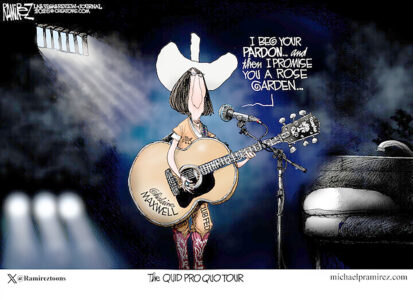
Editorial cartoon for Feb. 12, 2026
Tariffs vs. the working class
For decades, politicians have sold tariffs as a tonic for the working class. In reality, one particular group seems ...
Study shows seat belt use rising in Michigan
Results of a recent study indicates Michigan appears to be moving in the right direction again in terms of seat ...

Editorial cartoon for Feb. 11, 2026
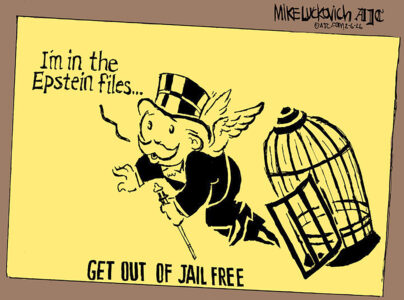
Editorial cartoon for Feb. 10, 2026
Caution urged when buying and using home pesticides
Got a problem with pests in the home? Be careful about what you choose to use as a treatment, the Michigan ...