Tiny fawns face tough odds; juvenile grebe gets second chance
Northwoods Notebook
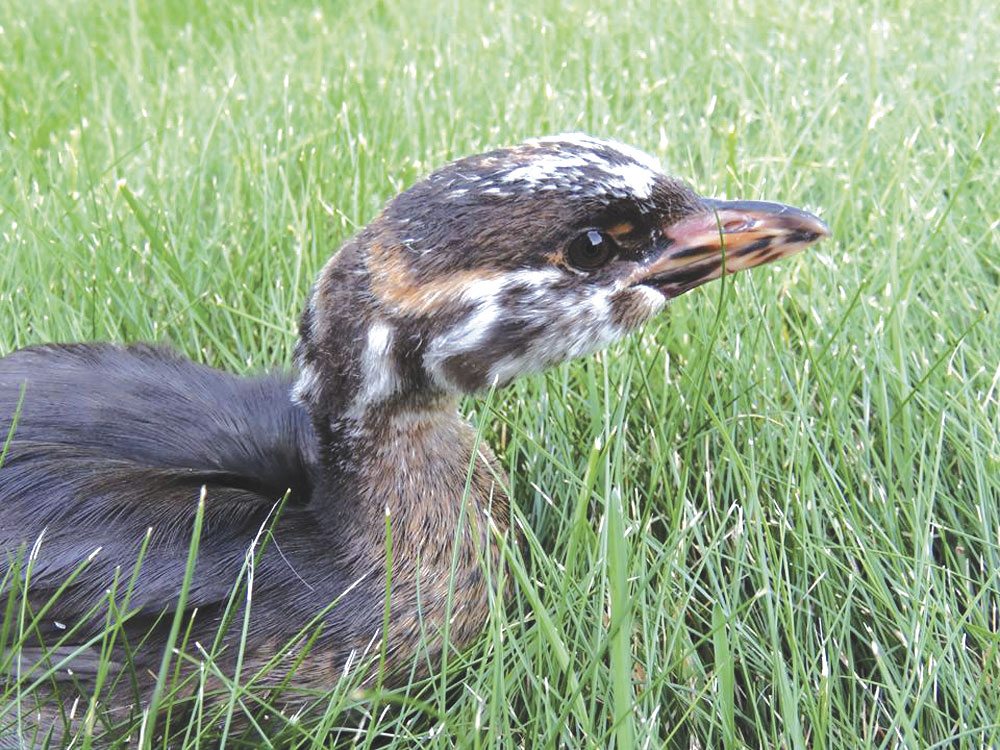
A young pied-billed grebe that likely mistook a wet road for a pool of water got a lift from wildlife rehabilitator Phyllis Carlson to much better conditions for this diving species at Crystal Lake. Only the juvenile birds have these “skunk heads;” adults are light brown with a striped bill, hence the name. (Phyllis Carlson Photo)
A co-worker told me about a very small fawn her neighbors have regularly had in their yard.
The size makes it likely this is not a stunted fawn but one born late season, perhaps in late July.
This happens when a doe’s first breeding doesn’t take in November and she goes back into season about 28 days later, which means conception doesn’t happen until well into December, said Terry Minzey, Upper Peninsula regional wildlife supervisor for the Michigan Department of Natural Resources.
It takes about 200 days to gestate a fawn, so instead of being born during the usual wave of fawns in late May and early June, this one doesn’t drop until July. Some might be as late as August.
These late-season fawns are rare in the north but happen regularly enough in the more southern states to be termed “short fawns” by hunters who see them, Minzey said.
The U.P., though, is on the northern edge of the natural range for white-tailed deer, which offers a much shorter window of opportunity to get in shape for the winter, he said.
Such late-season fawns face long odds for surviving that first year, Minzey said. Fawns aren’t capable of packing on fat reserves until they’ve aged at least a few months, so this one will go into the winter with less padding for warmth and to draw on when forage becomes more scarce and less nutritious, Minzey said.
Fawns normally will have reached about 70 pounds, on average, by the time winter really sets in, and those that have had good conditions during the summer and fall might even tip the scales at 80 to 90 pounds, Minzey said. A late-season fawn, though, might be half that weight.
The smaller size also makes it more difficult to move through deep snow, Minzey added, and the younger fawns are more vulnerable to predators.
But if this one and its mom remain close to human habitation, especially if a reliable food source is available, it could beat those odds and make it through the lean months, Minzey said.
Add a mild winter, like the past two in the Iron Mountain area, “and the chances would be fairly good,” added Jim Hammill, a retired DNR biologist in Crystal Falls.
*****
Writing a few weeks back that I’d seen almost no bucks, even young ones, throughout the summer seems to have thrown down the gauntlet for area bucks to start showing themselves.
Honestly, I love being proven wrong in this case — at least partially. The bucks now turning up all look young, as predicted. Most have only spike antlers, with a few sporting forks, but I have yet to see one that seems truly mature.
Minzey explained these young bucks usually form up in bachelor herds after the does drive them off just before dropping their new fawns in late spring.
Now, with this year’s fawns of good size, the deer are beginning to mix again. It’s likely these spike and fork bucks I’ve seen are the does’ sons from the previous year.
All are still in velvet, so not yet aggressive or trying to breed. Pre-rut, when the antlers harden and the bucks begin rubbing velvet off, hasn’t started, Minzey said.
When it does, the does again will reject these yearling bucks, which may wander 5 to 10 miles away or more looking for “someplace where there’s room for him,” Minzey said.
This dispersal of males isn’t as dramatic as with predators such as wolves and cougars, known to sometimes cross several states searching for territory that hasn’t already been claimed.
These young males will have two main criteria for choosing where to stop: The availability of food and females. The cougars that have been captured on trail cameras or killed so far in the U.P. all have been males from the Black Hills population, which means they likely won’t remain here unless females start making the same cross-country journey.
The prospects certainly are much better for young bucks, as the U.P. has plenty of space, forage and does if they can manage to make it to age 4 or 5.
*****
Local wildlife rehabilitator Phyllis Carlson is taking a well-deserved vacation.
It comes after a brutal summer that saw a number of animals she received be beyond what she could heal or nurture.
This past week, Carlson learned that two of three crows she sent in for testing were positive for West Nile virus. Results still are pending on a robin and kestrel, a tiny falcon common to the region.
Carlson did have one good outcome in the past week — a juvenile pied-billed grebe that probably mistook a wet road for a water body and made what Carlson called a “hard landing.” Grebes, like loons, have legs set very far back for diving and can only take off with a paddling start from water, so find themselves helpless if downed on land.
This one was set loose on Crystal Lake, to join a home-grown group of young grebes. It last was seen swimming away in good shape, Carlson said.
Betsy Bloom can be reached at 906-774-2772, ext. 40, or bbloom@ironmountaindailynews.com.
Outdoors

Sagola youth club competes at Marshfield
Migration hits the brakes in icy weather
Outdoors report: Changes made in sturgeon, trout seasons
Outdoors report: Turkey licenses available for spring season

Michigan’s Great Lakes fish populations assessed