Michigan deserves its title as ‘The Trails State’
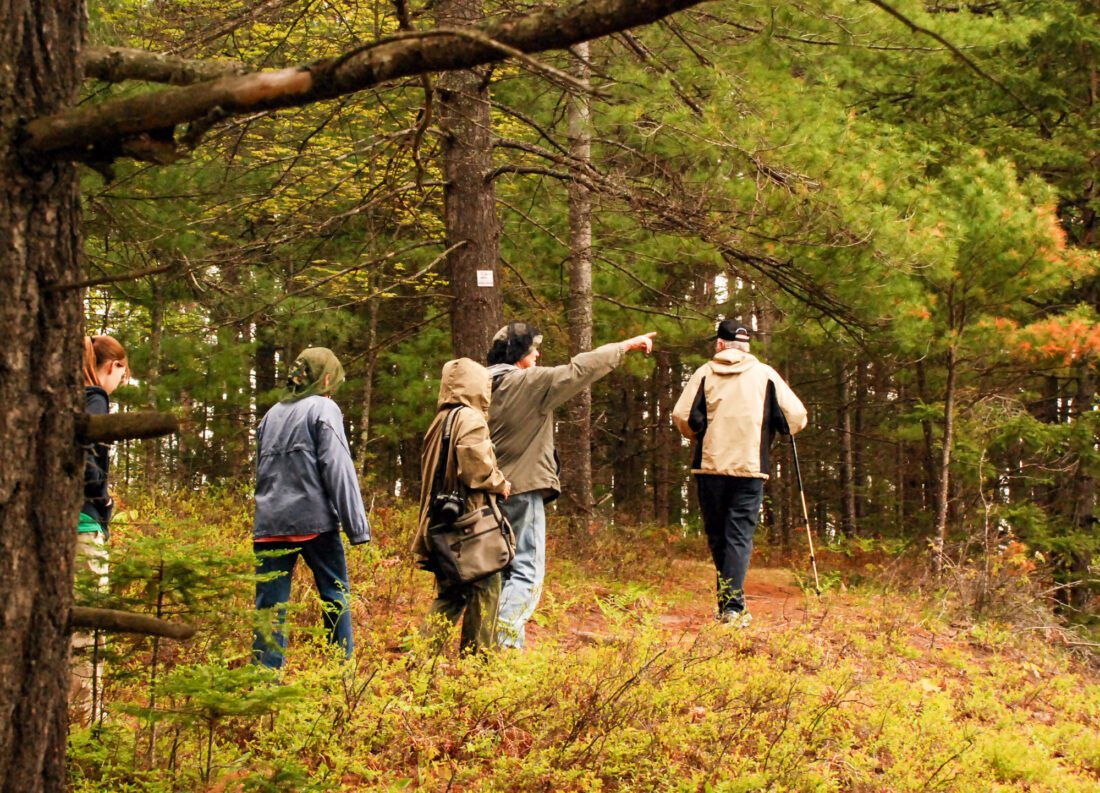
Birdwatchers travel a designated songbird trail at Little Presque Isle north of Marquette in Marquette County. (Michigan Department of Natural Resources) By Michigan Department of Natural Resources
Single-track. Switchback. Rail trail. Off-road. Backcountry. Water. Equestrian. Multi-use. Looped. Out-and-back. Smooth and paved.
Hear these different kinds of trails and pathways, and a favorite type likely comes to mind – it does for me, a longtime, passionate trail explorer.
Well, wait: Can I pick more than one?
Of course, we all can – how could we not?
Here in Michigan, we’re lucky to have all these trail types and then some. We are known as The Trails State for good reasons: Michigan is home to more than 13,700 miles of designated state-managed trails and thousands of miles of local, county and federally managed trails.
If you’re like me, getting outdoors and on the trails is an enjoyable experience any time of the year, whether that means walking, running, hiking, cycling, riding or paddling.
In the Great Lakes State, we live and play in trail paradise, all year long.
“Michigan truly is The Trails State,” said my colleague Tim Novak, state trails coordinator for the DNR Parks and Recreation Division. “With nearly 14,000 miles of state-designated trail, Michigan is the nation’s leader in providing access to the outdoors and recreation. And our trails are much more than just a place to walk, run, ride or paddle – trails provide access to many of Michigan’s most iconic and recognizable natural resources and scenic sites.”
Kelly Wolgamott, vice president of Pure Michigan, part of the Michigan Economic Development Corporation, concurs.
“Michigan’s thousands of miles of trails are an incredible way to explore our two peninsulas,” she said. “Whether it’s hiking, biking and paddling in the spring, summer and fall or snowmobiling, snowshoeing and cross-country skiing during the winter months, our Pure Michigan Trails and Trail Towns offer four seasons of unforgettable outdoor adventure.”
Getting outdoors and moving our bodies may not always be the first thing we turn to when we’re feeling stressed or overwhelmed with life – sometimes it feels like our never-ending to-do lists don’t allow for such an activity – but it clearly can make a positive difference in our well-being when we carve out the time.
“Trails improve mental and physical health,” Novak said. “They increase the economic well-being of the people who use them and the regions they run through. At their core, trails connect communities and people. They provide avenues for social and cultural growth. They create memories and a sense of belonging.”
Research backs this up. Consider a 2014 study by the American Journal of Public Health, which revealed there is a direct and significant measurable correlation between how close people live to biking and walking infrastructure and the amount of weekly exercise they get.
American Trails, a nationwide coalition of all types of trail organizations, agencies and individuals, shared results of this study, which was conducted in three communities that were upgrading their walking and biking infrastructure, measuring the exercise habits of the residents both before and after the trails went in.
The results showed that those living within less than a mile of the new trails were getting on average 45 minutes more exercise a week after the trails were built than they were before they had that available infrastructure.
The amount of increased exercise per week went down the farther away people lived from the new trails, but benefits were still seen for those who lived up to 2.5 miles away.
A 2011 literature review by the American Heart Association, meanwhile, found that for every $1 invested in building trails, there is a direct correlation to $3 of saved medical costs for communities, according to an American Trails website article.
“Michigan’s statewide trail network is unmatched and reflects a deep commitment to providing access to people, places and year-round adventures,” Wolgamott said.
Want to lend a hand? For off-road vehicle or snowmobile trail volunteering, contact Jessica Roehrs at RoehrsJ1@Michigan.gov. For nonmotorized trails volunteering, contact Tim Novak at NovakT8@Michigan.gov. Please put “VOLUNTEER” in the subject line.
Part of enjoying our trails is practicing trail etiquette – this helps keep everyone happy and safe, while protecting our state’s natural landscapes. Knowing when to yield and how to interact with other users helps ensure a safe and enjoyable experience for all.
If you’re looking for more resources to help inspire your next trail excursion, visit Michigan.gov/DNRTrails. You’ll find the DNR’s all-new Recreation Search, giving you plenty of ideas for nonmotorized trails to check out, including trails in state parks, as well as interactive maps for both motorized and nonmotorized trails and routes, different trail activities, where you can take your four-legged friends on the trails, accessible trails and scenic sites, and closures and detours.
Happy trails!
Outdoors

Applications, outings, free fishing on calendar
Michigan deserves its title as ‘The Trails State’
Catch of a lifetime
Wisconsin Conservation Congress invites resolutions
MADISON, Wis. – The Wisconsin Conservation Congress invites all Wisconsinites to take part in its annual spring ...

Pure Michigan applications due; Wisconsin harvests elk