Michigan’s Great Lakes fish populations assessed
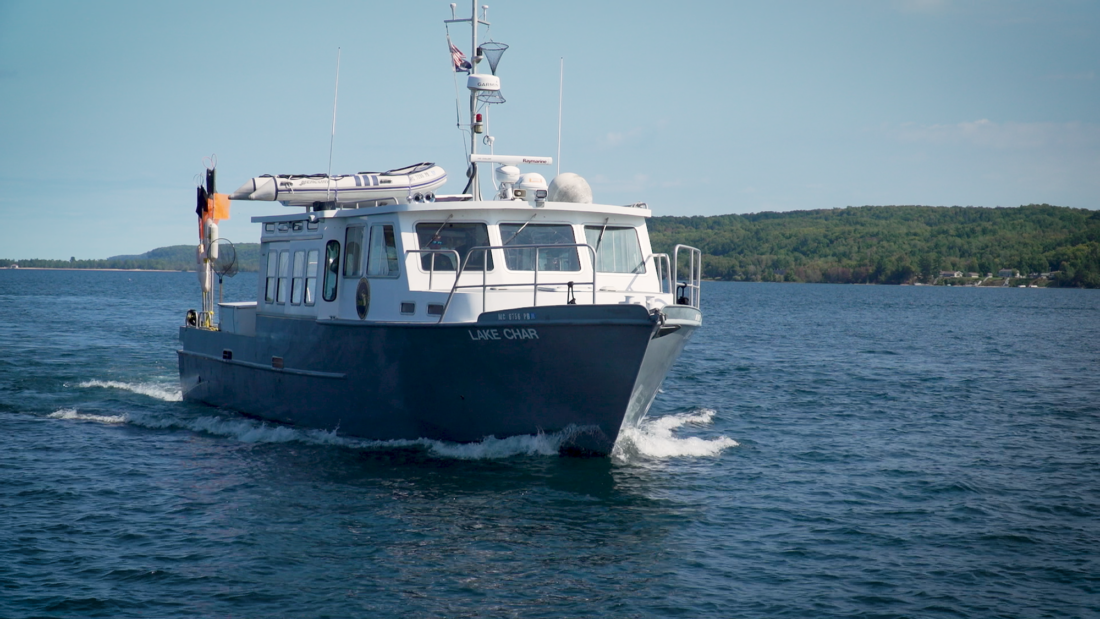
The research vessel Lake Char conducted its 2025 work on Lake Superior from April through November. Nearly 38 miles of survey gill net was deployed at 91 sampling stations across the lake. (Michigan Department of Natural Resources photos)
The Michigan Department of Natural Resources surveys the Great Lakes fisheries every year between April and November. Crews from research stations in Marquette, Charlevoix, Alpena and Harrison Township gather data on fish populations, fish health and the presence and effects of invasive species.
This information directly informs fisheries management decisions — such as stocking levels or regulated catch limits — and provides data on the success of past actions.
Here are highlights from the Marquette Fisheries Research Station:
The crew of the research vessel Lake Char began work on Lake Superior as soon as the ice melted and continued through early November. The Marquette Fisheries Research Station is responsible for work that focuses on monitoring fisheries resources, including culturally and economically important species. These include lake trout, which were recently declared recovered in Lake Superior, lake whitefish and burbot. Surveys are conducted annually or at periodic intervals to track key population trends to monitor overall health of fishery resources.
Lake Superior
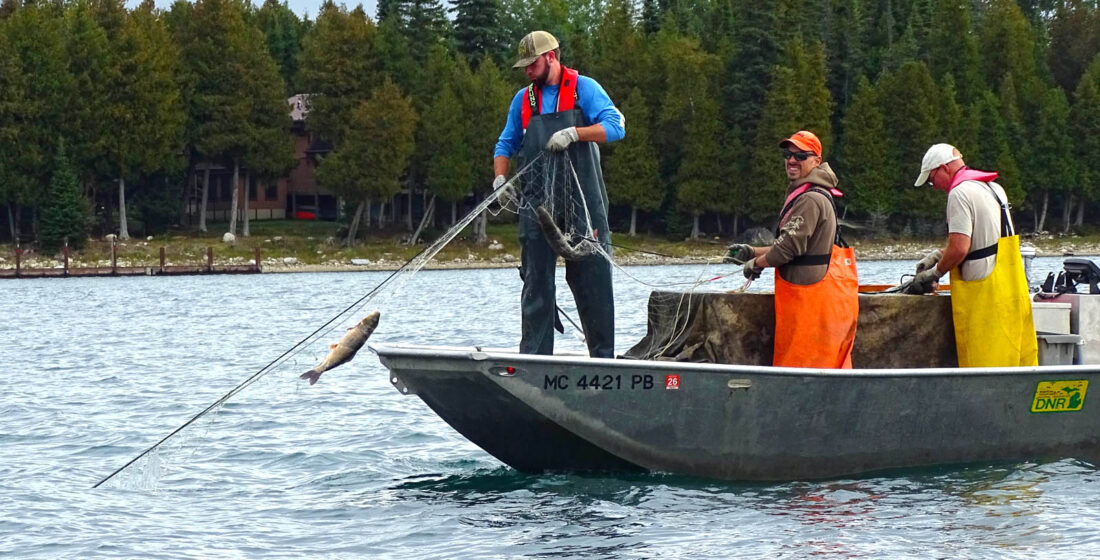
Michigan Department of Natural Resources seasonal worker Ben Poli and captains Darren Vercnocke and Bill Wellenkamp lift a gill net during the Les Cheneaux Islands fish community survey.
Data from the spring adult lake trout surveys on Lake Superior showed a slight increase in populations east of the Keweenaw Peninsula and slight declines west. The summer juvenile lake trout survey indicated slight declines in western and central areas (Ontonagon to Marquette) and slight increases in eastern waters (Munising to Grand Marais).
In June 2025, the RV Lake Char team surveyed Big Reef to assess lake trout populations. Big Reef is a popular lake trout sportfishing site, offshore about 30 miles north of Munising. A similar expedition to Klondike Reef was conducted in 2024.
While out near Big Reef, the crew surveyed the deepest waters of Lake Superior (and all the Great Lakes) — about 1,320 feet — to assess siscowet lake trout populations. Siscowet lake trout is one of the lake trout morphotypes in Lake Superior that are most abundant in the deepest parts of the lake.
They finished the survey season with lake trout spawning survey work between Marquette and Munising in late October and early November. During the 2025 field season, 37.5 miles of survey gill net was deployed for these surveys at 91 sampling stations across Lake Superior.
Northern Lake Michigan
Fisheries work in Upper Peninsula waters of Lake Michigan began shortly after ice-out with jaw tagging and acoustic transmitter tagging of walleye in Little Bay de Noc for movement studies of the species.
Fisheries assessment work in nearshore waters of lakes Michigan and Superior occurred during August and September. Crews sampled 20 locations (10 miles of trawling) in Lake Michigan’s Little Bay de Noc and Big Bay de Noc. Over 23,000 feet of survey gill net were deployed at 68 sampling stations spread across four locations in northern Lake Michigan (Big Bay de Noc, Little Bay de Noc, Naubinway and Manistique) and two locations in southern Lake Superior (Munising Bay and West Bay at Grand Marais). Catch data from these fall surveys allow researchers to assess changes in the fish community and populations of species such as walleye, yellow perch, smallmouth bass, northern pike, lake sturgeon and invasive Eurasian ruffe.
Isle Royale
In 2025, a special angler survey was conducted on Isle Royale to provide updated information needed to manage this unique fishery. Three creel clerks were stationed at different locations on the island from June to August and visited campsites, docks and main harbors to conduct interviews, as well as traveling the coastline by boat to count the number of anglers fishing.
Survey results found that anglers took over 9,700 trips and spent over 33,000 hours fishing in the Lake Superior waters around Isle Royale. Approximately 19,500 fish were caught, of which 5,800 were kept and 13,700 were released. Lake trout were the most sought-after species, representing 82% of the total catch. Other species making up a significant portion of the catch included northern pike, brook trout and yellow perch. Most of the anglers fishing at Isle Royale were from Michigan, followed by Minnesota and Wisconsin, but anglers from 14 other states also visited the island during the 2025 survey.
-
- The research vessel Lake Char conducted its 2025 work on Lake Superior from April through November. Nearly 38 miles of survey gill net was deployed at 91 sampling stations across the lake. (Michigan Department of Natural Resources photos)
-
- Michigan Department of Natural Resources seasonal worker Ben Poli and captains Darren Vercnocke and Bill Wellenkamp lift a gill net during the Les Cheneaux Islands fish community survey.