Outdoors report: Turkey licenses available for spring season
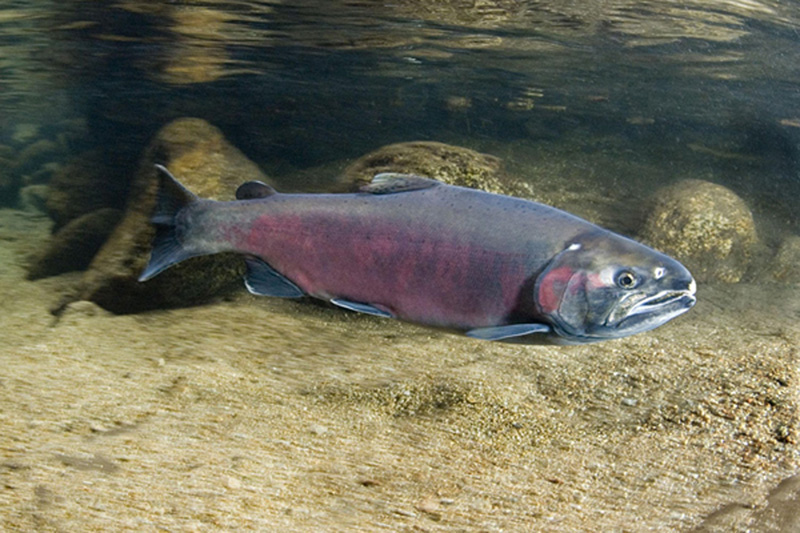
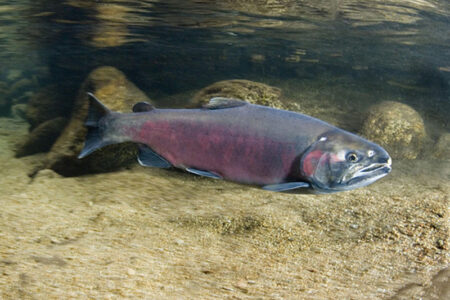
Coho salmon (NOAA Fisheries photo)
IRON MOUNTAIN — Licenses are on sale for two spring turkey hunting seasons that do not require hunters to apply in Michigan’s turkey hunt drawing.
Hunt 0234 and Hunt 0301 have unlimited quotas, and licenses can be purchased throughout the entire spring turkey hunting season.
Hunt 0234 is a statewide license that runs May 2-31. (The print version of the DNR’s 2026 Spring Turkey Regulations Summary incorrectly listed the 0234 season dates as April 25-May 31, but the correct dates are May 2-31.) If you have a Hunt 0234 license, you must have landowner permission to hunt on private lands.
Hunt 0301 is a private-land option for southern Michigan, running April 18-May 31. With this license, you must have landowner permission to hunt on private lands. This license is not valid on county, state or federal lands.
If you purchase a Hunt 0234 license or a Hunt 0301 license, you cannot purchase a general spring turkey license. Hunters can only buy one spring turkey hunting license per year.
If you did not apply for the drawing, you may purchase leftover general licenses for units with a drawing and quota. These licenses are valid on public and private lands. Leftover licenses may or may not be available, depending on demand.
The general spring turkey season in the Upper Peninsula is April 18-May 31, with a license quota of 6,000.
Hunters ages 10 to 16 may purchase a spring turkey youth license and do not need to apply. Hunters age 9 and younger may participate through the mentored hunting program and receive a spring turkey license. Both the youth hunter and mentored youth spring turkey licenses are valid for all spring turkey management units and season dates.
Wisconsin season
Wisconsin’s spring turkey season will open with a youth hunt April 11-12, followed by six distinct periods, each seven days long and running Wednesday through the following Tuesday. A total of seven zones will be open for turkey hunting, beginning April 15. The final hunt period is May 20-26.
Wisconsin youth hunt rules can be found at https://widnr.widen.net/s/qnbdwkwwvw/spring_turkeyyouthhunt.
UP fishing
The Michigan Department of Natural Resources reported this Upper Peninsula activity:
Little Bay de Noc: Anglers reported slow fishing when targeting perch and attributed the slow fishing to a cold front. Anglers used wigglers and minnows on jigs, as well as small shiny bait holder style lures, such as spoons with wax worms or cut bait. Most anglers fished the upper bay where they felt the ice was more trustworthy.
Munising: The coho salmon bite was good for anglers throughout the bay. Anglers targeting perch did well, catching good numbers. Anglers reported many undersized splake, with a few larger ones mixed in. The whitefish bite was slow but picked up slightly. For nighttime anglers, the smelt and burbot bite was steady. Popular baits included wax worms and minnows.
Keweenaw Bay: Anglers reported fair numbers of lake trout, cisco, and coho salmon being caught. Success was also noted by those targeting burbot and smelt while night fishing during the last week. Some anglers had success catching splake, along with the occasional rainbow trout. Whitefish anglers reported slow fishing.
Marquette: Fishing in all areas was slow due to ice from inclement weather received during the week. There were a few coho salmon caught out on the breakwall on days when the ice allowed. There were a few brown trout and steelhead caught on the breakwall.
Steelhead were expected to start moving back up the Carp River as the river mouth began to open. If fishing around the mouth did not produce, anglers moved farther up the river, as a few fish had been reported moving past the prison.
The Chocolay River was slow since water levels dropped. The only good action reported came from boat anglers heading upriver. Once the ice pushed out and the river mouth opened up, more fish made their way back up the river.
Au Train: As soon as the Au Train River mouth opened, coho salmon fishing returned to the excellent conditions seen before Blizzard Elsa. The fish that had been observed were all caught near the mouth of the river along the ice cliffs. Most were caught using jigs with wax worms or floating spawn eggs.