
Electronic tagging introduced for Michigan deer hunt
Outdoors report
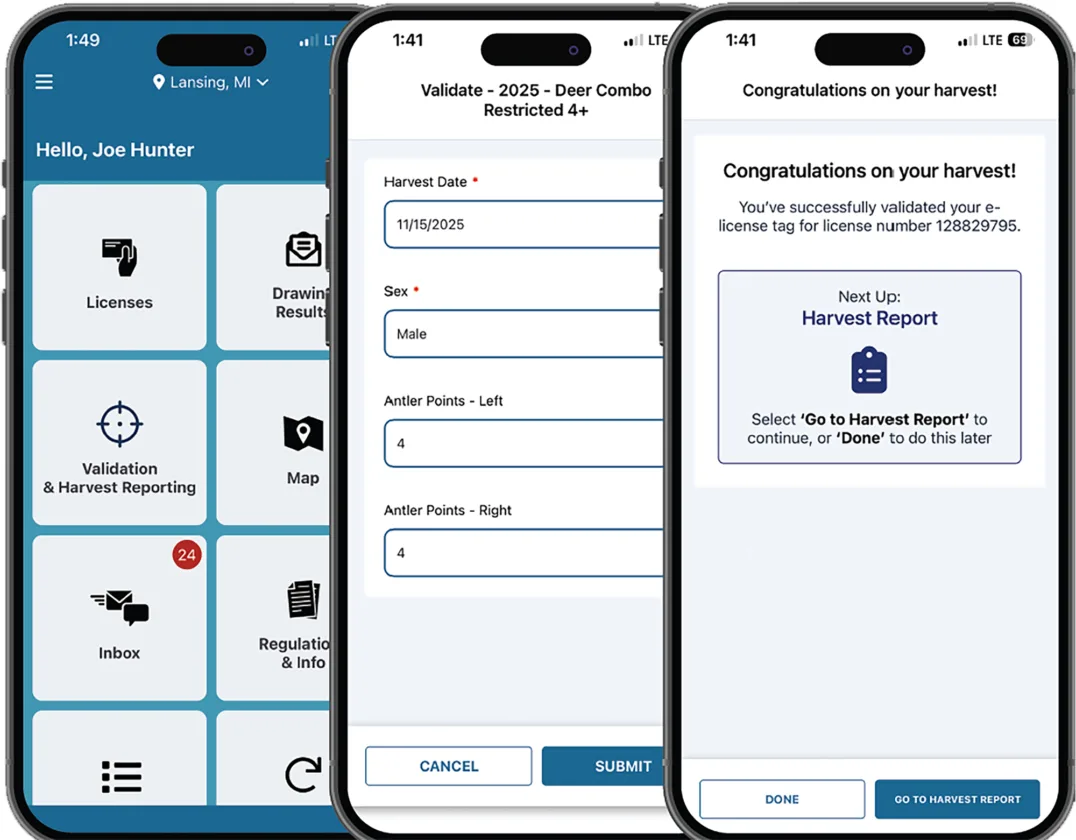
Beginning this year, hunters harvesting deer, turkey, bear, bobcat, otter, fisher and marten will have the option to tag harvested animals digitally through the Michigan DNR Hunt Fish mobile app. These are examples of screenshots hunters will see. (Michigan Department of Natural Resources photos)
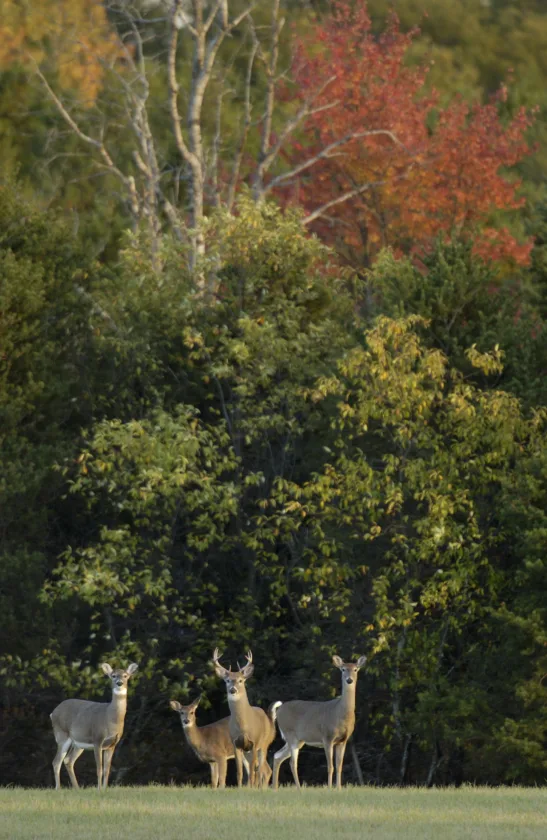
Late-winter snow likely affected the Upper Peninsula deer population, but no major widespread die-offs were reported this year, according to the Michigan Department of Natural Resources.
Beginning this year, hunters harvesting deer, turkey, bear, bobcat, otter, fisher and marten will have the option to tag harvested animals digitally through the Michigan DNR Hunt Fish mobile app. These are examples of screenshots hunters will see. (Michigan Department of Natural Resources photos)
Late-winter snow likely affected the Upper Peninsula deer population, but no major widespread die-offs were reported this year, according to the Michigan Department of Natural Resources.
Trending
Michigan’s archery deer season opens Thursday, with electronic harvest tagging -- or eHarvest tags -- now available.
Hunters who purchase a deer license through the Michigan Department of Natural Resources Hunt Fish app immediately receive an eHarvest tag on their smartphone, allowing them to validate the tag electronically rather than attach a paper kill tag.
An eHarvest tag can be validated with or without cell service. If the deer is no longer personally attended by the hunter, a tag made of durable material with the license number written in permanent ink must be securely attached.
A durable tag is not required when the deer is stored at the hunter's primary residence or transferred directly to a processor or taxidermist.
Also, eHarvest tagging does not replace mandatory harvest reporting. Hunters must still report their harvest within 72 hours or before transferring possession, whichever comes first.
Following successful eHarvest pilots for turkey, digital tagging has expanded this year to include deer, bear and several furbearing species, according to the DNR.
Deer hunters who purchase a license from a license retailer will receive a paper kill tag at the point of sale. Hunters who purchase a deer license through eLicense will receive a paper kill tag by mail, which can take 10-15 business days.
Hunters who purchase through the Michigan DNR Hunt Fish app receive an eHarvest tag immediately and do not receive a paper kill tag.
Michigan’s deer harvest reporting page includes links for reporting a harvest or downloading the Michigan DNR Hunt Fish app, along with reporting instructions, tips, a demonstration video and resources for assistance.
Several late-winter snowstorms likely affected the Upper Peninsula deer population, but no major widespread die-offs were reported, according to the DNR.
In the U.P., deer hunters are allowed to use bait through Jan. 1. Bait cannot exceed 2 gallons at a hunting site and must be spread over a minimum 10-foot-by-10-foot area.
To minimize potential disease transmission, the DNR recommends not repeatedly placing bait at the same point on the ground and baiting only when actively hunting.
***
The DNR reminds anglers that autumn can be one of the best times of year to seek out walleye and perch.
These fish can often be found in the river mouth areas of larger, inland lakes, taking advantage of baitfish that like to hang out as the weather cools off. Try depths of 10 to 12 feet to find walleye, and depths as shallow as 4 feet for perch.
Trout might also be found in larger lakes in the same general areas.
The DNR reported this U.P. activity:
Little Bay de Noc: Walleye fishing was fair to good. Anglers caught fish casting jigs tipped with live bait or artificial bait featuring glow paint, using erratic, darting presentations to trigger strikes. Anglers trolling reported success using crawler harnesses or slender diving baits. Yellow perch fishing yielded mixed results with some anglers near the Escanaba River and harbor having successful outings, locating schools remained difficult. Minnows fished along deep-water structures and flats produced the best results. Coho salmon were frequently observed, but action was generally slow. Trolling artificial lures such as spoons and crankbaits yielded little success, and anglers using forward-facing sonar while jigging also encountered a tough bite. Early morning and low-light periods near or after dark offered the best opportunity for coho salmon.
Marquette: Most anglers continued to troll north of White Rocks toward Granite Rock and the Clay Banks in 80 to 160 feet of water for lake trout. Anglers reported catching lake trout throughout the water column, primarily near the bottom using downriggers. A few anglers trolling near the mouth of the Chocolay and Carp rivers from Lower Harbor caught coho salmon, Chinook salmon, and brown trout at depths around 30 feet in 60 feet of water. Catch rates appeared to increase as water temperatures cooled.
Munising: Boat anglers reported catching a few coho salmon and splake while trolling the bay. Anglers fishing off the mouth of the Anna River also caught splake and a few coho salmon. Spawn and spinners were the most effective baits.
Manistique: River anglers reported catching pink salmon and Chinook salmon. A small run of Chinook salmon entered the river, with fish observed near the mouth and up near the dam. Anglers trolling and casting crankbaits downstream of the paper mill and rapids reported occasional catches, though Chinook salmon fishing was slower overall. Shore anglers landed a few fish drifting skein, egg sacs, and beads, while other anglers caught fish casting shallow-running crankbaits during low-light periods at dusk and into the night.
Keweenaw Bay/Huron Bay: Anglers reported fair fishing, with catches consisting of coho salmon, lake trout, and splake, along with a few larger Chinook salmon taken by trolling spoons and flasher-fly combinations. Anglers jigging for lake trout experienced fair action using both natural and artificial presentations in 100 to 140 feet of water. Shore fishing remained slow, though anglers casting from shore managed to catch a few coho salmon.
Traverse Bay/Portage Entry: Anglers reported fair to good lake trout fishing while trolling spoons and flasher-fly combinations around structure in 50 to 100 feet of water. A few coho salmon and steelhead were also caught while trolling, though overall numbers remained low. Anglers jigging for lake trout reported good action when using natural presentations, with most fish caught in 80 to 120 feet of water.