
Wisconsin hunters harvest nearly 4,300 bears
Outdoors report
Trending
Bear hunters in the Wisconsin management zone that includes Florence and neighboring counties had a success rate of 52% during the 2026 season, according to preliminary results reported by the Department of Natural Resources.
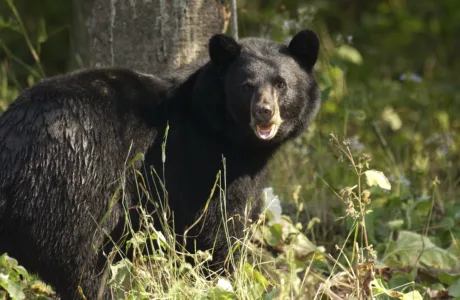
Hunters harvested 4,275 bears statewide during the 35-day season, slightly above the overall harvest target of 4,160 bears, the DNR said. The 2026 bear season ran from Sept. 15 to Oct. 13. A total of 15,245 bear licenses were awarded through a lottery system.
About 28% of hunters were successful statewide, on par with the five-year average hunter success rate of around 30%. Hunter success rates in individual zones varied from a high of 73% in Zone A in the northwest to less than 10% in southern Zones E and F.
In Zone B in the northeast (north of Highway 64), the harvest total was 807 with 1,545 licenses issued. The DNR’s harvest target for Zone B was 850.
“The big story across the northern part of the state was the ongoing drought conditions, particularly in northwest Wisconsin, and how the dry conditions might affect bear activity,” said Randy Johnson, DNR large carnivore specialist. “A different story emerged in southern parts of Wisconsin, with reports suggesting abundant acorns in many areas, along with agricultural crops, which often draw the attention of bears away from hunter baits in these areas. These patterns played out with bear harvest being above expectations in the northwest part of the state while at or near expectations across the rest of the state.”
Across central and southern Wisconsin, total harvest was predictably up somewhat this year compared to last, due in large part to increasing the number of licenses available in several management zones. Hunter success rates across Zones C, E and F were marginally lower compared to last year.
“One of our goals has been to increase bear harvest in parts of central and western Wisconsin (Zones C and E) to slow bear population growth in these areas, and this year's bump in harvest in these areas reflects that goal,” said Johnson.
Wisconsin’s bear population is estimated at around 24,000, according to the DNR.
Hunters wishing to obtain a license or preference point for the 2027 season must apply in Go Wild or at an authorized license agent before the Dec. 10 deadline.
Over 146,000 people applied for a Wisconsin bear hunting license or preference point for the 2026 season, again setting an all-time high record number of applicants. To help hunters make hunting plans, a full breakdown of the 2026 bear license drawing results and license wait times is available at https://widnr.widen.net/s/5srkph6xcv/beardrawing_summary.
The Michigan Department of Natural Resources issued 6,278 bear licenses for the 2026 season with over 72,580 people applying. Total statewide harvests typically land in the range of 2,000 with around 80% coming from the Upper Peninsula.
***
A temporary closure of a section of ORV Route BN in Ontonagon County will be in effect from Monday through Wednesday for work on ORV trail bridges over the Firesteel River, the Michigan DNR said.
The work will be taking place between where ORV Route BN crosses M-38 and M-26, which is located east of Greenland and southeast of Ontonagon. Signs will be posted and barricades erected.
There are no reroute options available.
***
The Michigan DNR reported this Upper Peninsula fishing activity:
Little Bay de Noc: Anglers who ventured out reported fair walleye and yellow perch fishing. Anglers targeted reefs near the head of the bay, as well as adjacent drop-offs. Anglers trolling utilized crawler harnesses with inline weights or bottom bouncers, while anglers casting used lures with erratic, darting action. Rear-finned, snap-style jigs worked well when paired with forward-facing sonar. Anglers reported catching yellow perch on minnows and worms, with the most success occurring from morning into late afternoon.
Marquette: A few lake trout and coho salmon were caught off the end of the lower breakwall near the lighthouse during early morning hours and before sunset. Anglers trolling the river mouths from Lower Harbor continued to catch fair numbers of coho salmon and steelhead, along with an occasional Chinook salmon. Brown trout numbers remained higher than in previous years in both rivers and river mouths. Coho salmon catches were strong throughout the week, though numbers began to decline with rising water temperatures. Anglers reported catching steelhead in the Carp River, as well as a few in the Chocolay River near the river mouth.
Manistique: Anglers fishing the river reported catching a few chinook salmon, though remaining fish were in poor condition as the run neared completion. Anglers reported fair steelhead angling with consistent catches, primarily comprised of smaller-sized fish along with a few brown trout. Anglers drifted beads or artificial egg patterns.
Ontonagon/Silver City/Union Bay: Anglers experienced good success targeting lake trout when conditions allowed, with fish taken primarily by jigging in depths of 70 to 90 feet. Trolling in slightly deeper waters yielded similar results.
Black River Harbor: When conditions allowed, anglers reported high catch rates of lake trout. Reports indicated that fish were caught by anglers trolling in depths around 120 feet of water.
Grand Marais: Anglers fishing off the mouth of the Sucker River reported a good fishing for rainbow trout along with a few coho salmon while casting spoons and fishing spawn.