
Wisconsin youth deer hunt Oct. 10-11
Outdoors report
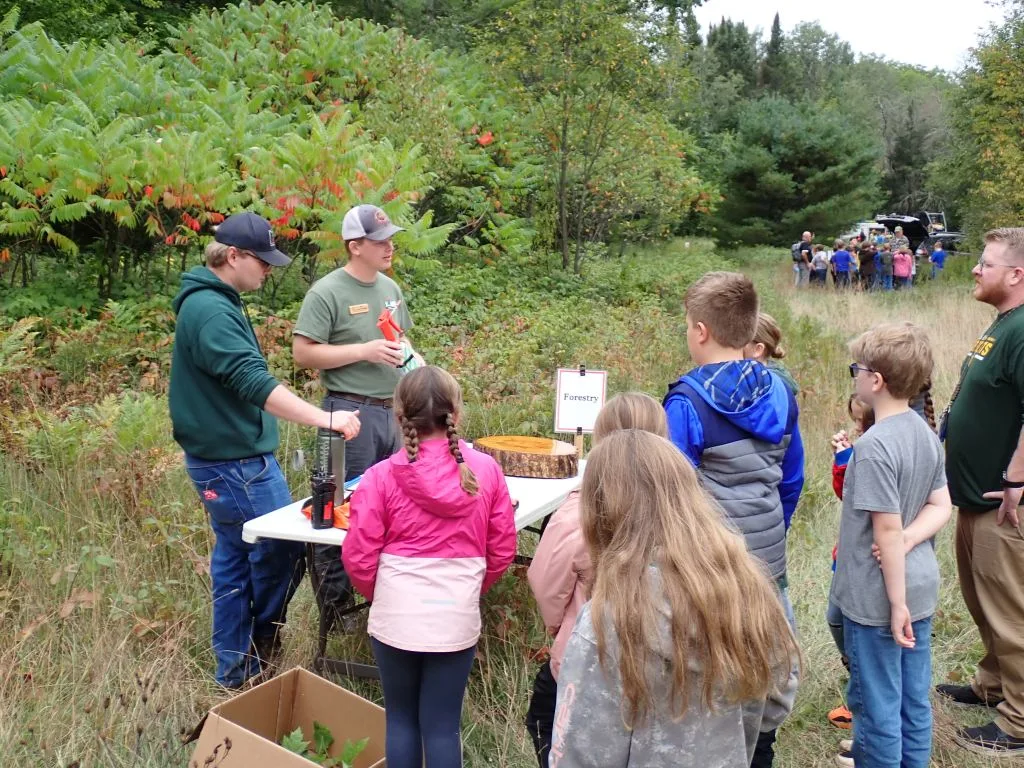
Wisconsin Department of Natural Resources foresters Eric Sommerfeld and Josh Butcher show some of the tools they use in the field at the recent Environmental Field Days for Marinette County 4th graders. (Courtesy photos)
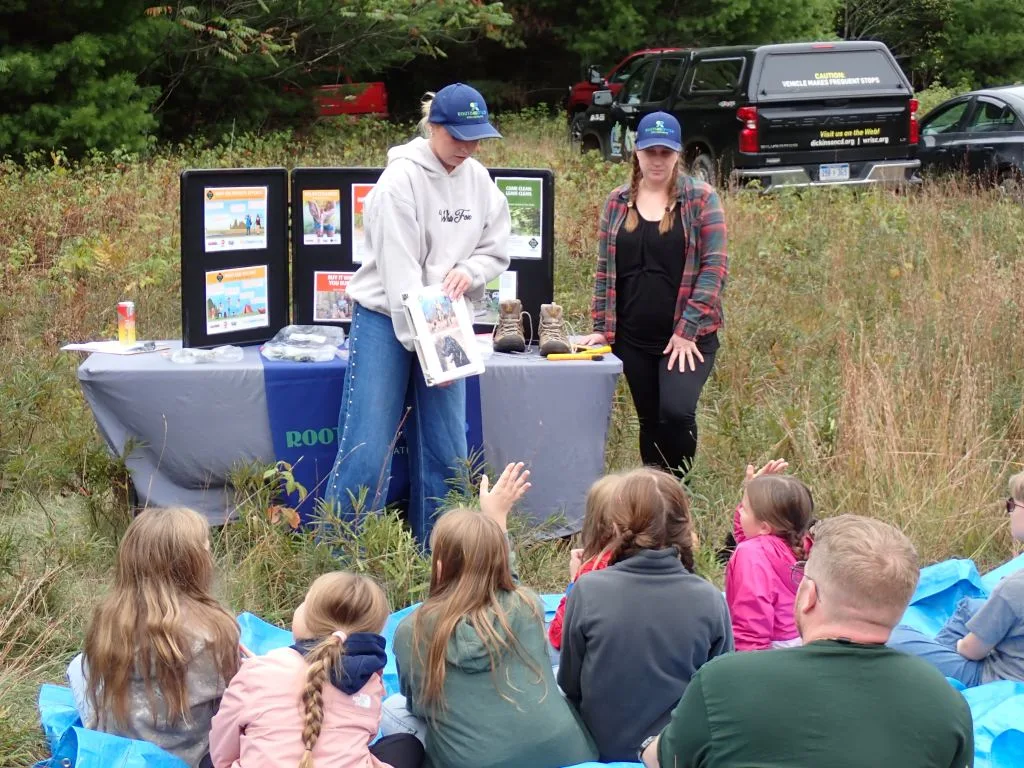
Anjuli White and Natalie Iwaszek of the Roots & Rivers Collaborative discuss with Marinette County students how to prevent the spread of terrestrial invasive species.
Wisconsin Department of Natural Resources foresters Eric Sommerfeld and Josh Butcher show some of the tools they use in the field at the recent Environmental Field Days for Marinette County 4th graders. (Courtesy photos)
Anjuli White and Natalie Iwaszek of the Roots & Rivers Collaborative discuss with Marinette County students how to prevent the spread of terrestrial invasive species.
Trending
IRON MOUNTAIN -- Wisconsin’s youth deer hunt is taking place next weekend.
It offers hunters 15 years old and younger the chance to learn hunting techniques and develop a connection to nature at a time when deer are less pressured than during the state’s traditional nine-day gun season in late November.
Wisconsin residents and nonresidents may participate Oct. 10-11.
Youth hunters, with or without hunter education certification, are eligible to hunt while under the supervision of a mentor. For all hunters younger than 11 years old or hunters between ages 12-15 who have not completed hunter education, the mentor must be at least 18 years old, be a hunter education graduate, hold a current hunting license and always remain within arm's reach of the youth hunter.
For hunters ages 12-15 who have completed hunter education, the mentor must be at least 18 years old but does not need to be a hunter education graduate or a licensed hunter. The mentor must always be in both visual and voice contact with the youth hunter.
One mentor may not accompany more than two youths at the same time. For more, go to https://dnr.wisconsin.gov/topic/hunt/youth.
***
The Michigan Department of Natural Resources’ Becoming an Outdoors Woman program will host a “Preparing for the Deer Hunt” class on Saturday, Oct. 10, at the DNR Pocket Park in Escanaba. The class, which aims to give new hunters more confidence, will cover scouting, tracking, camouflage, calling and baiting and will include shooting practice on the pellet gun range.
Cost is $30 per person, which includes a deer call to take home. For more, go to https://www.michigan.gov/dnr/education/public/bow.
***
The annual Environmental Field Days for Marinette County 4th graders was held Sept. 16-18. The event was attended by 437 students and 36 teachers and chaperones at four different sites.
EFD is organized by the Marinette County Land Information Department. Presenting agencies and volunteers included the Marinette County Land Information and Extension offices, the Wisconsin DNR, the aquatic invasive species FLOW program of the Lumberjack Resource Conservation and Development Council, City of Marinette Public Works, the Marinette High School fishing team, and the Roots & Rivers Collaborative.
Activities are held in four locations throughout the county: Marinette's City Park, Peshtigo's Badger Park, Lake Noquebay Park near Crivitz, and a site on county land in Dunbar. Area schools are assigned a specific location to attend and small student groups rotate through the stations to learn about the topics.
This year's topics included a talk with a conservation warden, forestry and trees, wildfire control, water quality, invasive species (aquatic and terrestrial), insects, composting, fisheries, mammals and fishing tips.
Teachers received quiz questions to review information presented at each station. Water and fruit snacks were provided for event participants.
***
The Michigan DNR’s turkey harvest report summary shows a modest number of birds taken since the fall season opened Sept. 15.
Harvest totals as of 5 p.m. Friday were six in Dickinson County, seven in Iron County, five in Menominee County, eight in Delta County and 10 in Marquette County.
The season runs through Nov. 14.
Hunters are required this year to report all harvested turkeys within 72 hours or before transferring possession.
***
Applications will be accepted until Nov. 3 for Michigan’s next Conservation Officer Training Academy.
This is a precertified law enforcement academy, meaning that qualified applicants must be at least 21 years old (by the time of hire) and meet one of the following requirements:
-- Hold a current Michigan Commission on Law Enforcement Standards license.
-- Be eligible for immediate licensure upon employment.
-- Be a licensed law enforcement officer in another state and meet MCOLES requirements.
Out-of-state applicants must be Michigan residents by the time training ends.
The academy will take place April 25-July 15 in Lansing. Training will include laws and rules specific to fish and game, species identification, and safe, legal operation of boats, off-road vehicles and snowmobiles.
A hiring webinar is scheduled for 6 p.m. Eastern time Wednesday, open to all qualified applicants who would like to learn more. Preregistration is required at https://www.michigan.gov/dnr/managing-resources/laws/hiring.
***
The Michigan DNR reported this Upper Peninsula activity:
Little Bay de Noc: Anglers targeting coho salmon fished the Escanaba River. Anglers reported seeing fish surface in the river and near the dam. Fishing was slow, with most anglers unable to entice bites. Anglers drifted spawn and cast brightly colored lures. Anglers noted that the run was slowing down, though additional heavy rainfall could bring in remaining coho salmon. Walleye anglers reported fair fishing, with success using natural bait trolled on a harness or cast on a jighead, as well as artificial lures such as snap jigs and crankbaits.
Marquette: Anglers targeted lake trout in 80 to 160 feet of water. Most boat anglers continued to troll north of White Rocks out toward Granite Rock and the Clay Banks, as reports from west of the Chocolay River remained dismal. Anglers reported catching lake trout throughout the water column, though most fish were caught near the bottom using downriggers. A few anglers caught lake trout and coho salmon off the lower breakwall early in the morning and before sunset. Anglers trolling the river mouths out of Lower Harbor caught fair numbers of salmon, including both coho salmon and chinook salmon. Brown trout were among the most frequently caught species in both the Chocolay and Carp rivers, along with numerous coho salmon. Following rain and cooler temperatures, fish numbers began to increase as salmon pods staged near the river mouths ahead of the run.
Munising: Boat anglers caught a few coho salmon while trolling in the bay. Lake trout anglers had success jigging and trolling around Grand Island and Wood Island. Anglers fishing off the mouth of the Anna River caught a few splake and coho salmon. Casting spinners and drifting spawn produced the best results.
Ontonagon/Silver City/Union Bay: Anglers reported mixed catches of lake trout, brown trout, coho salmon, and Chinook salmon in fair numbers. Boat anglers trolling found fish in depths ranging from 30 to 150 feet. Anglers had better success finding salmon when trolling in shallower water.
Manistique: Pink salmon were plentiful in the river. Anglers targeting pink salmon used small crankbaits, spinners, and beads, typically in pink colors. Chinook salmon anglers reported catching fish in holes of fast water above the U.S. Highway 2 bridge. Anglers reported the best success on skein, though other egg patterns also produced fish. Anglers trolling the river reported slow salmon fishing but caught incidental species such as smallmouth bass and northern pike.
Keweenaw Bay/Huron Bay: Anglers reported fair to good fishing with catches consisting primarily of coho salmon, lake trout, and a few splake while trolling. Anglers jigging for lake trout reported fair action using natural and artificial presentations in 100 to 140 feet of water. Shore anglers reported improved fishing over the past week, with many anglers catching coho salmon.