Isolated flight delays may spread, Duffy says
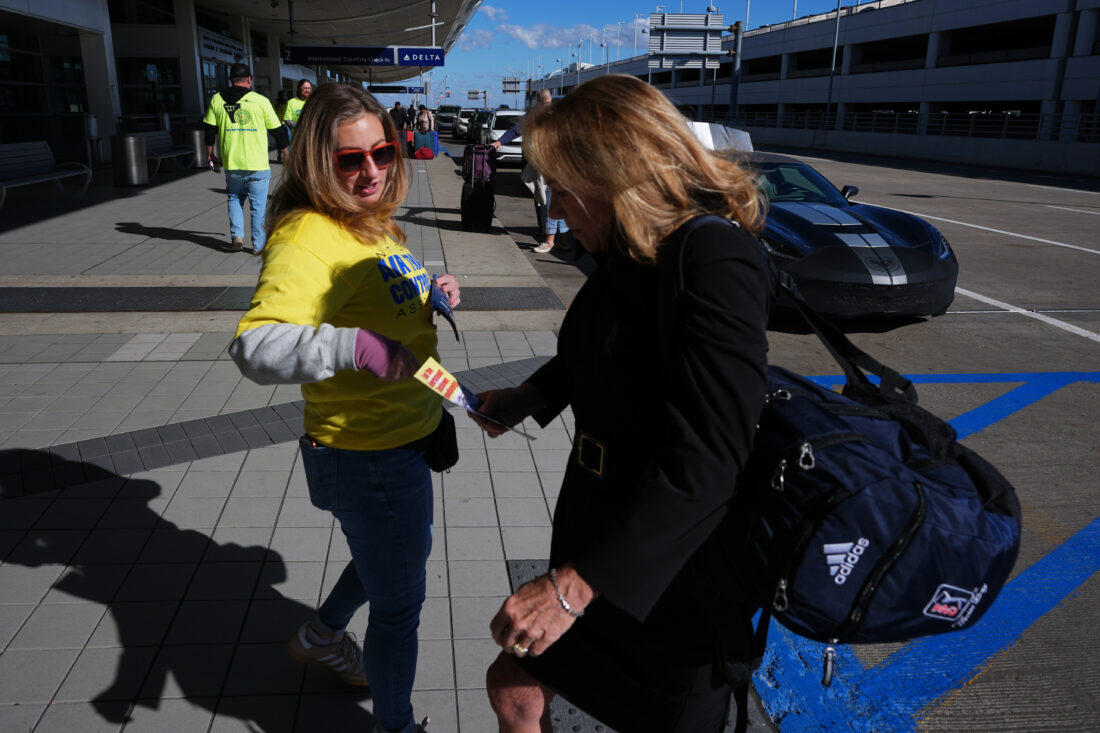
Air Traffic Controller Lisa Blake distributes a leaflet to a traveler explaining how the federal government shutdown is impacting air travel at Detroit Metropolitan Wayne County Airport on Tuesday in Romulus, Mich. (AP Photo/Paul Sancya)
Air traffic controllers missed their paychecks Tuesday because of the ongoing government shutdown, and that has Transportation Secretary Sean Duffy and the head of the controllers’ union concerned that flight delays could multiply as increasingly stressed-out controllers call out sick.
Recent absences have led to a number of isolated delays around the country because the Federal Aviation Administration was already extremely short on controllers prior to the shutdown. The FAA restricts the number of flights landing and taking off at an airport anytime there is a shortage of controllers to ensure safety.
There’s no way to predict when or where delays might happen because even a small number of absences can disrupt operations at times. Sometimes the delays are only 30 minutes, but some airports have reported delays more than two hours long — and some have even had to stop all flights temporarily.
So far, most of the delays have been isolated and temporary. Aviation analytics firm Cirium said that normally about 20% of all flights are delayed more than 15 minutes for a variety of reasons.
The data Cirium tracks shows there has not been a dramatic increase in the total number of delays overall since the shutdown began on Oct. 1. Nearly 80% of the flights at a sample of 14 major airports nationwide have still been on time this month.
Though a two-hour-long staffing-related ground stop at Los Angeles International Airport made national news on Sunday, a major thunderstorm in Dallas that day had a bigger impact on flights when only about 44% of flights were on time. Cirium said 72% of the flights out of LAX were still on time Sunday.
But Duffy and the president of the National Air Traffic Controllers Association Nick Daniels have continued to emphasize the pressure that controllers are feeling. They say the problems are likely to only get worse the longer the shutdown continues.
National News
TSA boss warns of airport shutdowns
Verdict puts pressure on social media firms

Iran rejects US ceasefire plan
News briefs
Truck lacked warning tool NEW YORK (AP) — Federal investigators say a runway warning system didn't sound an ...
Senators chase deal to end Homeland Security standoff