
Pakistan says it will host US-Iran talks
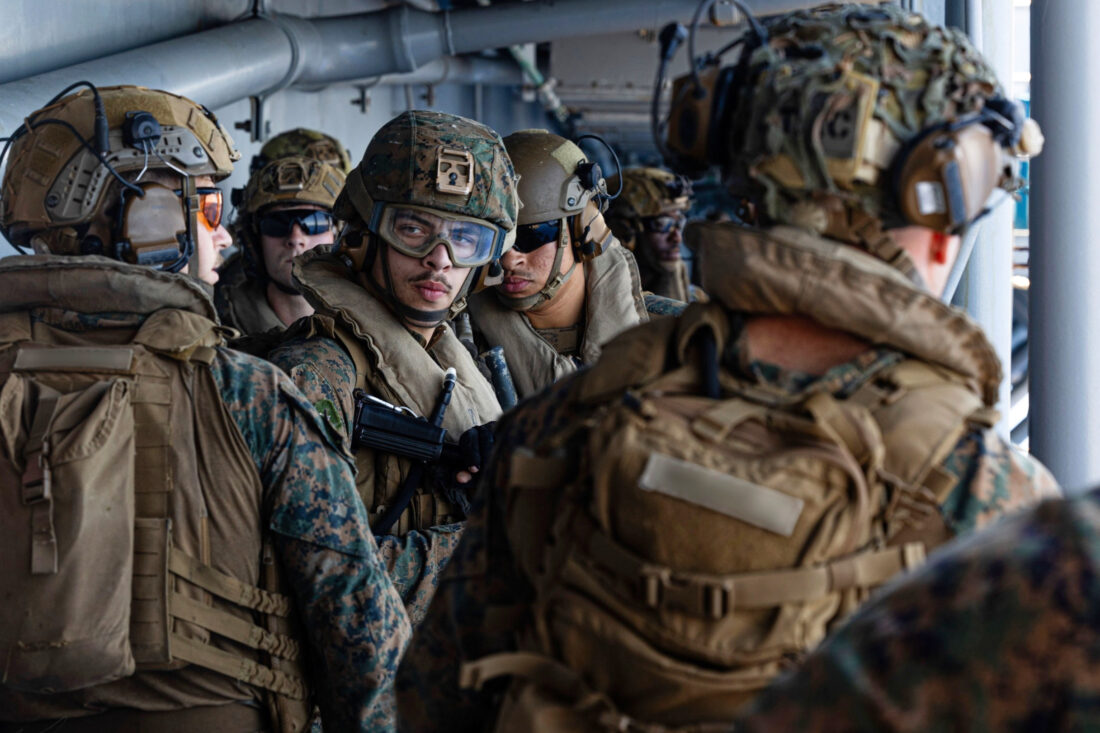
This image from video provided by U.S. Central Command shows U.S. Sailors and Marines aboard USS Tripoli (LHA 7) arriving in the U.S. Central Command area of responsibility on Friday. (U.S. Central Command via AP)
ISLAMABAD (AP) — Pakistan announced Sunday that it will soon host talks between the U.S. and Iran, though there was no immediate word from Washington or Tehran, and it was unclear whether discussions on the monthlong war would be direct or indirect.
“Pakistan is very happy that both Iran and the U.S. have expressed their confidence in Pakistan to facilitate the talks. Pakistan will be honored to host and facilitate meaningful talks between the two sides in the coming days,” Foreign Minister Ishaq Dar said after top diplomats from Turkey, Egypt and Saudi Arabia met in Islamabad.
Pakistan later said the diplomats had departed for their home countries. The talks were originally scheduled to continue Monday.
Pakistan’s foreign ministry did not answer questions, and Iran’s mission to the United Nations declined to comment.
Islamabad has emerged as a mediator, having relatively good ties with Washington and Tehran, after what Pakistani officials call weeks of quiet diplomacy.
Earlier, Iran’s parliament speaker, Mohammad Bagher Qalibaf, dismissed the talks in Pakistan as a cover after some 2,500 U.S. Marines trained in amphibious landings arrived in the Middle East. He said Iranian forces were “waiting for the arrival of American troops on the ground to set them on fire and punish their regional partners forever,” according to state media.
Iran also threatened to attack homes of U.S. and Israeli “commanders and political officials” in the region. A spokesperson for the Iranian military’s joint command, Ebrahim Zolfaghari, cited the “targeting of residential homes of the Iranian people in various cities” and other “malicious actions,” state media reported.
“We don’t know at what moment our homes could be targeted,” said Razzak Saghir al-Mousawi, 71, describing relentless airstrikes as Iranians crossing into Iraq urged the United States to end the war. “I am definitely afraid.”
Meanwhile in Israel, Prime Minister Benjamin Netanyahu said the military will widen its invasion of Lebanon, expanding the “existing security strip” in that country’s south while targeting the Iranian-backed Hezbollah militant group. No details were released.
Over 1 million Lebanese have been displaced in the war. One of them, Mohammad Doghman, called Israel “an expansionist state.”
The war has threatened global supplies of oil, natural gas and fertilizer and disrupted air travel. Iran’s grip on the strategic Strait of Hormuz has shaken markets and prices. Now the Iranian-backed Houthi rebels ‘ entry into the war could threaten shipping on another crucial waterway, the Bab el-Mandeb strait to the Red Sea.
An Associated Press video shot shortly before midnight showed a huge plume of black smoke rising from a large fire in Tehran, following strikes in Iran’s capital. Earlier Sunday night, Israel’s military said that over the past 24 hours its fighter jets had dropped more than 120 munitions in Tehran, targeting sites used for weapons research, development and production. Around the same time, Iran’s state television said power was back in areas of Tehran that had experienced outages after attacks on electricity facilities.
More than 3,000 people have been killed in the war that began with U.S. and Israeli strikes on Iran that triggered Iranian attacks against Israel and U.S. military assets and other sites in neighboring Gulf Arab states.
National News

An age of innovation in the US
News briefs
Court allows abuse verdict WASHINGTON (AP) — The Supreme Court is rejecting a push by President Donald Trump ...
Justices protect Fed, but uphold other Trump firings
Firefighters killed were trying to shield themselves from flames
US and Iran pause strikes, disagree over next steps
News briefs
Three die fighting fires BEAVER, Utah (AP) — Three firefighters have died and two were injured while battling ...