
Fed nominee denies pressure from Trump
Trending
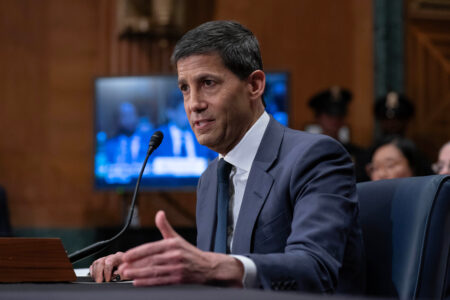
WASHINGTON (AP) -- President Donald Trump’s nominee to chair the Federal Reserve said Tuesday that he never promised the White House that he would cut interest rates, even as the president renewed his calls for the central bank to do so.
“The president never once asked me to commit to any particular interest rate decision, period,” Kevin Warsh, a former top Fed official, said under questioning by the Senate Banking Committee. “Nor would I ever agree to do so if he had. … I will be an independent actor if confirmed as chair of the Federal Reserve.”
Warsh’s comments came just hours after Trump, in an interview on CNBC, was asked if he would be disappointed if Warsh didn’t immediately cut rates and responded, “I would.”
The comments underscore the challenge faced by Warsh, 56, a financier and former member of the Fed’s board of governors whom Trump named in January to replace the current Fed chair, Jerome Powell. Democrats on the committee accused Warsh of flip-flopping on interest rates over the years, supporting higher interest rates under Democratic presidents and advocating rate cuts during Trump’s time in office. Investors are watching the hearing closely to see how Warsh balances Trump’s demands with worsening inflation, as the war in Iran pushes up the price of gasoline.
Higher inflation typically leads the Fed to raise rates, or at least keep them unchanged, rather than cut them. When the Fed changes its key rate, it can affect mortgages, auto loans, and business borrowing.
Yet Warsh’s account was challenged by Sen. Ruben Gallego, an Arizona Democrat, who said that Wall Street Journal reporting last year found that Trump had urged Warsh to reduce borrowing costs.
“Who’s lying here? Is it you or the president?” Gallego asked.
“I think those reporters need better sources,” Warsh responded.
For all the back and forth, the hearing didn’t appear to advance Warsh’s nomination, which has been delayed by a Justice Department investigation into the Fed and Powell, over brief testimony Powell gave last June before the same panel about a building renovation.
Sen. Thom Tillis, a North Carolina Republican on the committee, reiterated Tuesday he wouldn’t vote for Warsh until the investigation is dropped. With the committee closely divided and all Democrats opposed to his nomination, Tillis’ opposition is enough to bottle it up in committee.
“We have got to get rid of this investigation,” Tillis said, “so I can support your nomination.”
Tillis has previously said that all seven Republicans on the committee have signed a letter stating that Powell did not commit a crime when he testified before the panel last June. Federal prosecutors, led by Assistant U.S. Attorney Jeannine Pirro, are investigating his testimony for potential perjury, though a judge said last month they offered no evidence to support the charge when he threw out subpoenas Pirro had issued.
Prosecutors from her office as recently as last week sought access to the Fed’s building project but were turned away, revealing that the Trump administration has not reversed course despite opposition from members of his own party that are essential to Warsh’s confirmation.
In his opening remarks, Warsh told the Senate Banking Committee that one of his top goals would be to fight inflation, which remains elevated at 3.3% annually.
“Congress tasked the Fed with the mission to ensure price stability, without excuse or equivocation, argument or anguish,” Warsh said. “Inflation is a choice, and the Fed must take responsibility for it.”
Warsh would be in a tough spot if confirmed. Inflation is worsening, making it much harder for the Fed to implement the interest rate cuts Trump so desperately seeks. The conflict could also slow the economy, as well as hiring. And if Warsh ultimately becomes chair, he may very well find his predecessor, Powell, still sitting on the Fed’s governing board, an uncomfortable arrangement that hasn’t occurred since the late 1940s.