DNR: Many 400- and 500-pound bears tagged in UP
-
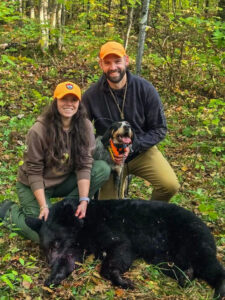
- Cody Norton harvested his third bear in the central Upper Peninsula with the help of fellow Michigan Department of Natural Resources biologist Morgan Lucot and Norton’s hound, known simply as B. (Cody Norton photo)
-
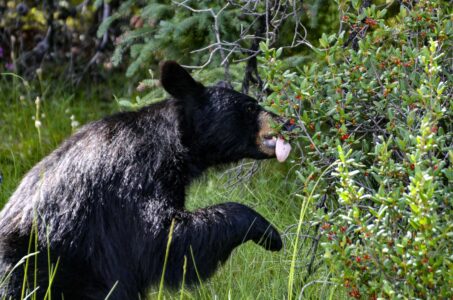
- Black bears may forage up to 20 hours a day during a Michigan summer, getting the nutrients they need to overwinter. (Michigan Department of Natural Resources photo)
-
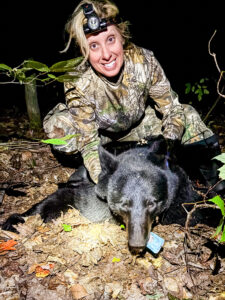
- Paulla Schemm of Flushing harvested her first bear in September 2025 in the Newberry area. (Paulla Schemm photo)
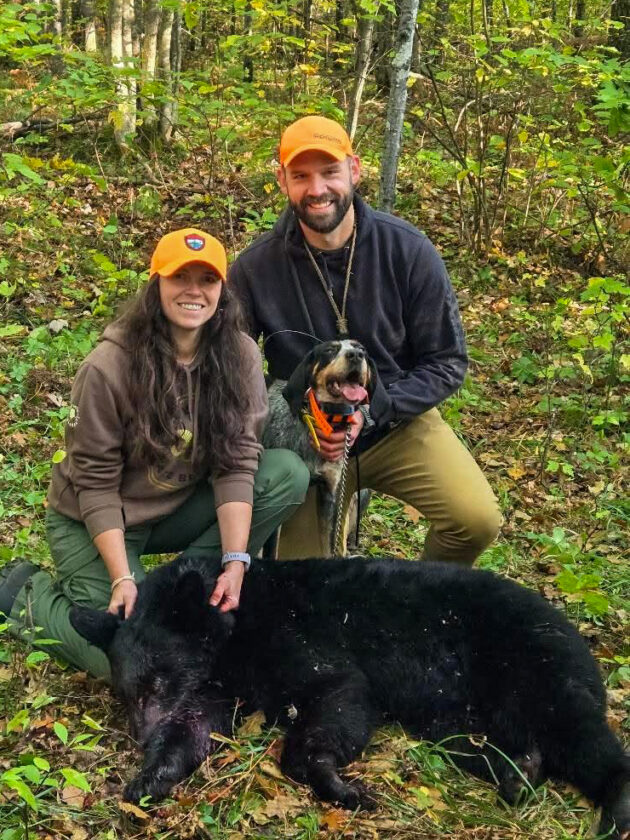
Cody Norton harvested his third bear in the central Upper Peninsula with the help of fellow Michigan Department of Natural Resources biologist Morgan Lucot and Norton’s hound, known simply as B. (Cody Norton photo)
Bear hunters recorded another robust season in Michigan in 2025, harvesting nearly 2,000 animals and bringing home a remarkable number of large bears in the Upper Peninsula.
At the Escanaba-area check stations alone, the Michigan Department of Natural Resources registered an estimated 20 bears above 400 pounds and eight bears above 500 pounds, according to Cody Norton, the DNR’s bear, furbearer and small game specialist.
“We saw a phenomenal number of unusually large bears harvested across the Upper Peninsula,” said Norton, a Marquette-based wildlife biologist and avid bear hunter. “This is something we’ve been working toward with our long-term bear management plan — growing the total number of bears and giving hunters more opportunities to harvest large, mature animals.”
The strong harvest comes as Michigan celebrates 100 years of regulated bear hunting and demand for bear licenses is at an all-time high. The DNR uses hunting as a primary tool to manage a sustainable black bear population, which sits at about 12,500 statewide.
Hunters in Michigan harvested 1,952 black bears in 2025, according to preliminary numbers from the DNR. That’s slightly above the state’s five-year average of 1,911 bears harvested per year.
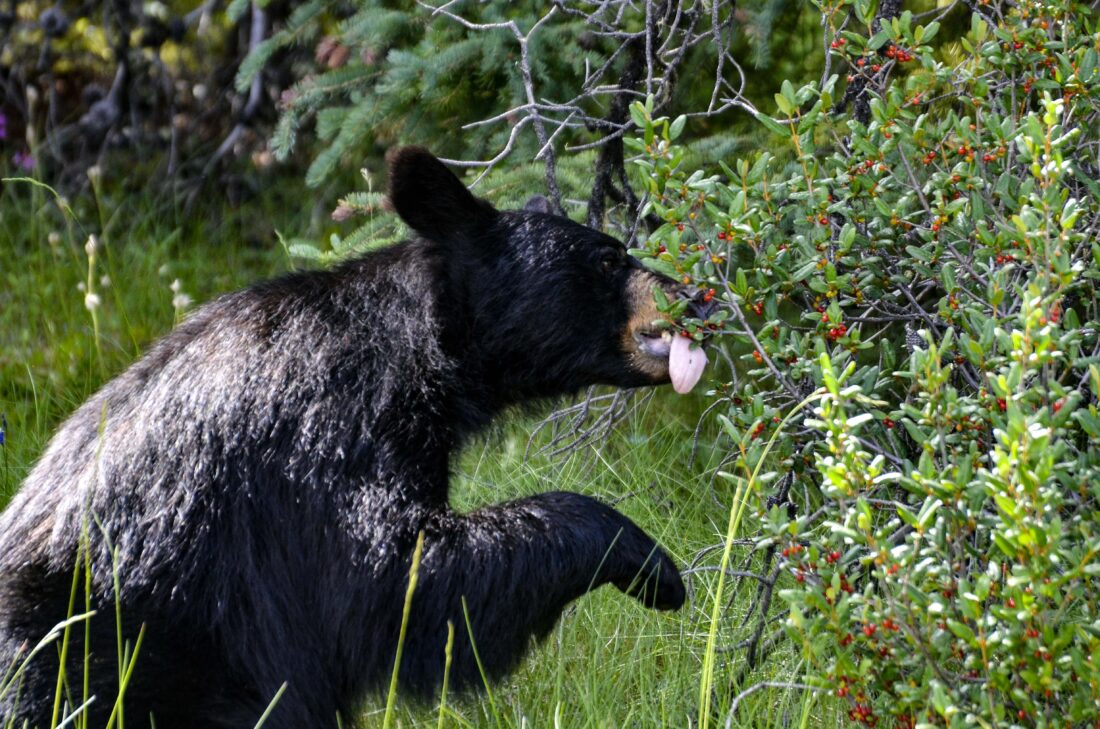
Black bears may forage up to 20 hours a day during a Michigan summer, getting the nutrients they need to overwinter. (Michigan Department of Natural Resources photo)
In the U.P. — home to 83% of Michigan’s bears — hunters harvested 1,522 bears during the September/October hunting season. In the northern Lower Peninsula, hunters harvested 430 bears.
While bears are not weighed at all state-managed check stations, wildlife experts estimate their weight. Norton said the significant number of large bears harvested in the U.P. indicates the presence of more mature animals and a good year for food sources, such as vegetation and berries.
In the eastern U.P., Paulla Schemm harvested her first bear Sept. 16, which weighed more than 200 pounds.
Schemm, a veteran hunter from Flushing, said she and her husband benefited from the DNR’s bear hunting clinic in Cadillac. She wants to inspire more people to hunt.
“I’d like to keep the spirit alive – particularly in getting more women and children interested in hunting,” said Schemm, who harvested the bear in the Newberry area. “Hunting is a part of conservation. It’s important.”
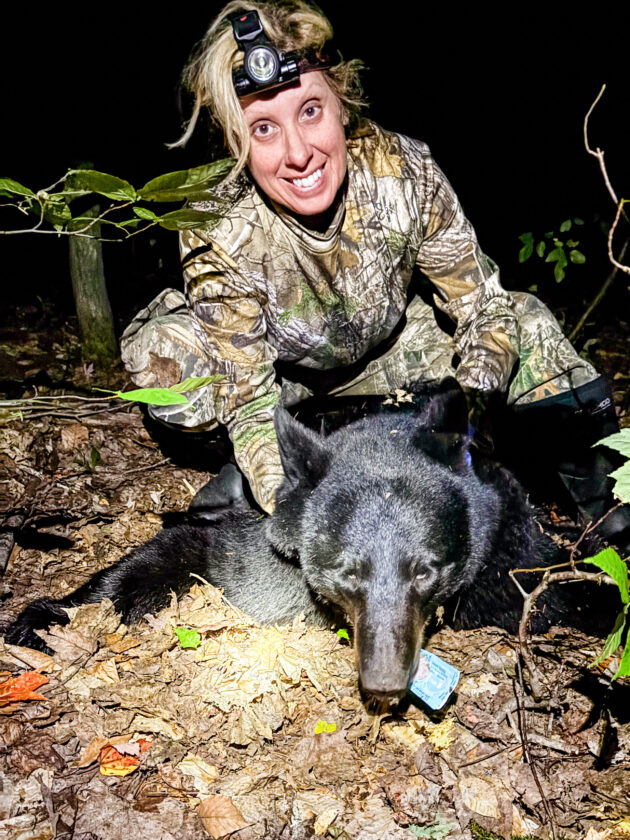
Paulla Schemm of Flushing harvested her first bear in September 2025 in the Newberry area. (Paulla Schemm photo)
‘Greatest’ experience
Milton Miller, 97, shot a bear this fall near his hunting cabin in the northeastern Lower Peninsula. The nearly 300-pound boar was Miller’s first Michigan-harvested bear. He previously killed one in Alberta, Canada.
Miller had applied for a bear hunting license for nine consecutive years in the Red Oak bear management unit, which encompasses his property in Alcona County. He finally drew a tag last year.
“Shooting this bear was probably, of all my hunting experiences, the greatest one,” said Miller, a retired bridge inspector from Macomb Township. His story was chronicled in Outdoor Life.
In mid-September, Miller had been hunting with his grandson for several days with no luck. On the afternoon of Sept. 15, his grandson had to work, so Miller headed into the woods alone, driving an ATV a half-mile from his cabin to his blind. He parked and walked the last few hundred yards, settling into the blind about 3 p.m.
Nothing happened all afternoon. But just as Miller was gathering his gear, a bear came out of the woods and headed to the bait in front of his blind. Miller lifted his rifle to shoot, just as a bigger bear appeared.
The first bear ambled by his blind to hit the bait as he waited for the second bear to walk closer. When the bigger bear was about 35 feet away, Miller put the crosshairs of his rifle behind the animal’s shoulder and pulled the trigger.
The bear ran back into the woods. There was no visible blood, and Miller thought he may have missed. He texted a friend, Anne Christman, who told him to stay in the blind until she got there. It took Christman an hour to get to Miller, and they began tracking the bear together.
They saw blood in the woods, and after about 40 yards, they found the bear. Together, they field-dressed the animal, then loaded it into Miller’s ATV and he drove back to his cabin. Miller covered the bear in ice and finally got to bed around 2 a.m.
When contacted in early December about his harvest, Miller, a widower, was thawing a steak from the boar for dinner. The Army veteran has outlived two hunting partners but said his passion for hunting remains.
“I still love to hunt,” he said.
Record applications
Michigan’s popular bear hunt is based on a preference point system that rewards persistence. Hunters earn one point for each year they apply and are unsuccessful at drawing a license. Those with the most accumulated points are selected annually to fill quotas in each of the 10 bear management units.
Licenses generally take longer to get in the Lower Peninsula due to the smaller bear population and high demand.
The DNR sets a desired bear harvest to establish license quotas and manage the bear population. License quotas are calculated using the average hunter success rate over the previous few years for each management unit and hunt period. Statewide, the hunter success rate is hovering around 40%.
Norton said the desired harvest has hit the mark pretty closely over the past few years, falling within about 15% of the goal. An increasing bear population in the U.P. has resulted in harvest above goal, while a more stabilized bear population in the Lower Peninsula has seen harvest very consistent with goals. The next adjustments will be made for the cycle of bear hunting regulations covering 2027-2028.
Hunters can apply for either a bear hunting license or a preference point toward a future hunt. In 2025, nearly 73,000 hunters applied for either a license or a preference point – the most ever recorded since Michigan started regulating bear hunting in 1925.
Using the whole bear
In Michigan, bear hunters can use bait or dogs. Norton has harvested two bears using bait in the past. This year, for the first time, he harvested a bear using his dog, a bluetick coonhound named, simply, B.
Norton and a group of fellow hunters tracked the 150-pound boar through the woods near Channing in Dickinson County in the central Upper Peninsula. B and several other hounds were able to tree the bear, and Norton made a successful rifle shot for his third harvest.
“I skinned and butchered the bear myself the day I harvested it,” Norton said. “We ate the heart and tenderloins that night. For cuts of meat, I cut backstraps, steaks and roasts and then froze the rest to grind it up.”
Several years ago, Michigan passed a law that edible bear meat must be used, which most hunters already do, Norton noted. He said the change makes it clear to the public that harvested bears are being consumed and that the resource is not being wasted.
“I like bear meat more than venison,” Norton said. “The meat is richer and fattier, and the fat is not waxy like deer tallow. It also tastes sweeter to me. The only caveat is that it needs to be cooked well-done – to at least 160 degrees – in order to kill any potential trichinella parasites.”
Norton cubed the bear fat and will render it into grease. He uses the grease as cooking oil for meat and vegetables, bakes with it and even uses it to condition his boots.
“This winter, I’ll also be fleshing, stretching and drying the bear hide before sending it to a tannery,” Norton said. “It will probably end up living on the back of the couch as a way to remember the hunt.”
For more information on bear hunting in Michigan, go to Michigan.gov/Bear.
Local News
DNR: Many 400- and 500-pound bears tagged in UP
Protest, vigil planned in IM
IRON MOUNTAIN — The Dickinson County Democratic Party plans a protest at 2 p.m. Sunday, beginning behind Iron ...

Court rules state’s mental health procurement plan violates law
Wintry mix of rain, ice and snow in forecast for region
About an inch of snow was expected to fall in the Iron Mountain area today, possibly coming on the heels of ...

Rapid River Relic Riders to host 20th-annual event