
Wisconsin voters to elect state Supreme Court justice
-
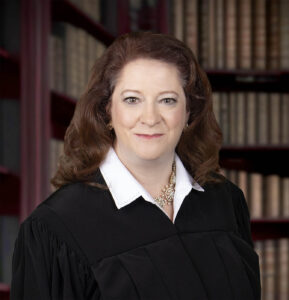
- Maria Lazar
-

- Chris Taylor
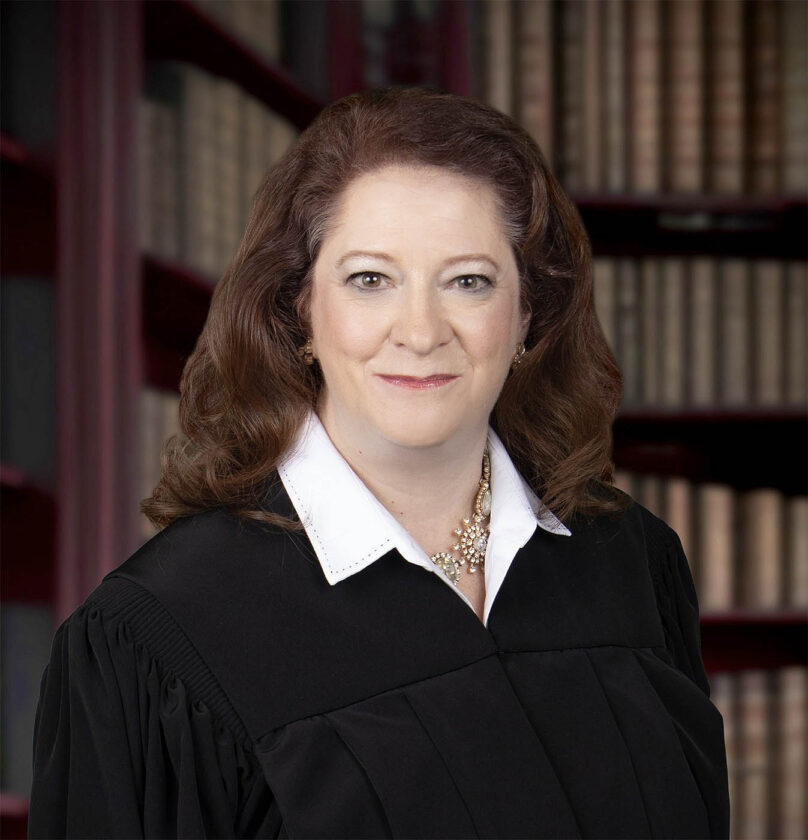
Maria Lazar
The spring election Tuesday will decide a seat on the Wisconsin Supreme Court.
Maria Lazar and Chris Taylor are running for a 10-year term. Both are currently judges on the Wisconsin Court of Appeals.
The election is nonpartisan, but Lazar is generally seen as a conservative and Taylor as a liberal.
Lazar is a former Waukesha County Circuit Court judge. She was a Wisconsin assistant attorney general from 2010 to 2015 and before that was an attorney in private practice from 1989 to 2010.
Taylor was a Dane County Circuit Court judge from 2020 to 2023, and a representative in the Wisconsin Legislature from 2011 to 2020.
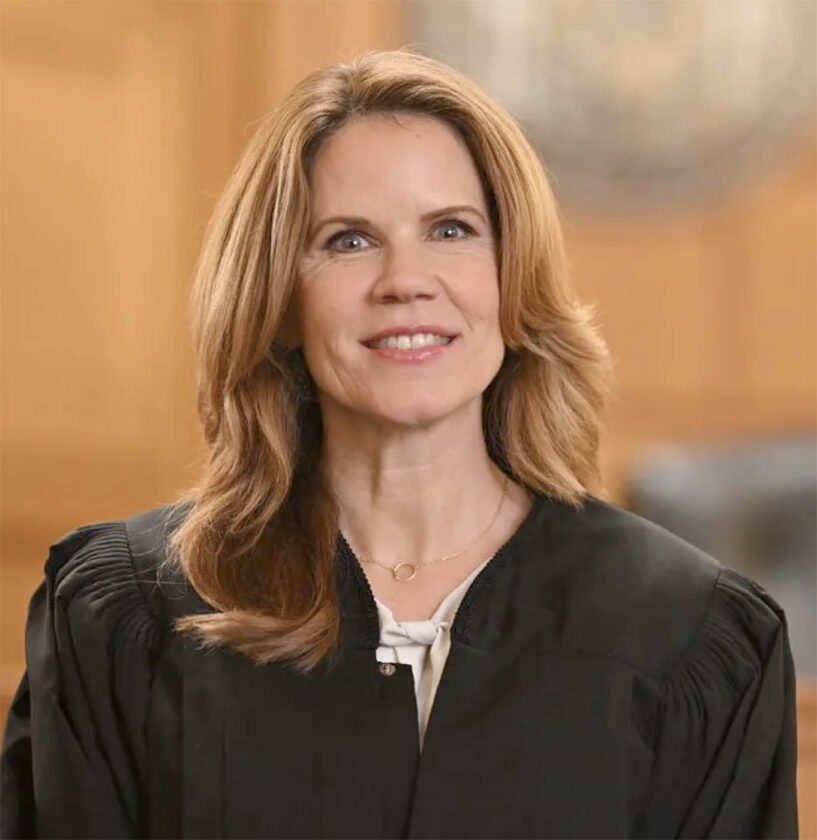
Chris Taylor
Liberal justices currently have a 4-3 majority on the court. If Lazar wins, that status won’t change. If Taylor wins, the liberal majority will be 5-2.
This information was provided by guides.vote, which produces nonpartisan voter guides researched by veteran journalists:
Abortion
Lazar calls the U.S. Supreme Court decision throwing out Roe v. Wade “very wise,” and a “good move forward,” because the 1973 Roe ruling “didn’t work.” She said that Wisconsinites might back a state law banning abortion once a fetal heartbeat is detected, which is about six weeks from conception.
Taylor writes that she values “women…having the right to make those personal, private health care decisions.” In the Wisconsin Assembly, she introduced a bill specifying “that every woman has the fundamental right to choose to obtain a safe and legal abortion,” except “after viability unless her life or health is endangered.”
Citizenship
Lazar responded to President Trump’s Executive Order, which holds that any children born to mothers who are in the United States illegally are not citizens. The order says that the 14th Amendment does not apply to those children. Lazar said that birthright citizenship is not necessarily absolute, and that Congress and the President can interpret the scope of citizenship rights.
Taylor says the 14th Amendment of the U.S. Constitution protects the citizenship rights of people born in the United States
Environment
As an appellate judge, Lazar ruled that PFAS, also known as “forever chemicals,” can’t be regulated under Wisconsin’s decades-old spills law, that Wisconsin DNR’s regulation of PFAS amounted to “unlawfully adopted rules.”
In the Wisconsin Assembly, Taylor introduced a bill that would require the DNR to establish and enforce regulatory standards for PFAS, also known as “forever chemicals.” She introduced a bill that would allow cities and towns to regulate pesticides.
Guns
As a circuit court judge, Lazar ruled that the Wisconsin city of Delafield could not deny an operating permit for a gun range.
Taylor introduced a bill to prohibit anyone found guilty of misdemeanor domestic violence from possessing a firearm (expanding from the current felony-level prohibition). In a 2018 interview, she supported background checks and a red flag law.
Labor
As assistant attorney general, Lazar defended the manner of enactment of Act 10, which effectively ended collective bargaining for most Wisconsin public employees. “I am proud of how hard everyone at DOJ worked on that case and of the ultimate result,” she said in 2015.
In the Assembly, Taylor opposed Republican Gov. Scott Walker’s Act 10, ending most collective bargaining rights for most public employees. During her campaign for the Supreme Court she said, “I’m honored to have the support of the Wisconsin AFL-CIO in this race. Every working family deserves to have their rights and freedoms protected.”
Redistricting
Lazar says that judges who redraw legislative maps are not following the law. “That’s not what judges are meant to do.”
Taylor sponsored a bill in 2017 that would have created new procedures for preparing redistricting plans. It would establish a Redistricting Advisory Commission and prohibit “redistricting plans from abridging the right to vote on account of race or color or because a person is a member of a language minority group.”
Voting rules
As an appellate judge, Lazar ruled that disabled people are not allowed to receive absentee ballots by email, only overseas and military voters. She ruled that the confidential records of people placed under guardianship for incompetency should be made public, in order to see if ineligible voters have voted in Wisconsin elections.
As an appellate judge, Taylor ruled that missing information in a witness’s address does not invalidate an absentee ballot, so long as the included information is sufficient for a witness to still be contacted by a municipal clerk. In the Assembly, she introduced a bill to allow 17-year-olds to vote in a primary election if they turn 18 by the date of the following general election.
Priorities
Lazar says it is time to “draw a line in the sand and stop the destruction of our courts, especially our state Supreme Court.” She says, “I want to bring back dignity, respect, integrity, impartiality, and independence to the court,” suggesting that the public may feel “that the state Supreme Court is bought and paid for.”
Taylor says she would make sure that people’s “Constitutional rights are protected.” It is important “for our courts to be places where people feel heard, respected, and treated equally under the law.”
———
Wisconsin Examiner is a part of States Newsroom, the nation’s largest state-focused nonprofit news organization. For more, go to https://wisconsinexaminer.com/.
Local News
UPCC accepting applicants for building trades summer camp
MARQUETTE — The Upper Peninsula Construction Council, in partnership with UP Michigan Works! and local education ...

Sheriff Miller completes NSI’s Leadership Development Course
NWS warns travel could be difficult into weekend
Mixed precipitation is expected to continue into the weekend, potentially leading to hazardous road conditions and ...

Trump says US will ‘finish the job’ soon in Iran
Dickinson courthouse closing for Good Friday
IRON MOUNTAIN — Dickinson County Courthouse will be closed Friday in observance of Good Friday. Regular ...
Niagara to apply for CDBG for sewer, water main work
NIAGARA, Wis. — The City of Niagara will seek a Community Development Block Grant to help pay for a sewer and ...