
Evers, GOP leaders reach deal on tax relief, school funding
Deal includes $300 payments to taxpayers
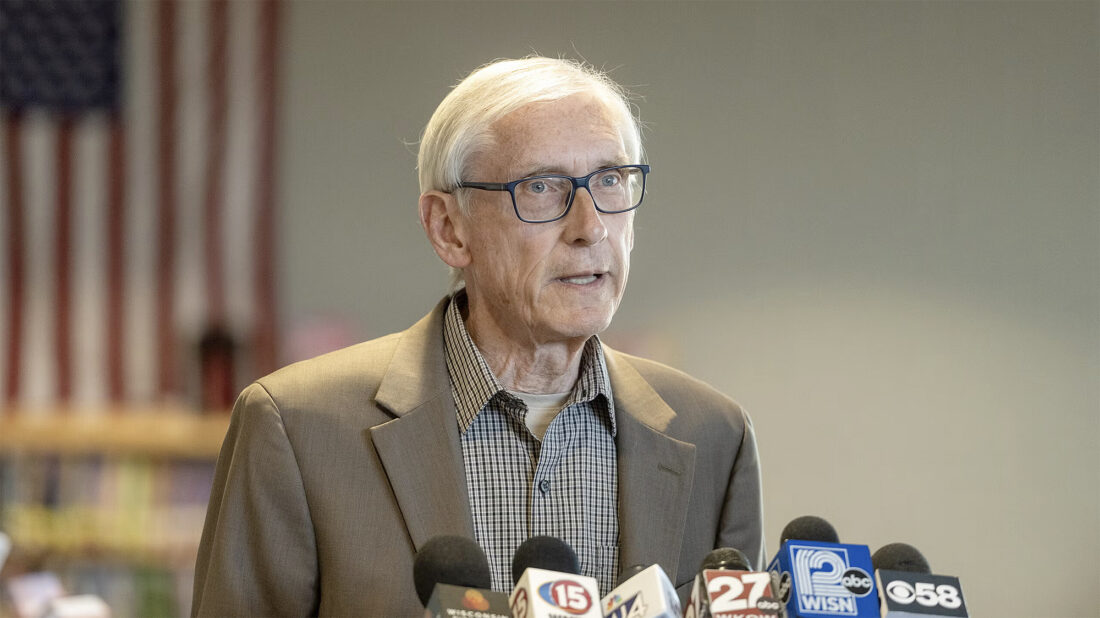
Wisconsin Gov. Tony Evers takes questions from reporters Monday during a school visit in Barneveld, Wis. (Angela Major/Wisconsin Public Radio)
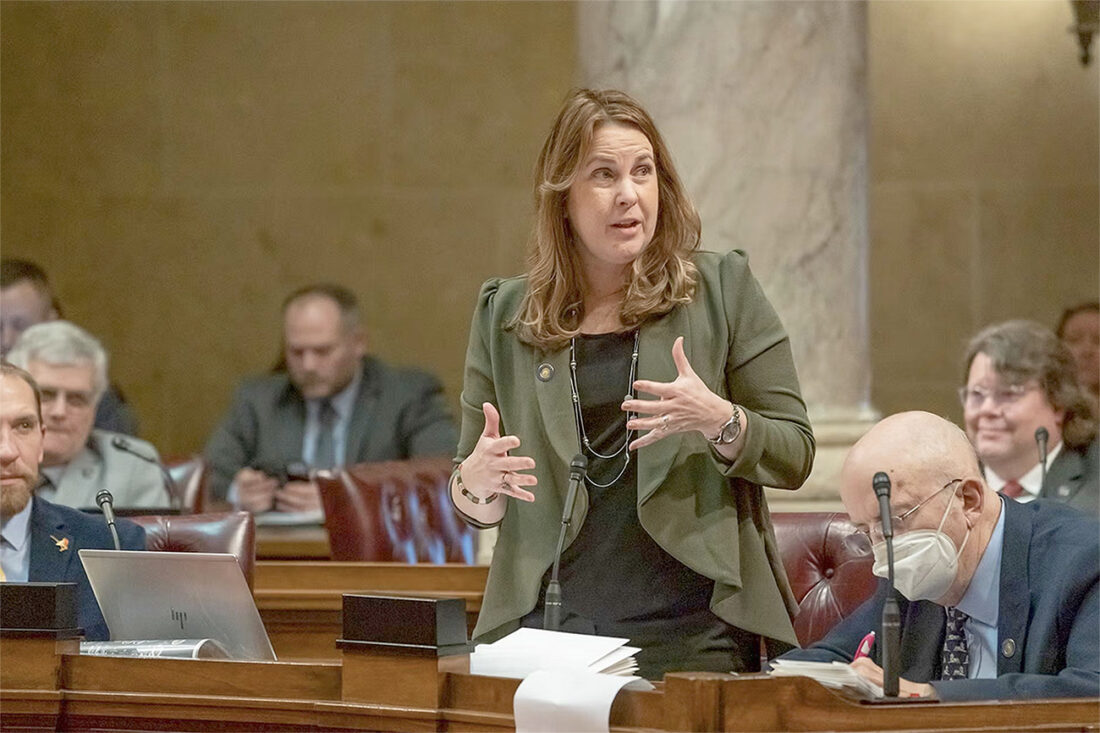
State Sen. Dianne Hesselbein, D-Middleton, speaking on the Wisconsin Senate floor. Hesselbein was named Senate minority leader in December 2023 and was reelected to that position in November 2024. (Photo courtesy of state Sen. Dianne Hesselbein’s office)
Wisconsin Gov. Tony Evers takes questions from reporters Monday during a school visit in Barneveld, Wis. (Angela Major/Wisconsin Public Radio)
State Sen. Dianne Hesselbein, D-Middleton, speaking on the Wisconsin Senate floor. Hesselbein was named Senate minority leader in December 2023 and was reelected to that position in November 2024. (Photo courtesy of state Sen. Dianne Hesselbein’s office)
Trending
After months of negotiation, Democratic Gov. Tony Evers and Republican leaders in the Legislature said Monday they've reached a deal that would spend down the state's budget surplus on tax relief and education.
But whether the deal would actually pass appeared uncertain after several lawmakers -- including the state Senate's top Democrat -- took issue with the agreement.
The roughly $1.8 billion deal, which is expected to go before lawmakers for a vote this week, includes $850 million in direct payments to taxpayers, and the elimination of state income tax for overtime pay and tipped earnings. It would also boost spending on K-12 education by $600 million.
That school funding figure is split between general school aid and increasing the state's special education reimbursement rate, which has been a point of contention from Evers' team since the passage last summer of the two-year state budget. Since that time, higher-than-expected costs of special education lowered the total amount received by school districts from the state.
The deal would spend down much of the state's projected surplus -- which the nonpartisan Legislative Fiscal Bureau had previously estimated at roughly $2.5 billion -- but leave the state's rainy day fund untouched.
Speaking to reporters on Monday, Evers touted the deal as a win for schools, with compromises for Republican tax priorities.
"Money for schools is obviously the most important thing for me," Evers said. "We're in a position to actually compromise and have Republicans and Democrats -- at least at the leadership level -- getting something done."
In separate statements, Assembly Speaker Robin Vos, R-Rochester, and Senate Majority Leader Devin LeMahieu, R-Oostburg, said the deal would put the state's surplus toward tax relief.
"We're sending (the surplus) back to help families with the pressure of increasing costs, reward hard work, and to continue investing in schools to help stabilize rising property taxes," Vos said.
But Senate Democratic Minority Leader Dianne Hesselbein, D-Middleton, issued a statement calling the deal "expensive," at a time of "significant economic uncertainty and upheaval."
"From my perspective, there is no deal," Hesselbein said. "Three men who will not be in elected office next year have come up with this proposal, which Senate Democrats will be reviewing."
Hesselbein, who could be the Senate's majority leader next year if Democrats flip the chamber in November, was referencing plans by Evers, Vos and LeMahieu to leave office after their current terms.
Hesselbein wasn't the only lawmaker to criticize the agreement. Two Democratic candidates for governor, Sen. Kelda Roys, D-Madison, and Rep. Francesca Hong, D-Madison, said they would vote against it. So did state Sen. Steve Nass, R-Whitewater, who has a long history of bucking GOP leadership.
Despite the early -- and outspoken -- criticism, Evers told reporters he thought the votes would be there for the bill to pass.
"I think it would be hard for anyone to say, 'I'm not in favor of this, therefore I'm going to be against it, and as a result, my local school district gets screwed,'" Evers said.
Evers' office said the direct payment checks, which would total $600 per married couple or $300 per individual, would be mailed out by November. Evers spokesperson Britt Cudaback called that provision a central priority for Senate Republicans during negotiations. The governor's office says 3 million people are expected to receive those checks, for a total cost to the state of about $850 million.
"This deal will provide immediate relief with $600 in surplus refund payments and provide permanent property and income tax relief for Wisconsin families," LeMahieu said in his statement.
While the state Legislature has adjourned for the year, both the Senate and Assembly would need to pass this deal for it to become law. That means that a special session of the Legislature will be called. According to the governor's office, that path will be expedited, with the Legislature's budget committee expected to move it forward today, and the full Legislature set to debate it as early as Wednesday.