Native plants attract pollinators
Landowners can provide habitat for butterflies, bees, birds and other wildlife
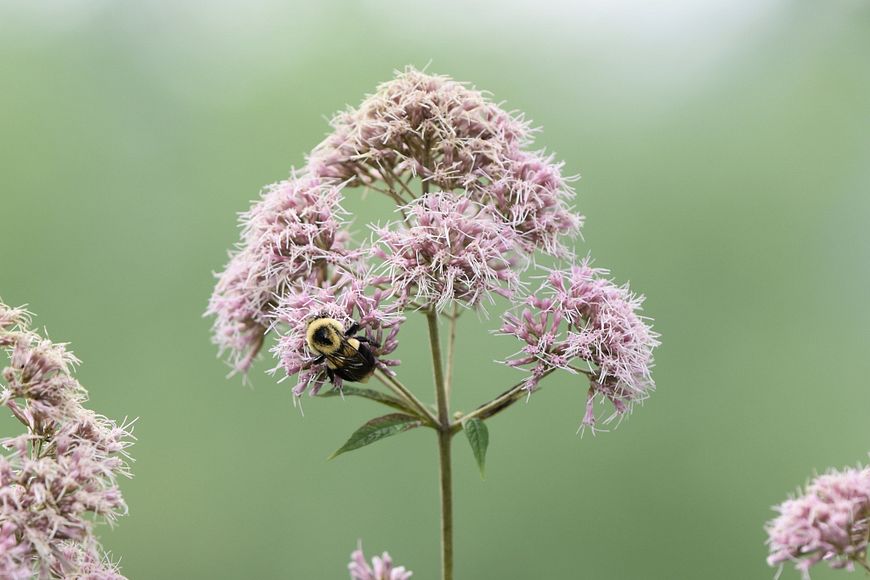
A bumble bee sits on a light purple bloom of joe-pye weed, a native Wisconsin plant that helps attract pollinators. (Wisconsin Department of Natural Resources/Jay Watson photo)
MADISON, Wis. — Native plant sales are blooming across Wisconsin through June, the Wisconsin Department of Natural Resources said.
By planting native plants, you can support the entire ecosystem by providing food for insects, birds, small mammals and other wildlife.
Many native plant sales, offered by local nonprofits and governments are fundraisers that help provide habitat for wildlife. Additionally, the growth of native plants can help revive habitat loss from years of intense use.
“Introducing native plants to your yard is a wonderful way to provide habitat for butterflies, bees, birds and other wildlife,” said Amy Staffen, DNR conservation biologist for the department’s Natural Heritage Conservation Program. “These sales by local organizations and our Wisconsin native plant nurseries offer a more accessible way to exercise your green thumb, whether you’re a beginner or more experienced gardener.”
The DNR has compiled a list of 2022 native plant sales on the department’s endangered resources webpage so you can order your native plants in time for late spring and early summer planting. Check the webpage periodically for new information. If you are a producer, contact Amy Staffen to get your native plant sale listed on the webpage.
Find out more at https://dnr.wisconsin.gov/topic/endangeredresources/nativeplants.html.
Scientists are documenting global declines in insect populations, which can be attributed in part to the loss of habitat and food sources. While native insects evolved to detoxify and digest native plants, they lack the enzymes necessary to eat non-native plants, including ornamental trees and other plants commonly used in landscaping.
By planting native plants, you’re boosting the web of life: Native plants feed insects, which in turn feed birds, bats and other wildlife.
For instance, in East Coast suburban neighborhoods where less than 70% of native vegetation remains, research shows that birds are not finding the insects they need to survive and successfully reproduce, said Craig Thompson, a DNR migratory bird expert. He leads the department’s Natural Heritage Conservation’s Program Integration Section.
The eastern migratory population of monarchs that breed and migrate through Wisconsin and other Midwestern states has dropped 80% over the last 20 years, said Brenna Jones, a DNR conservation biologist who coordinates the Wisconsin Monarch Collaborative. Winter counts in Mexico showed a 26% decline in 2020-21 from the previous year.
Partners in the collaborative are committed to engaging urban residents, farmers, businesses, rights-of-way managers and others to voluntarily add about 120 million new milkweed plants within a diverse mix of native wildflowers to Wisconsin landscapes by 2038.
“The benefits of native plants don’t end with habitat,” Staffen said. “Adding native plants can help landowners achieve other goals. Native plants used in a rain garden can help minimize flooding and filter out pollutants. The variety of colors, shapes and sizes adds beauty to any property.”
More information on native plant sales, native plant nurseries, rain gardens, pollinator gardens, how-to guidance documents, plant lists and more is available on the DNR’s endangered resources native plants webpage.
Outdoors
Outdoors report: NRC acts on deer season regulations
Warblers on the move
Outdoors report: New slot limit in effect for walleye at two UP lakes
UP, NE Wisconsin have birds wildly far from home
Wisconsin DNR says fishing is open on reservation lakes
MADISON, Wis. – The Wisconsin Department of Natural Resources on Friday indicated the walleye and musky season ...