
UP, NE Wisconsin have birds wildly far from home
Northwoods notebook
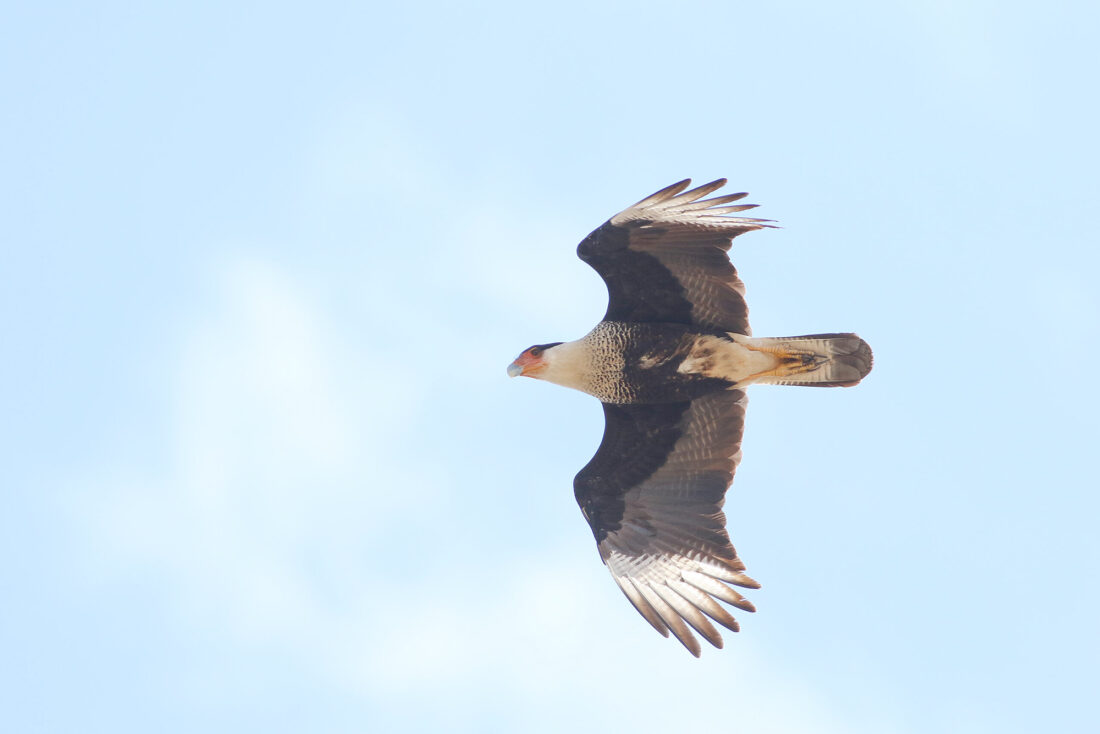
Sean McLaughlin, the 2026 raptor counter at Michigan Audubon's Whitefish Point Bird Observatory in Chippewa County, on Sunday photographed this crested caracara, a bird normally seen no farther north than Texas and Florida. (Sean McLaughlin photo)
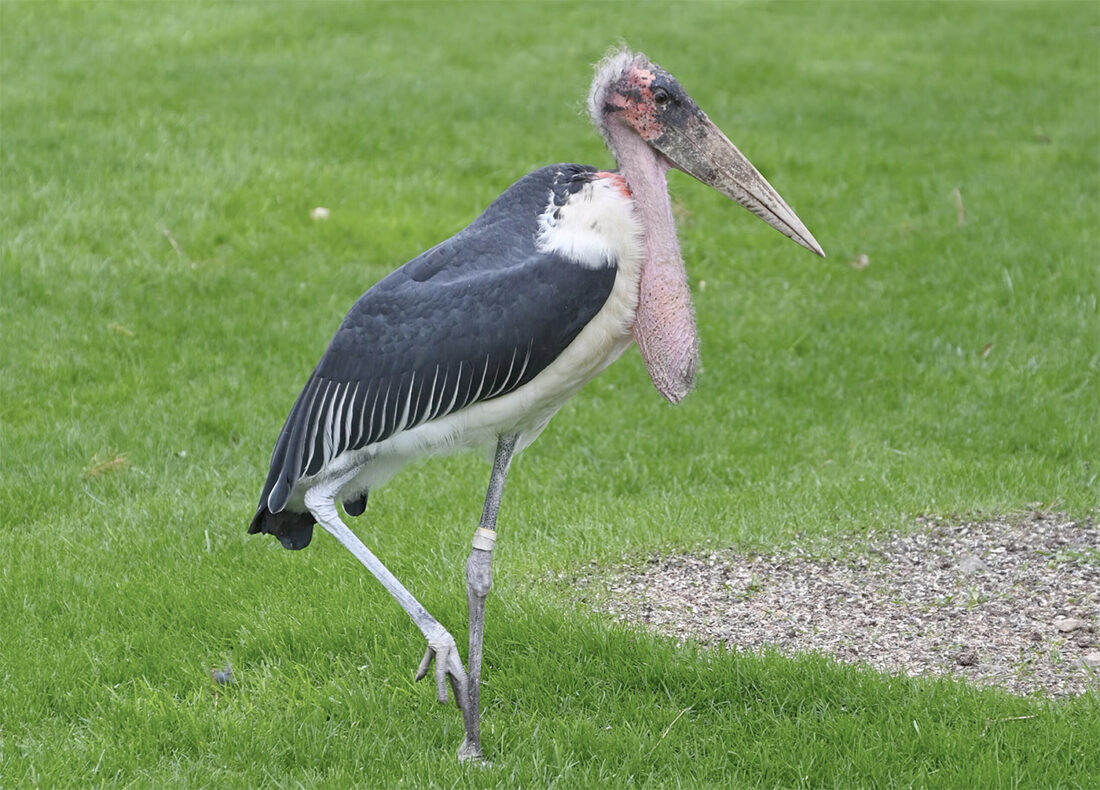
A marabou stork, believed to have escaped from captivity, was spotted in Sheboygan on Thursday. It has appeared this past week in several parts of northeastern Wisconsin. (Photo courtesy of Mark Stevens, via Wisconsin Public Radio)
Sean McLaughlin, the 2026 raptor counter at Michigan Audubon's Whitefish Point Bird Observatory in Chippewa County, on Sunday photographed this crested caracara, a bird normally seen no farther north than Texas and Florida. (Sean McLaughlin photo)
A marabou stork, believed to have escaped from captivity, was spotted in Sheboygan on Thursday. It has appeared this past week in several parts of northeastern Wisconsin. (Photo courtesy of Mark Stevens, via Wisconsin Public Radio)
Trending
While the cold weather and northwest wind flow appeared to put a damper on major spring migration movement this past week, the region already has had some surprises show up.
Whitefish Point -- known as a birding hotspot each spring and fall because it extends into Lake Superior, creating a natural migration corridor -- had an unexpected thrill Sunday when a crested caracara turned up in view of the raptor counter at Audubon Michigan's Whitefish Point Bird Observatory near Paradise.
Sean McLaughlin wrote on observatory's website blog, "As the day was winding down, I heard visiting hawkwatcher Bill softly say, 'What's this bird?' I swung around and at the top of my lungs bellowed: 'CARACARA!'"
The bellow was justified -- this member of the falcon family that behaves more like a vulture normally cannot be seen farther north than Texas or Florida, where it prefers semi-arid and open country. It is non-migratory.
The bird made several "epic passes" over the observation deck Sunday and returned the next day so most Whitefish Point locals could share in the rarity, McLaughlin wrote.
"There is hardly a better feeling than seeing a ridiculous, out-of-place bird confidently migrate by! The crested caracara represents the first Whitefish Point record!," he wrote.
While a first for Whitefish Point, it is not a first for the Upper Peninsula. The species was recorded in the Munising area in July 2016, by Pictured Rocks National Landshore park biologist Cindy Heyd near the mouth of the Anna River.
Until earlier this year, Michigan had only three confirmed sightings of the crested caracara, all in the Upper Peninsula from summer 2016 into winter 2017. It was thought to be the same bird.
Then in early February, Carolina Sabo reported an "unusual hawk" feeding on a deer carcass in Eaton County in south-central Michigan, according to accounts posted online. Several people were able to get photographs of the bird within days of the initial sighting.
There was some online speculation the Whitefish Point crested caracara might be the bird from downstate.
Others reported sightings this past week near Engadine and Trenary.
It will be interesting to see if this caracara sticks around as long as the one did in 2016-17.
The other bird causing a buzz this week is in Wisconsin. While the caracara is wildly out of its normal range, at least it's native to the same country.
Not so with this wanderer: a marabou stork.
North America has only two stork species: the wood stork, which can be reliably found in the U.S. only along the coastal areas of the southeast and a small area in California; and the jabiru, which doesn't come north of Mexico and can range into Argentina in South America.
The marabou stork, however, is normally found in sub-Saharan Africa. It is the largest of the stork family, weighing nearly 20 pounds and with a 10.5-foot wingspan.
Like the caracara, they are scavengers that aren't long-distance migrants. It's all but certain this stork is an escapee from a zoo or other wildlife facility, though none have come forward to claim it, authorities said.
According to Wisconsin Public Radio, the marabou stork was first spotted in Wisconsin on Tuesday in Fond du Lac and has since been seen in the Green Bay, Appleton and Sheboygan areas. It appears the stork has been traveling north, as it made an appearance near Byron, Illinois, in late April.
Susan Theys, a rehabilitator at Wildlife of Wisconsin, based in Cato, said a volunteer went out to see if the stork was injured or sick. The bird eluded the volunteer, but several more eyewitness reports led the rehabilitators to believe the bird is healthy at this point, Theys told WPR's Bridgit Bowden.
"If it appears to be healthy and able to fly, I guess they should just leave it be," Theys said, adding if it appears to be in distress or flying low, her organization should be contacted for assistance.
Other media reports show photos of the stork on trash carts by a home's porch, perched on rooftops and walking across city streets. Its size and appearance -- almost-naked head with mottled red and black skin, massive sword beak and dangling wattles -- have caused some alarm, though no negative encounters have been reported.
A representative from the Wisconsin Department of Natural Resources said in an email to WPR that it is not a wild bird, and the agency does not deal with lost pets or zoo animals.
Further sightings can be reported to Wildlife for Wisconsin, 920-323-5609.
Former wildlife rescuer Jessica Saunders, whose Facebook post about the stork went viral, told WLUK Fox 11 News of Green Bay that it's important to catch the stork as soon as possible to avoid it potentially getting hurt or hurting others.
"It is probably living its best life out there, but it could go downhill quickly for it," Saunders said.
Betsy Bloom can be reached at 906-774-2772, ext. 85240, or bbloom@ironmountaindailynews.com.