Going where care is needed
Local nurse works in tent hospitals at crisis sites
-
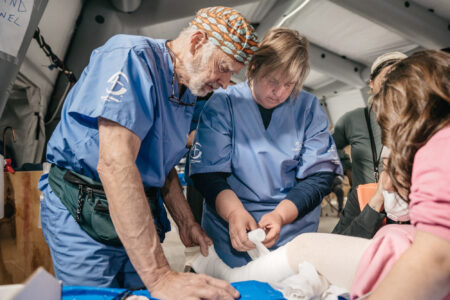
- Nurse Rhonda Lindstrom of Aurora, Wis., has spent the past 10 years traveling throughout the world caring for patients in disaster zones with Samaritan’s Purse. Here, Lindstrom assists with setting a cast for a young patient’s leg after an earthquake in Turkey. (Contributed photo)
-
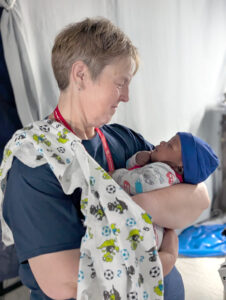
- Nurse Rhonda Lindstrom cares for a young patient at an emergency field hospital set up in Jamaica after the island was hit by a hurricane. (Contributed story)
-
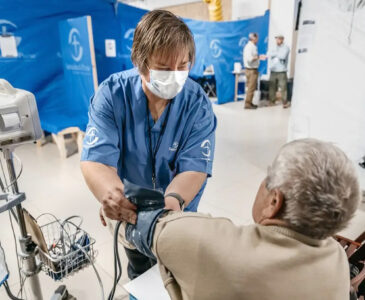
- Nurse Rhonda Lindstrom of Aurora, Wis., has spent the past 10 years traveling across the world caring for patients in disaster zones with Samaritan’s Purse. Here, Lindstrom takes care of an elderly patient at a hospital in Ukraine. (Contributed photo)
-
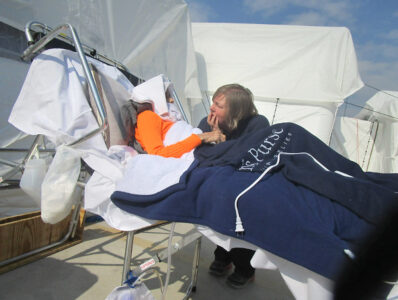
- Nurse Rhonda Lindstrom listens to an elderly patient’s experiences after an earthquake in Turkey. The woman requested to be brought outside to get some sunshine. (Contributed photo)
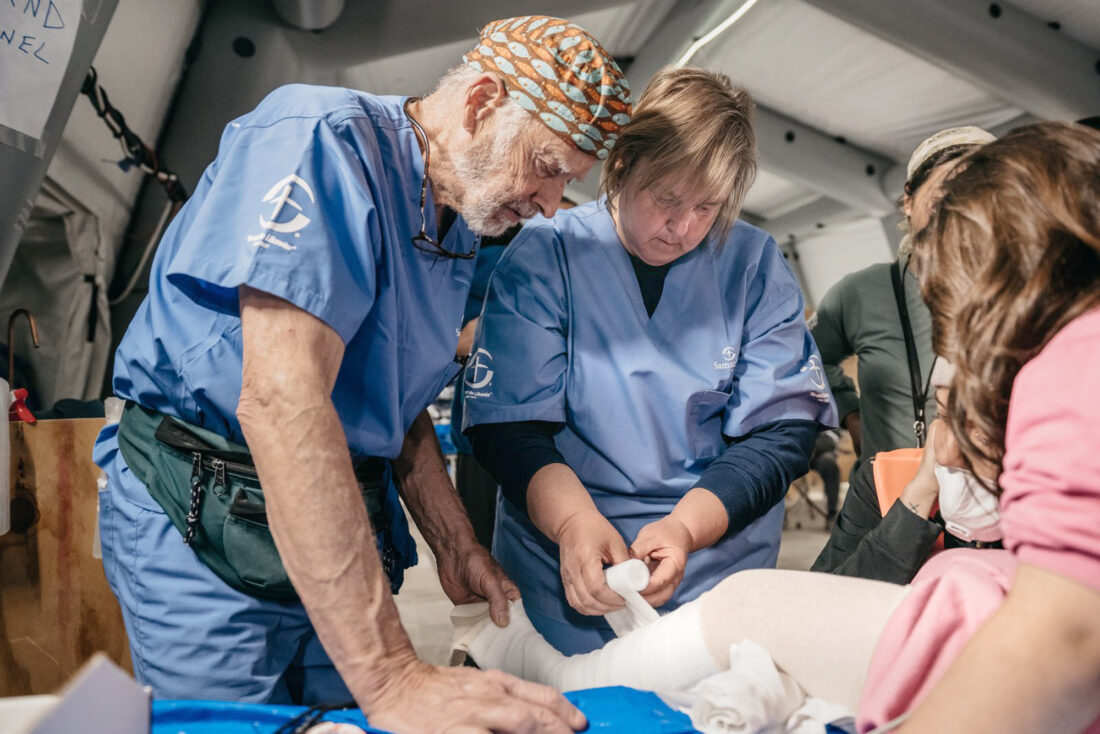
Nurse Rhonda Lindstrom of Aurora, Wis., has spent the past 10 years traveling throughout the world caring for patients in disaster zones with Samaritan’s Purse. Here, Lindstrom assists with setting a cast for a young patient’s leg after an earthquake in Turkey. (Contributed photo)
This is the second part of a feature story with nurse Rhonda Lindstrom of Aurora, Wis. The first part ran Wednesday, which was National Nurse Appreciation Day recognizing the dedication and contributions that nurses provide in society.
———
AURORA, Wis. — For the past decade, Rhonda Lindstrom of Aurora has served as a disaster relief nurse with Samaritan’s Purse, providing critical medical care around the globe.
From some of the world’s most challenging environments to the frontlines of urgent humanitarian crises, Lindstrom has gone to where care was needed most — and she wouldn’t have it any other way.
Her journey in missionary service began years before joining Samaritan’s Purse, laying the foundation and experience that enable her to do the vital work she does today.
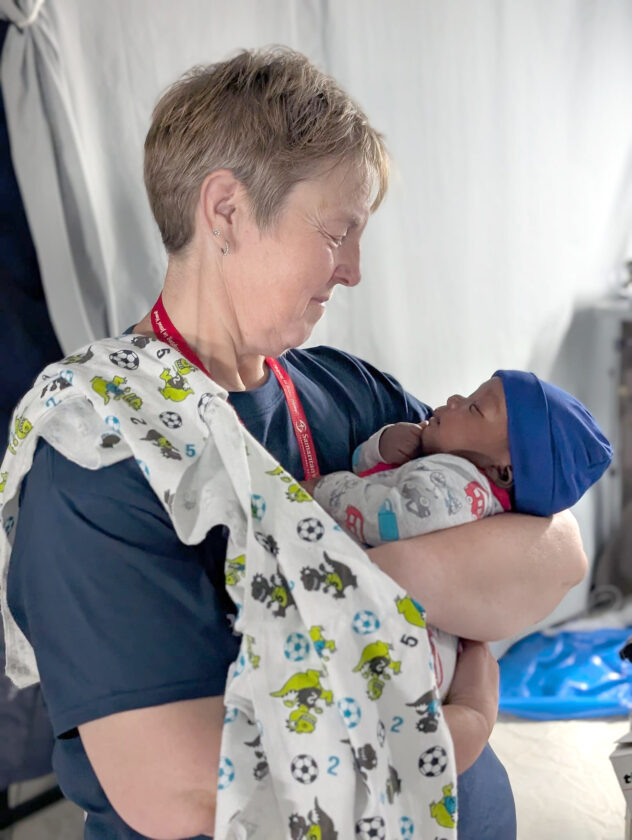
Nurse Rhonda Lindstrom cares for a young patient at an emergency field hospital set up in Jamaica after the island was hit by a hurricane. (Contributed story)
And her story is far from over …
Life in a tent hospital
A typical disaster hospital is built of a network of tents, each serving a critical function — from triage and emergency care to intensive care units, operating rooms, radiology, laboratories, wards and pharmacies. The setup also includes supply and maintenance areas, administrative space, a makeshift “bistro” and sleeping quarters for staff.
Once operational, the team works quickly to establish essential infrastructure, including showers, toilets and a clean water system.
“By wave two, they have converted a temporary camp into a functional hospital,” Lindstrom said.
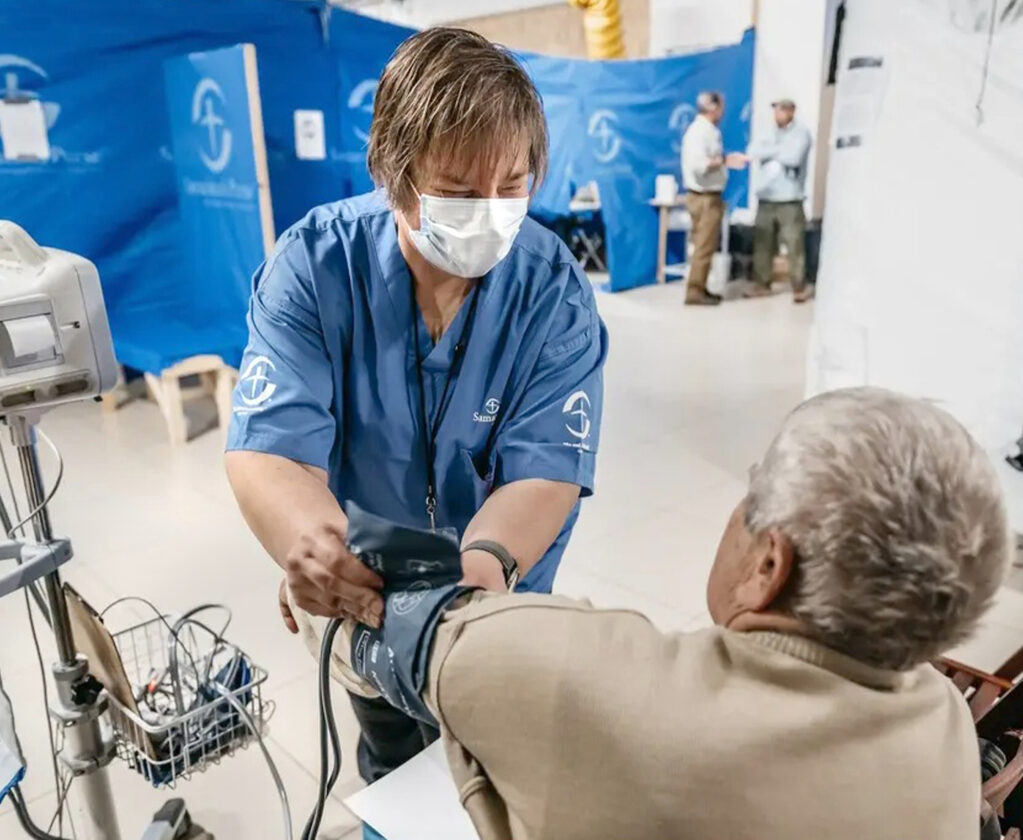
Nurse Rhonda Lindstrom of Aurora, Wis., has spent the past 10 years traveling across the world caring for patients in disaster zones with Samaritan’s Purse. Here, Lindstrom takes care of an elderly patient at a hospital in Ukraine. (Contributed photo)
While the team often brings advanced medical equipment, adaptability is key in the field. Lindstrom noted they sometimes have to go “old school,” relying on simpler tools that reflect what is realistically available in the countries or areas in need.
Depending on the hospital tier size, staff can range from 60 to more than 100 personnel.
All supplies are shipped ahead of time — historically on a DC-8 aircraft, recently replaced by a 767 capable of transporting an entire hospital in a single flight.
“That was a workhorse plane, but she needed to retire because parts were no longer available,” she said, adding the plane was on display at the EAA in Oshkosh, Wis., last summer.
In hard-to-reach areas, such as parts of Turkey, military helicopters may be used to transport both personnel and equipment when roads are impassable.
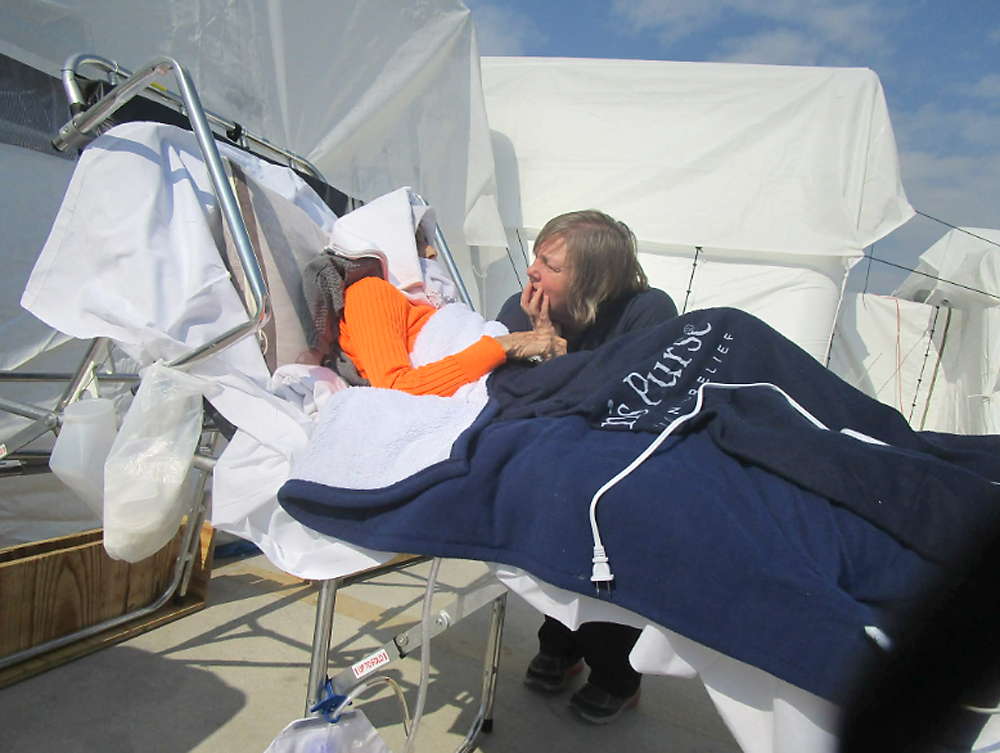
Nurse Rhonda Lindstrom listens to an elderly patient’s experiences after an earthquake in Turkey. The woman requested to be brought outside to get some sunshine. (Contributed photo)
“The whole hospital is on a shelf right now waiting to go. I want to say they have about six hospitals always ready,” she said.
Team members are typically mobilized within 24 hours of a disaster. “It’s a well-oiled machine,” Lindstrom said.
Deployments happen in waves, with an initial team sent out immediately, followed by additional staff and supplies depending on the scale of the crisis.
For Lindstrom, that process begins close to home. She is flown out of Iron Mountain to join fellow responders arriving from across the globe.
“The logistics of getting 100 people from all over the world to one place 24 hours after a disaster is incredible — I can’t even imagine,” she said.
Driven by faith, service
Over time, Lindstrom has learned to steady her emotions in the face of crisis, choosing instead to focus on what endures.
While she has witnessed extraordinary places, it’s the human connections that leave the deepest impression.
“I can tell you I’ve seen incredible places, but what I remember most is the people — I love the people,” she said.
That connection extends beyond her role as a nurse. During deployments, Lindstrom also serves in “member care,” a chaplain offering emotional and spiritual support.
“Both are really important,” she said. “And I love them, just in very different ways.”
Each year brings a different pace, some passing without a single deployment, and others demanding repeated responses.
“Last year, I think I went three times,” she said.
Even so, her work abroad is grounded in responsibilities at home. Lindstrom returned to the area eight years ago to help care for her parents, a commitment that shapes when she is able to deploy.
She is candid about the demands of the work and the mindset it requires.
“This work isn’t for everyone. Faith is at the core of what motivates me,” Lindstrom said.
In addition, the environments she encounters are never easy. “There’s not one place we go that looks good when we arrive,” she said. “No matter the disaster, it’s always hard.”
Even with that calling, each deployment remains a personal decision. “In our organization, you have to be a Christian. From there, you listen for where God is leading you and decide what you can and can’t do.”
For now, she plans to continue answering that call. “I’ll do this for as long as I can,” she said.
Closer to home, Lindstrom also honors her profession through service. She is a member of the Dickinson County Chapter of the Nurses Honor Guard, which recognizes nurses at the end of their lives.
“I wanted to honor those in the profession who came before me and paved the way,” she said. “It’s a truly honorable thing to do.”
For many years, she has also volunteered as medical for EAA AirVenture and Lifest in Oshkosh, Wis.
Reflecting on her journey, Lindstrom emphasizes that her work is not just a profession, but a calling shaped by a lifetime of experiences.
“God made me for this,” she said. “My love for culture, people, and learning languages — all of it gave me a leg up. It doesn’t make the job easy, but it makes it possible.”
From the streets of New York during a pandemic to the frontlines of war and natural disaster, Lindstrom’s story is one of resilience, faith and an unwavering commitment to care for others when they need it most.
About Samaritan’s Purse
Founded in 1970 by Bob Pierce as a Christian relief organization, Samaritan’s Purse is dedicated to providing humanitarian aid and disaster relief worldwide.
The organization operates as one unified mission with many branches, including Operation Christmas Child that started in 1990, which distributes gifts to children globally.
“We work with local churches a lot, especially through Operation Christmas Child,” Lindstrom said.
During a deployment to Jamaica, she witnessed the broader reach of the organization firsthand. Franklin Graham and Edward Graham each visited on separate days. During one visit, Franklin Graham was accompanied by Greta Van Susteren as they participated in a gift distribution event in the local community.
Lindstrom is part of the organization’s Disaster Assistance Response Team, or DART, that focuses on international disaster relief. The broader structure also includes national response teams and several specialized divisions.
Funded entirely by private donations, Samaritan’s Purse has been providing aid for more than five decades.
Those interested in volunteering or supporting the mission can learn more at the organization’s website at www.samaritanspurse.org.
———
Terri Castelaz can be reached at 906-774-2772, ext. 85241, or tcastelaz@ironmountaindailynews.com.
Local News

Sand sculptors bring Bigfoot back to Gladstone Beach

UP sees ‘The Ford Boom’ in the 1920s

An age of innovation in the US
Democratic-led states sue over new Medicaid work requirements
Twenty-five Democratic-led states plus the District of Columbia have sued the Trump administration over its new ...

State appeals court upholds ex-school officer’s sentence for sexual abuse