Let there be music
IRON MOUNTAIN — During World War II, the U.S. government imposed a restriction on the use of iron, copper, brass and other raw materials. These materials were being diverted for use in the war effort. This greatly affected the making of musical instruments. One company in New York, Steinway & Sons, famous piano makers, had to stop production of pianos. They began constructing wings, tails and other parts for troop transport gliders.
During this time Henry Steinway and Roman de Majewski developed a plan to build a small, lightweight piano that could be shipped to the troops overseas. They believed that music was a good moral booster and would strengthen the soldiers’ resolve to keep fighting. A piano would be a reminder of home for many of the soldiers. The U.S. government agreed and awarded Steinway & Sons a contract to produce pianos for the troops.
These pianos were to become known as the “Victory Verticals” or “G.I. Steinways.” The government allowed them to use only 33 pounds of the restricted metals to build the pianos. This was one-tenth of the metal used in a traditional piano. When these pianos went to war, they had to be built rugged and durable. The Victory Verticals had to be tough enough to handle being dropped out of an airplane yet light enough to be carried by four soldiers. They needed to be able to withstand the tropical temperatures and be bug resistant. When the design of the piano was completed, it would weigh 455 pounds, be a 40-inch box-shaped instrument, would have had been given anti-insect treatment, water-resistant glue was used, and the legs were removed and redesigned to withstand being parachuted from a plane. Another special feature of the piano was its color. Most pianos were black or a dark wood finish. The G.I. Steinways were painted olive green, blue and gray. They were packed into strong crate with tuning equipment, instructions and sheet music.
Between 1942 and 1953, Steinway & Sons produced about 5,000 of these pianos, with about half of them being used in military service. The rest were sold to schools and churches. They were shipped to troops on three continents. These pianos provided many hours of entertainment, relaxation and joy to our troops during the war. It was an excellent way to provide camaraderie among the troops and provide a moment of peace.
“That music was deemed to be such a powerful morale boost that pianos were actually built to be parachuted around the world is incredible,” says Jonathan Piper, at the Museum of Making Music in Carlsbad, Calif. They have a Victory Vertical piano in their collection.
March 29 is National Vietnam War Veterans Day. In 2017, President Donald Trump signed the Vietnam War Veterans Recognition Act of 2017. This act officially recognizes March 29 as National Vietnam War Veterans Day. The act also includes the day among those days on which the U.S. flag should be displayed. This date was chosen because on March 29, 1973, the Military Assistance Command, Vietnam was disbanded and the last U.S. combat troops departed the Republic of Vietnam. The last unit was elements of MACV’s Infantry Security Force (Special Guard).
Other notable dates in history for March are:
March 3 — Navy Reserve Birthday: Formed in 1915 in response to the outbreak of World War I, the Navy Reserve made up almost 84% of the Navy’s fighting force during the war.
March 3 — Star Spangled Banner Day.
March 19 — Iraqi Freedom began (Iraq War) (2003).
March 24 –Kosovo campaign began (1999).
March 25 — National Medal of Honor Day.
March 29 — Vietnam Veterans Day/Palm Sunday.
March 31 — Somalia campaign ended (1995).
Please join us in supporting Emily Houser in her battle against Moyamoya disease. A fundraiser will take place from 3 to 9 p.m. Saturday at Bimbo’s, 314 Main St. in Iron Mountain. A portion of the food sales will be donated to Emily’s family. The Billy Jack Band will perform from 7 to 9 p.m. This is a rare blood vessel disorder that blocks or narrows blood flow to the carotid artery in the skull, causing hemorrhagic strokes (bleeding of the brain) and/or ischemic strokes. The disease can cause serious and permanent brain damage. She is a veteran, loving wife and mother of two very young children. For more information or to make a donation, contact David Stohl at 414-708-3035.
Other upcoming events:
Sunday — American Legion Post 50 breakfast, 7:30 to 11 a.m., River Ave., Iron Mountain.
Tuesday — Dickinson County Veteran Affairs committee meeting, 8 a.m., American Legion Post 50, 916 River Ave., Iron Mountain. The public is welcome to attend.
March 19 — American Legion Post 50 cribbage tournament, 916 River Ave., Iron Mountain.
March 20 — Norway High School softball team fundraising breakfast, 8 to 11:30 a.m., American Legion Post 145, 621 Main St., Norway.
Life
Foxy Loxy ladies to gather
NIAGARA, Wis. — The Foxy Loxy Red Hat ladies will meet at 12:30 p.m. Wednesday at The Brick in ...

Today’s birthdays

Skip the overpriced hair treatment
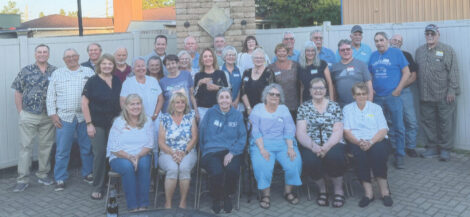
KHS Class of 1971 reunion
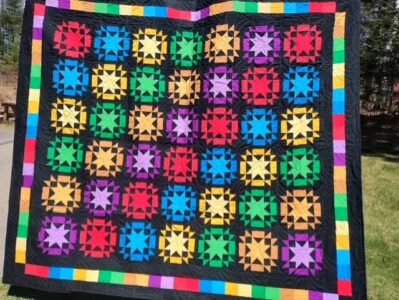
Strawberry Social and Quilt Show in Florence