
UN pauses evacuation of ships through Strait of Hormuz
Trending
DUBAI, United Arab Emirates (AP) -- A United Nations agency paused the evacuation of ships through the Strait of Hormuz on Thursday after the British military said a vessel was hit by a projectile off the coast of Oman following the passage of several tankers that used a route backed by the U.N.
The head of the International Maritime Organization said the plan to move stranded ships out of the Persian Gulf through the strait will be on hold until the agency can confirm safety guarantees for the ships on the evacuation list and in the region.
It was unclear who launched the projectile or the type of vessel that was targeted. The report of a strike came hours after Iran threatened vessels to stop using the route through the strait without Tehran’s permission.
The vessel that was attacked was not part of the evacuation effort, said Arsenio Dominguez, the U.N. agency’s secretary-general.
Following reports of the attack, Iran’s Persian Gulf Strait Authority -- a new government agency Iran established to control shipping in the strait -- wrote on X that transit outside its own designated routes “will not be covered by the guarantee of safe passage.”
The United Kingdom Maritime Trade Operations center said the vessel sustained damage, but it reported no injuries or environmental effects from the attack off the coast of Oman.
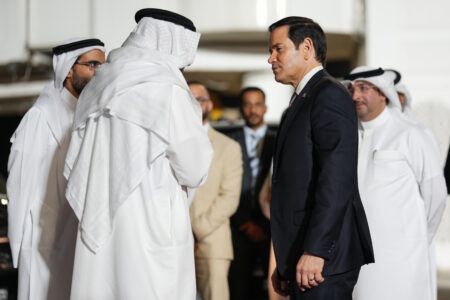
The opening of an alternative passage through the vital waterway would relieve pressure on the world economy and remove Iran’s main source of leverage in ongoing peace talks with the United States. U.S. Secretary of State Marco Rubio, on a visit to the Gulf to reassure American allies, said Washington was committed to the new route and ensuring that ships are able to transit the strait.
“If that stops, then we’re going to have a problem,” Rubio said earlier Thursday.
Traffic through the strait increased in recent days but was still well below prewar levels. Oil on Thursday briefly dipped below its last prewar price of just under $73 per barrel, a sign that the market believes the situation is improving.
The U.S. and Iran are still debating terms of an interim peace deal, including issues such as getting ships through the narrow mouth of the Persian Gulf and addressing the future of Iran’s stockpile of highly enriched uranium.
Under the memorandum of understanding signed last week, the U.S. and Iran have 60 days to iron out the details. As talks are held behind closed doors, U.S. President Donald Trump and Iranian leaders have seemed to negotiate in public, trading threats and claiming concessions the other side denies.
Meanwhile, a flare-up of fighting in Lebanon between Israel and Iranian-backed Hezbollah militants threatened the wider truce. Lebanon says five people have been killed by Israeli strikes over the past two days.