Finding a match, times two
Local search for kidney donor results in two transplants
-
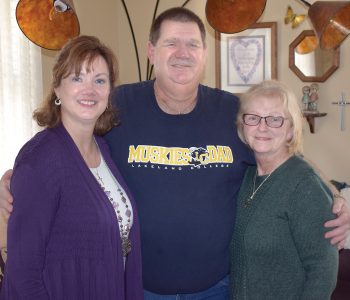
- BRUCE CASANOVA WITH Maria Basanese-Hill, left, who donated a kidney to him in July, and Maureen Anderson, right, who went through testing as a possible donor. Anderson ended up instead providing a kidney for a Detroit man in August after Basanese-Hill was deemed a better match for Casanova. (Terri Castelaz/Daily News photo)
-
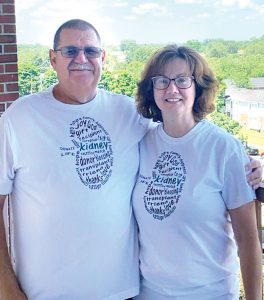
- BRUCE CASANOVA WITH Maria Basanese-Hill, right, together this past summer after she agreed to donate a kidney to him. (Terri Castelaz/Daily News photo)
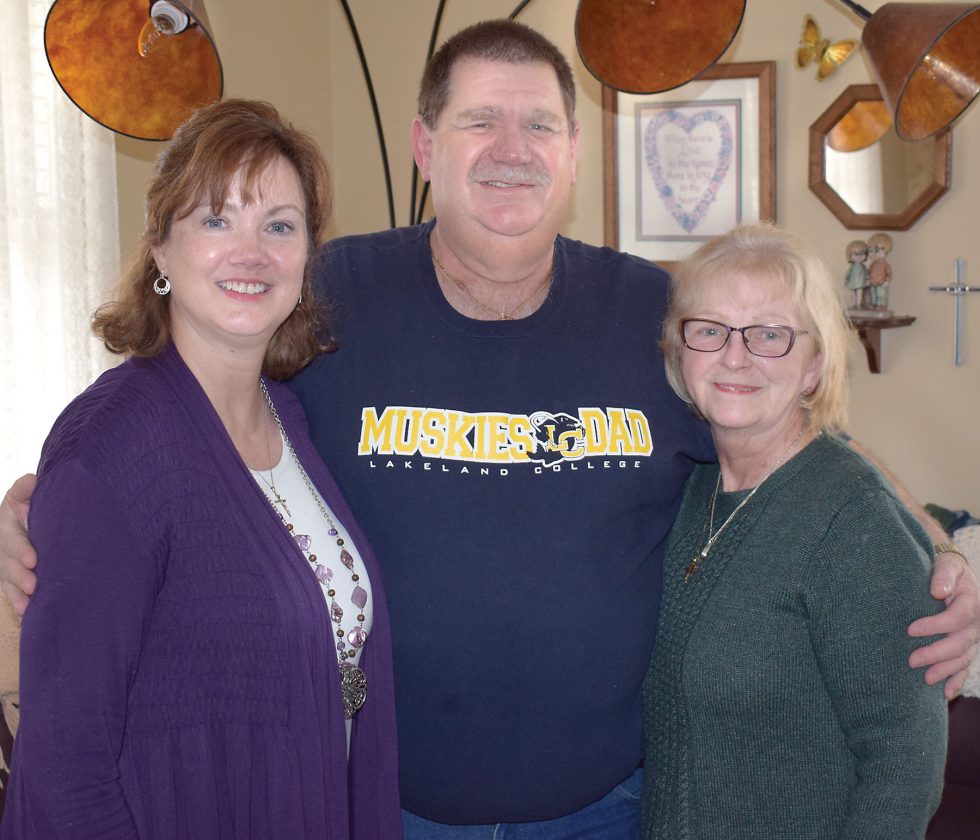
BRUCE CASANOVA WITH Maria Basanese-Hill, left, who donated a kidney to him in July, and Maureen Anderson, right, who went through testing as a possible donor. Anderson ended up instead providing a kidney for a Detroit man in August after Basanese-Hill was deemed a better match for Casanova. (Terri Castelaz/Daily News photo)
IRON MOUNTAIN — Facebook is a great social media outlet to connect with family and friends.
In this case, it also helped save an Iron Mountain man’s life.
About five years ago, Bruce Casanova was diagnosed with a chronic kidney disease — focal segmental glomerulosclerosis and hypertensive nephrosclerosis — detected in routine blood work.
“I had absolutely no idea,” Casanova said. “If it wasn’t for those tests I wouldn’t have known.”
Thankfully, the disease progressed slowly, so doctors didn’t hurry to put him on the transplant list.
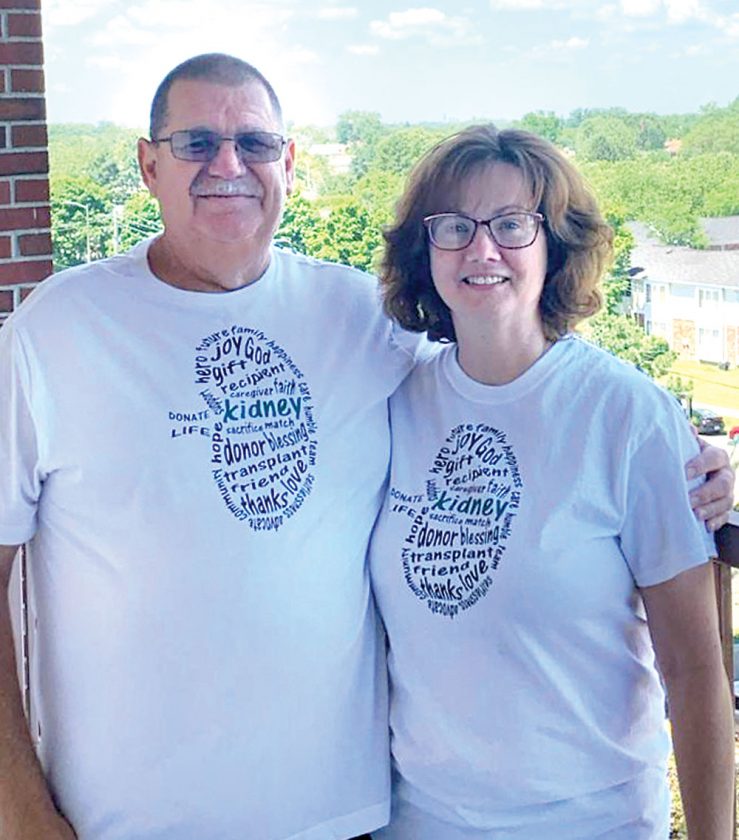
BRUCE CASANOVA WITH Maria Basanese-Hill, right, together this past summer after she agreed to donate a kidney to him. (Terri Castelaz/Daily News photo)
“The only ‘symptom,’ as you would call it, was some minor back discomfort, but it never kept me from doing what I wanted to do,” he said.
But by 2018, although he remained physically active, blood tests indicated Casanova’s kidney function was deteriorating, signaling it was time to start the process of seeking a donor.
His younger sister, Joan Casanova, was willing and was an immediate match. She continued with the testing through the final step — a MRI in September 2019 at Henry Ford Hospital in Detroit.
“That is when they discovered a medical problem, so she was unable to donate,” Bruce Casanova said. “So we were back to square one.”
Bruce’s children, Andrew and Emily, who didn’t qualify themselves, then reached out on Facebook to find a donor.
That’s when two longtime friends, Maria Basanese-Hill and Maureen Anderson, answered that call.
The two Iron Mountain women work with Casanova’s wife, Mary Beth, for the Iron Mountain School District. Basanese-Hill, a North Elementary teacher, saw Emily’s post and immediately reached out to Mary Beth.
“Never thinking that I really would be a match, because we aren’t related,” Basanese-Hill added. “I went online and applied just to see.”
She went through a long series of tests — blood, heart, kidneys and mental.
“Each test I was told, ‘If you don’t pass this one then you are done and if you do, you go on to the next,'” Basanese-Hill said. “Each time moving farther along.”
“Then I was told, ‘Thank you very much, but we have a donor for Bruce, so you aren’t needed anymore,'” said Basanese-Hill, who admitted being a little disappointed by the news.
That other possible donor happened to be Anderson, who is in school food services with Mary Beth.
“Mary Beth came to work one day and sadly said they haven’t been able to find any family members, so now they are trying Facebook to find somebody else in the community,” Anderson said. “I immediately said to her, ‘I’ll try.'”
Anderson said another co-worker told her she was too old to qualify. Still, the 71-year-old completed the questionnaire, noting at that time the website indicated 70 was the cutoff age.
Within a couple weeks, Anderson received a call asking if she was serious about being a kidney donor. “I said ‘yes’ and immediately started the testing,” she said.
Anderson, who was about two to three weeks ahead of Basanese-Hill in the process, made it through and was a candidate.
“Maureen’s last blood tests came back and it showed we didn’t match in the last antibodies,” Bruce Casanova said. “But doctors believed they had a better match.”
That was Basanese-Hill, who got the call from Henry Ford Hospital in February indicating she just might be needed after all.
“They told me, ‘The other possible donor is a very good match, but you are a perfect match,'” Basanese-Hill said. “I couldn’t believe it. What are the chances, not only a good match, a perfect match?”
As pandemic restrictions had been put in place by this time, a lot of her final testing was done at the local hospital, through virtual appointments with Henry Ford Hospital doctors and nurses.
“It was a good six-month process,” Basanese-Hill said. “Surgery was originally set for April 1 but got postponed because of the pandemic.”
Finally on July 1, Bruce Casanova received his new kidney from Basanese-Hill. Their surgeries, which were done robotically so were less evasive, went smoothly with no complications.
“I was up walking around that night,” he said.
He has had no rejection issues and doctors don’t expect him to.
“We were a perfect match — well, except she has a smaller kidney than I do,” he said with a laugh.
Casanova said he also still has his two kidneys. “They didn’t remove the old one; they said it will just absorb on its own,” he said.
Basanese-Hill joked she “wasn’t quite that good” after surgery but seeing him motivated her to get moving. “My goal was to get home, because I knew I would recover better there,” she said. “Surgery was on Wednesday and I was discharged Friday.”
Although he was discharged on that Saturday, Casanova needed to remain in Detroit for seven weeks.
As a precaution, he will need to take anti-rejection medication for the rest of his life. Blood work is done every two weeks and still shows no signs of problems.
“The year anniversary is coming up, so after that time, hopefully check-ups will decrease,” he said.
With the ongoing pandemic restrictions, he continues to follow up virtually with Henry Ford Hospital and have blood tests done locally.
He walks every day, but doctors gave him some restrictions, including swimming.
“It’s not the physical aspect; it’s because of the bacteria,” he explained. “I will eventually be able to go in salt water, but no lakes or pools.”
Kidney disease has been a family issue, as his brother donated a kidney to their father, but he has received different opinions from doctors if the disease was hereditary.
Although Anderson was no longer needed to be a donor for Casanova, she opted to continue the evaluation process.
“I felt I have gone this far,” she said, “why wouldn’t I want to help someone else?”
In August, she donated a kidney to a Detroit man. Her recovery took a little longer, she added, because she had it the “old-fashioned way.”
“After six months, if the recipient wants to know who I am, the hospital will contact me,” Anderson said.
Casanova joked she broke a record as the oldest donor at the hospital.
Basanese-Hill and the Casanova family also share a little history together. Mary Beth took care of Maria’s youngest daughter, Alena, from the time she was just a few months old through when she went to kindergarten.
“Mary and Bruce and their whole family just loved my daughter and took care of her,” Basanese-Hill said. “It was just an incredible experience.”
“When I found out Bruce needed something, I would have done anything to repay their family for what they did for me,” she said. “So, it was really a godsend that Mary Beth was put into my life 20 years ago, knowing that Bruce was going to need me.”
Casanova pointed out this wasn’t Basanese-Hill’s first time being a donor. “This saint donated bone marrow in 2014 to someone she didn’t know,” he said.
Both Basanese-Hill and Anderson said becoming a living donor wasn’t something they had on their radar. “It’s just something you don’t think about,” they said.
And the “circle” of about 16 people who originally started the process of being a donor for Casanova is still going, Anderson noted.
“I talked with the hospital at Christmas time and they informed me their circle is continuing — which is great,” she said.
“These two lovely ladies are my life saviors,” Casanova said.
He stressed as well that anyone going through this experience needs to have a good support system.
“I know I had and know the girls had them, too,” Casanova said. “If I didn’t have my wife there, it would have been a struggle, I’m sure.”
For more information on becoming a living donor, go to the Henry Ford Center for Living Donation website at https://www.henryford.com/services/transplant/center-for-living-donation.
Local News
Scouts tour Aurora EMS
DIDHD offers free vision, hearing screenings for kids
KINGSFORD — The Dickinson-Iron District Health Department will provide free hearing and vision screenings for ...
IM residents are on their own when nature’s water intrudes
Six candidates vie for Mr. Niagara, First Lady
NIAGARA, Wis. — The Niagara Women’s Civic Club has announced the candidates for its annual Mr. Niagara and ...
Remember when?