
Hot spell triggers ‘dawn to dusk’ migration
Northwoods Notebook
Trending
As predicted, avian migration kicked into high gear this past week, with the birds taking full advantage of the much-warmer-than-normal weather -- highs reaching into the 80s in the Iron Mountain area Thursday and Friday -- and, more significantly, a strong southern wind.
The difference was evident Monday, not just in the rising number of species back in the area -- eastern phoebes, again as predicted, showed up -- but the volume and variety of song. It was like going from a few acapella solos to rival choirs having a full-throated sing-off.
While migration in the north had been a little stalled due to the snowstorm just a couple weeks ago, this week couldn't have provided better conditions for the birds, said Ryan Brady, Natural Heritage Conservation Program biologist for the Wisconsin Department of Natural Resources.
Brady lives in Ashland, Wis., near the state's northernmost point into Lake Superior. That location tends to provide a prime vantage point to take in the annual flights, he said.
And Thursday offered "migration in all its glory from dawn to dusk," Brady wrote in a Facebook post. He counted 8,475 birds of 73 species, including nearly 2,000 northern flickers, roughly 600 purple finches and yellow-rumped warblers, 15 species of waterfowl and a whole host of raptors -- rough-legged hawks, sharp-shinned hawks, bald eagles, golden eagles, peregrine falcons and more.
It's unusual, he noted in an interview Friday, to see a week-long stretch of dry days and southern winds, day and night. The birds didn't waste the opportunity to make a major push north, with one day's arrivals moving on and being replaced by the next wave.
The result is that after that slow start, the region is back to having the bird species that would be expected in the region by mid-April.
With the forecast calling for a downturn in temperatures Sunday, and snow expected Monday, some of these birds could be caught out if the ground again is covered and the early insects stop being available, Brady said. He suggested putting out mealworms, chopped-up nuts and fruits such as raisins and blueberries and suet as an easy fat source, or clearing patches of ground for the foragers such as robins and flicker.
At Six Mile Lake this week, each glorious warm day seemed to bring a new aspect of spring -- willow catkins opening, a belted kingfisher's staccato protest to my presence, common green darner dragonflies already patrolling the growing pools along the shoreline.
Green darners, like monarch butterflies, have a multi-generational migration, with individuals going south for winter, reproducing there, then having their offspring come north. They, in turn, will produce a new generation of nymphs in the north that, when mature, will head south and repeat the cycle. It usually takes three generations to complete the yearlong migration, according to online sources.
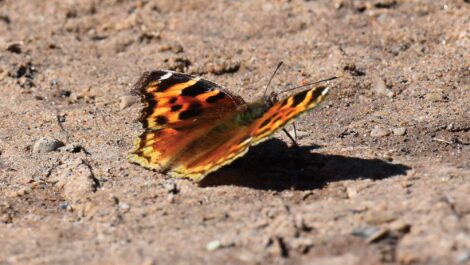
The warm weather also brought out the butterfly species that commonly hibernate as adults rather than pupae or caterpillars. Mourning cloaks, dark brown with wings edged in cream, along with the black-and-white on orange Compton's tortoiseshells and eastern commas all had emerged by Monday, rising from the dirt roads as vehicles passed. They use wet spots in soil to draw minerals as nourishment.
The lake remains mostly ice-covered, and has risen over most of our dock -- not a surprise given the amount of snowmelt this week. Even with the warmth, turtles and the spring frogs remain absent.
The return of cooler temperatures likely will slow all this progress for at least this coming week, but spring can't be held in check for long, even here in the Upper Peninsula.
Betsy Bloom can be reached at 906-774-2772, ext. 240, or bbloom@ironmountaindailynews.com.