
Reaching deepest Superior for the first time in 40 years
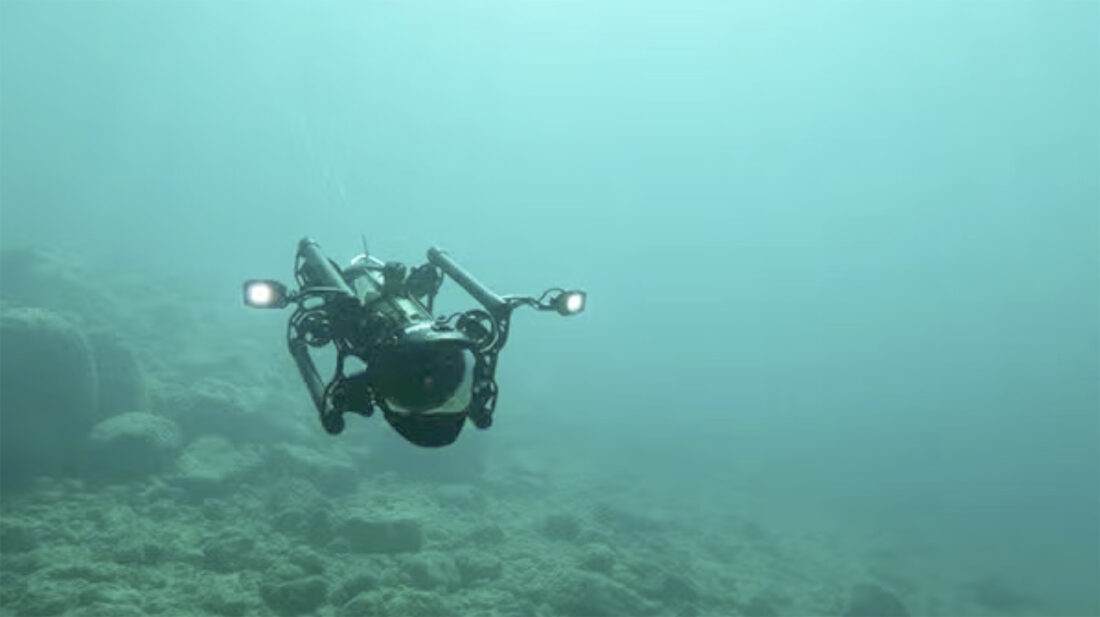
A high-tech robot in June dove to Superior Maximus, the deepest part of Lake Superior about 34 miles north of Munising. (Photo courtesy of Inspired Planet Productions)
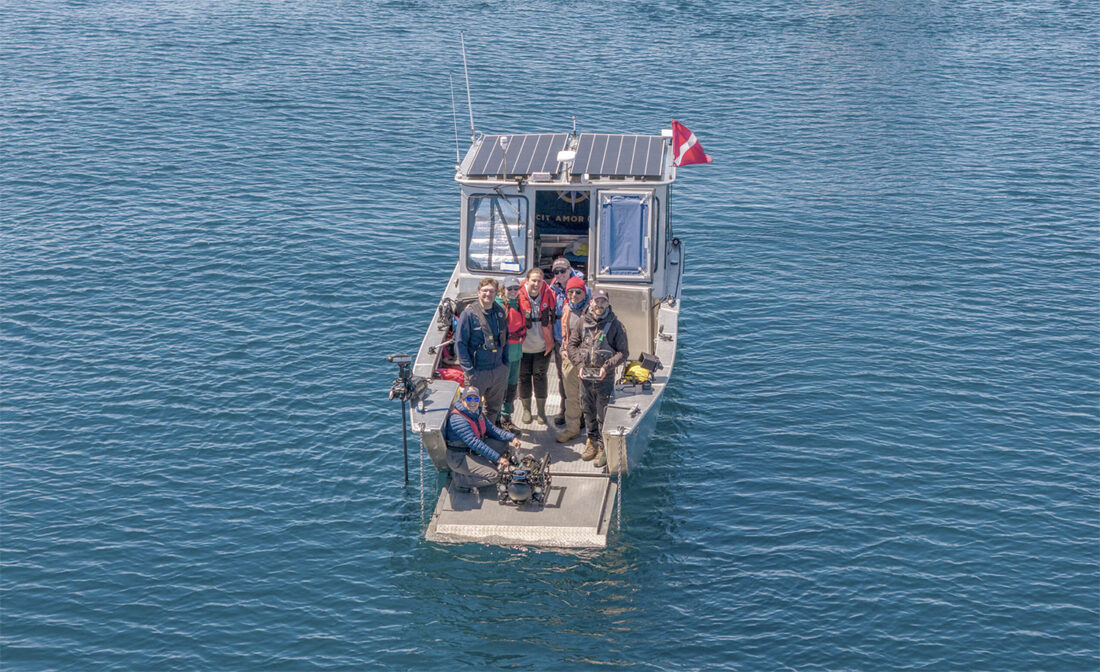
The crew on the research vessel Lake Char after a robot went to Superior Maximus, the deepest part of Lake Superior. (Photo courtesy of Inspired Planet Productions)
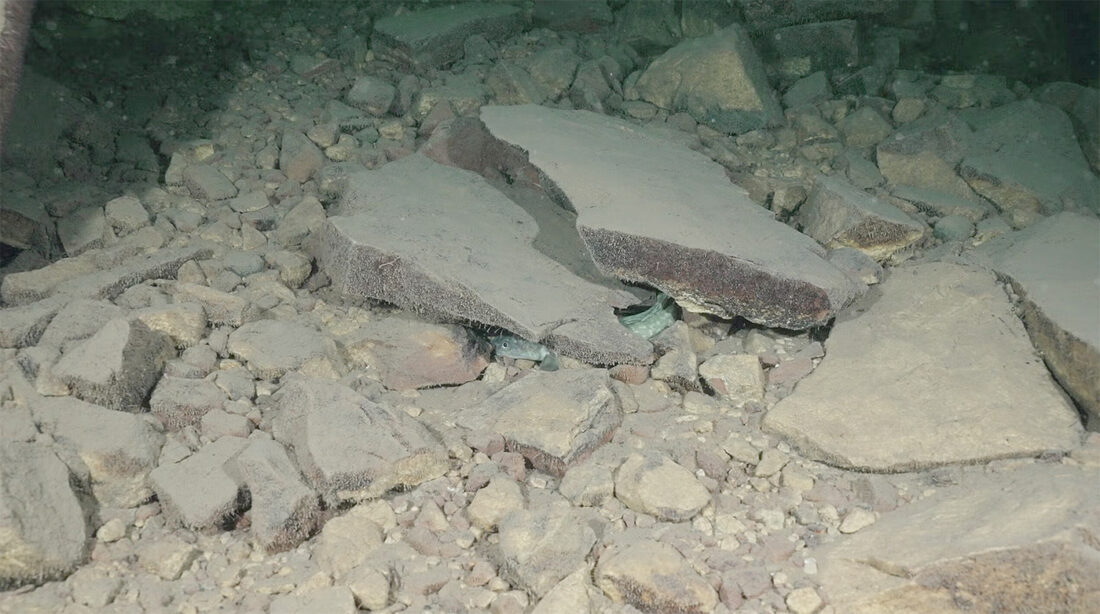
A burbot, the only species of freshwater cod, is seen hiding in rocks in Superior Maximus, the deepest part of Lake Superior. (Photo courtesy of Inspired Planet Productions)
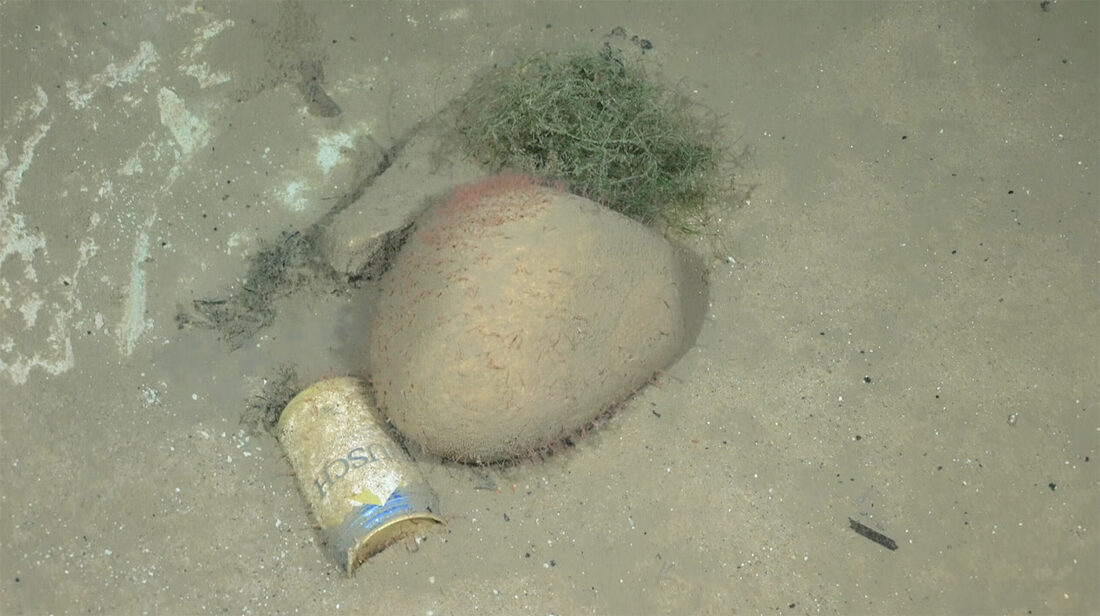
A Busch Light beer can found in Superior Maximus, 1,300 feet below the surface of Lake Superior. (Photo courtesy of Inspired Planet Productions)
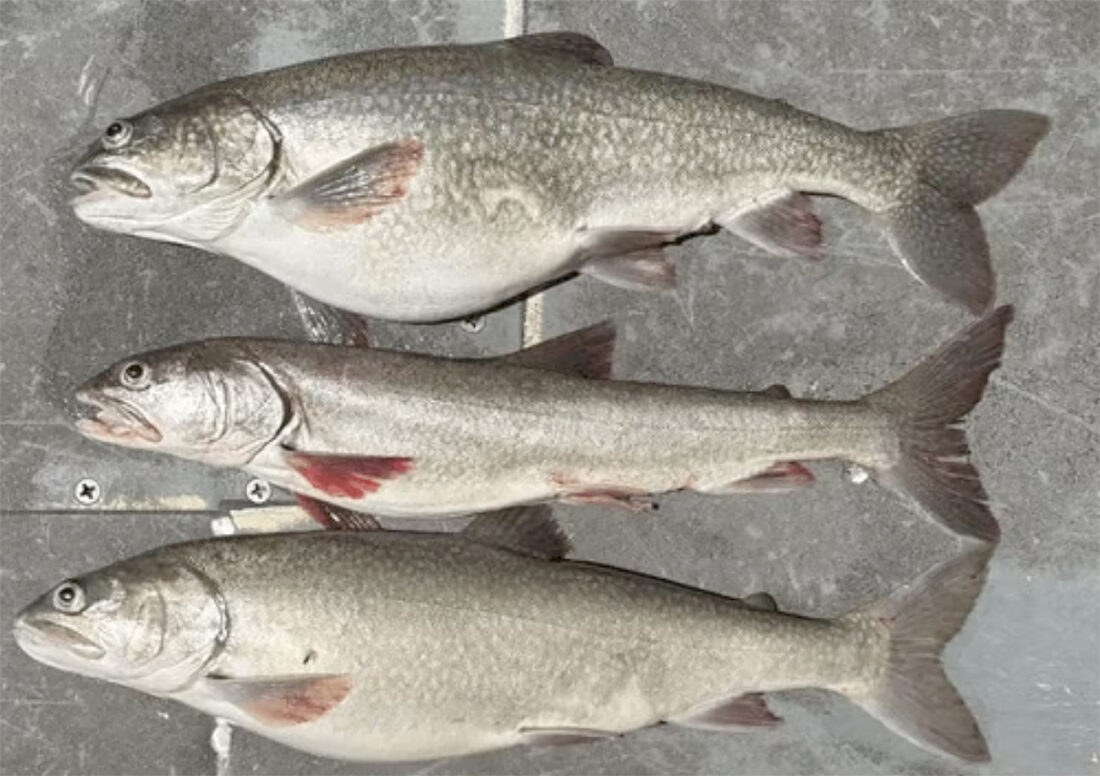
An emaciated “zombie” lake trout is in the middle of these three siscowet lake trout from Lake Superior. Siscowets are a fatty subspecies of lake trout that live in the deepest parts of the lake. Researchers have identified a growing number of “zombie” fish among siscowets surveyed in the deepest part of Lake Superior. (Photo courtesy of Shawn Sitar, Michigan Department of Natural Resources)
A high-tech robot in June dove to Superior Maximus, the deepest part of Lake Superior about 34 miles north of Munising. (Photo courtesy of Inspired Planet Productions)
The crew on the research vessel Lake Char after a robot went to Superior Maximus, the deepest part of Lake Superior. (Photo courtesy of Inspired Planet Productions)
A burbot, the only species of freshwater cod, is seen hiding in rocks in Superior Maximus, the deepest part of Lake Superior. (Photo courtesy of Inspired Planet Productions)
A Busch Light beer can found in Superior Maximus, 1,300 feet below the surface of Lake Superior. (Photo courtesy of Inspired Planet Productions)
An emaciated “zombie” lake trout is in the middle of these three siscowet lake trout from Lake Superior. Siscowets are a fatty subspecies of lake trout that live in the deepest parts of the lake. Researchers have identified a growing number of “zombie” fish among siscowets surveyed in the deepest part of Lake Superior. (Photo courtesy of Shawn Sitar, Michigan Department of Natural Resources)
Trending
For 20 years, Shawn Sitar has studied a part of Lake Superior he has never seen.
Sitar, a fisheries research biologist with the Michigan Department of Natural Resources, studies fish at the deepest spot on the largest freshwater lake on earth. It's an area known as Superior Maximus, with depths of more than 1,300 feet below the surface.
And this month, Sitar finally saw his research environment up close.
Scientists and filmmakers used a robot to venture into the depths. They're hoping to learn more about the wildlife that lives more than three-and-a-half football fields below the surface, where no light can penetrate and only a handful of species can survive.
It's a part of Lake Superior that has not had human contact in more than 40 years.
The expedition team is also gathering information about a recent phenomenon of emaciated Siscowet lake trout, which live in depths of 250 feet and deeper. Some are becoming so thin scientists refer to them as "zombie fish."
Filmmakers Yvonne Drebert and Zach Melnick also hope the images help people gain a greater appreciation for the Great Lakes. They plan to turn the expedition into a documentary called "Hidden Below: The Great Lakes," set to debut in 2028.
"We've all seen these really amazing films and videos from life in the ocean. We spend a lot of time seeing sharks and whales and coral reefs," Drebert said on WPR's "Wisconsin Today." "But we live right here on the Great Lakes and there's a pretty amazing universe of life and ecosystems right outside our doors."
Getting to Superior Maximus is a challenge.
Located in the southern central portion of Lake Superior, it is roughly 35 miles off the shore and takes nearly two hours to reach by boat.
The first expedition to Superior Maximus was in 1985, when University of Wisconsin-Milwaukee researcher J. Val Klump dove to the depths in a submersible for his research on sediment activity on the lakebed. This was part of a multi-year expedition. But to this day little is known about this part of Lake Superior.
The robot scientists used on the latest venture is named Kiyi after a rare, deepwater fish. The robot has eight thrusters that allow it to move in any direction. It is attached to a 750-meter fiber optic tether that sends signals back to the boat.
When the team watched the robot hit the lake's floor, they didn't know if it was going to implode or sustain the pressure, which is 40 times greater than the pressure at surface level.
"A lot of things need to go right in terms of the weather and technology to get us that far," Drebert said.
But Kiyi made it, and sent back clear videos of the depths below.
The scientists said the environment at Superior Maximus is more similar to the surface of the moon than it is to the shore.
"It's kind of magical when we get close to the bottom and we can flip those lights on and it's like a whole other world," Drebert said.
She said they found a type of freshwater, deepwater crustacean called mysis. Every day it moves up and down the water column with the rise and set of the sun. They also found deepwater sculpin, a glacial relic native to a limited number of deep, cold lakes in Canada and the United States. It spends its entire life on the lake bottom.
In an unexpected reminder of humans' presence on the lake, they also found a Busch Light beer can.
As the dives continue, the team is searching for a time capsule that was released there in the 1980s.
Since 2015, biologists have observed an increasing number of emaciated Sicowet lake trout -- fish with only about one-third of the fat content of healthy fish of the same age and length.
They are known colloquially as "zombie fish."
The percentage of zombie fish has risen from about 3% in 2015 to 20% in 2024 and 2025, according to the Michigan DNR. At Superior Maximus, 37% of fish captured in a 2024 survey were "zombies"; in 2025, 54% were.
Sitar said the condition of these fish is probably a natural ecological event, such as a famine. But scientists would like to collect samples and rule out disease and contamination.
"We're not totally alarmed," Sitar said. "We are concerned."
The initial expedition did not produce any zombie fish but the research vessel Lake Char will continue to go out on expeditions studying zombie fish, Superior Maximus and the surrounding areas.
Sitar said the health of Superior Maximus is indicative of the health of the entire Great Lakes ecosystem. And by diving to a world that has rarely been seen, scientists gain a greater understanding of how freshwater lakes should work.
"To still have the ability to make discoveries in the world, it's marvelous," Sitar said. "It seems like everything's answered in today's world -- but it really isn't. The more I look at Lake Superior, I find more questions than answers."