
No new taxes, emphasis on literacy in Michigan budget
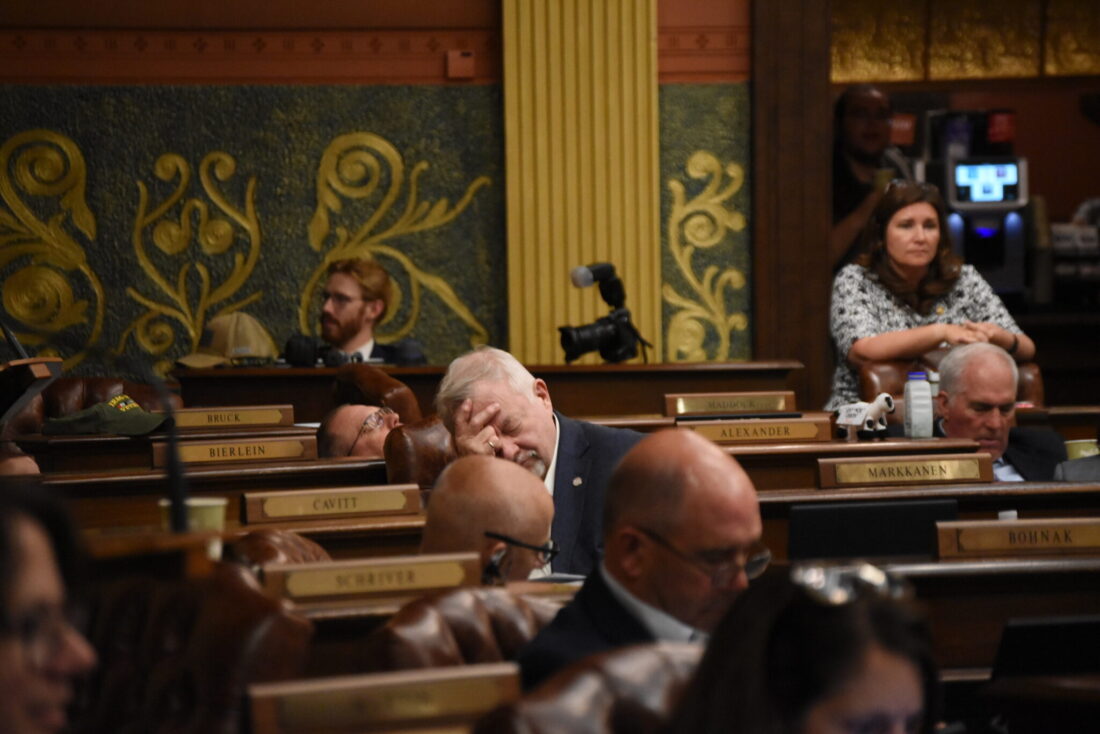
Republican legislators spend the early hours of Friday morning on the House floor for votes on the fiscal year 2027 budget. (Photo by Katherine Dailey/Michigan Advance)

GREG MARKKANEN
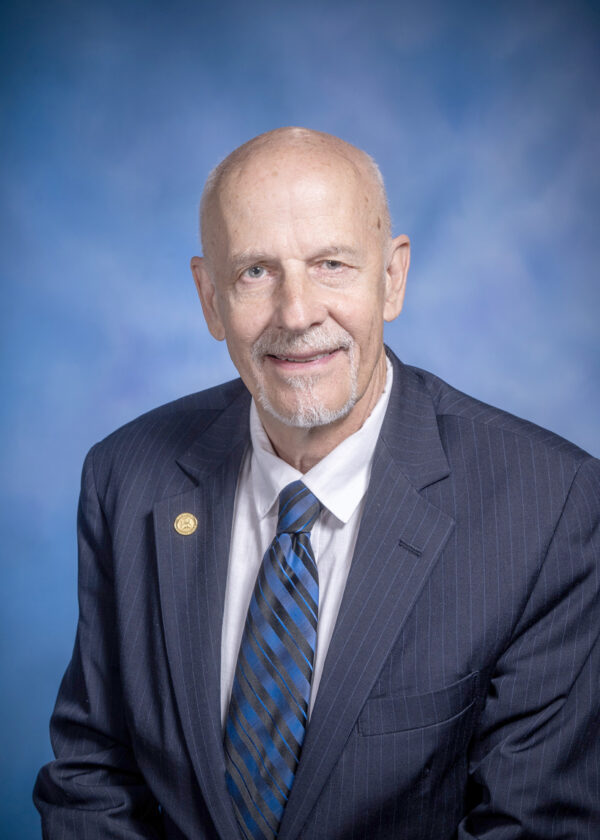
KARL BOHNAK
Republican legislators spend the early hours of Friday morning on the House floor for votes on the fiscal year 2027 budget. (Photo by Katherine Dailey/Michigan Advance)
GREG MARKKANEN
KARL BOHNAK
Trending
LANSING -- Michigan's fiscal year 2027 budget that was passed Friday morning includes new investments in student literacy and continued funding for other priorities, according to Gov. Gretchen Whitmer.
State Rep. Greg Markkanen, R-Hancock, in a news release Friday said the budget locks in critical funding for first responders and schools. It includes no new taxes, strengthens accountability measures and focuses on efficiency in state department spending, he said.
Lawmakers worked through the night Thursday to finalize the $84 billion spending plan for the fiscal year that begins Oct. 1.
According to Bridge Michigan, the budget boosts spending on targeted initiatives, especially programs aimed at helping improve poor student reading scores. It includes $65 million in additional funding for Language Essentials for Teachers of Reading and Spelling teacher literacy training, $10.5 million in extra funding for literacy coaches, $50 million for "high-impact tutoring" grants and $30 million early learning partnerships.
"Governor Whitmer once again brought Democrats and Republicans together to pass a bipartisan, balanced budget that will lower costs, help our kids succeed, and protect Medicaid," State Budget Director Jen Flood said Friday in a news release.
The state expects food stamp work requirements will save the state $71 million as the number of recipients declines, Bridge MIchigan reported. However, implementing work requirements for SNAP and Medicaid is expected to cost the state nearly as much.
The governor's office citied the following savings for residents in the budget:
-- $200 million to continue free school meals for all 1.4 million public school students, saving families about $1,000 per year, per child.
-- Continuing the Working Families Tax Credit, sending an average of nearly $3,900 in tax relief to 665,000 families.
-- Rolling back the retirement tax completely, saving 500,000 seniors an average of $1,000 a year.
Continuing tax exemptions include:
-- Tips (saving 300,000 workers $400 a year),
-- Overtime (saving 500,000 workers $500 a year),
-- Social Security (saving 40,000 seniors $500 a year)
-- $5 million for water affordability, helping families pay their bills and avoiding water shut offs.
-- $5 million for weatherization to help families lower their utility bills.
Regarding K-12 education, the governor's office said the budget includes:
-- $325 million to support school operations through a 2.5% increase in base per-pupil funding -- an additional $250 per student, for a total of $10,300 per pupil. The per-pupil funding represents a 31% increase since Whitmer took office, the governor's office said.
-- $123 million to continue expanded support for special education students - a 7.3% increase in the state allocation.
-- $278 million, to provide a 20% increase in funding to support academically at-risk students and English language learners, and a 10% increase in funding to support career and technical education students, and students in rural school districts.
-- Up to $321 million to support student wellness through continuation of mental health and safety grants to districts.
-- $125 million to reimburse districts with exorbitant transportation costs, allowing them to devote more resources to the classroom.
-- $30 million to support early learning partnerships, ensuring students and families access to high-quality early learning and updated GSR programs statewide.
-- $40 million to reimburse eligible districts for dual enrollment costs, incentivizing districts to encourage more students to pursue college credit while still in high school.
-- $2.4 million increase for Early On services, bringing total funding to $26.1 million. Early On is Michigan's system that connects families of infants and toddlers from birth to age 3 who have, or are at risk for, developmental delays or disabilities with coordinated social, health, and educational services to support early development.
For higher education, the budget includes:
-- $2.2 billion to sustain university and community college operations--advancing Michigan's Sixty by 30 goal of having 60% of working adults with a degree or skills certificate by 2030.
-- $532 million, and more than $1.7 billion to date, for the Michigan Achievement Scholarship, which provides a tuition free pathway for full-time community college students through the community college guarantee, and up to $27,500 for full-time students at public or private four-year universities. More than 106,300 students have been awarded the Michigan Achievement Scholarship since its inception in 2024, and 128,000 students are expected to benefit each year once the program is fully implemented.
-- $25 million to support expanding Michigan Reconnect to adult learners ages 21 and older, giving adult learners a tuition-free pathway to earn an associate degree or skilled trades certificate. More than 66,500 students have enrolled in community college with Michigan Reconnect since it was created in 2021.
-- $1.3 billion in total capital outlay project authorizations for 27 of the state's higher education institutions, with a state cost participation of $524.3 million.
Markkanen said the budget includes $30 million for infrastructure improvements at Michigan Technological University in Houghton. The funding will go to support a Center for Convergence and Innovation.
"Michigan Technological University is one of the Upper Peninsula's greatest assets, and these infrastructure improvements will help ensure it continues attracting talented students, researchers, and employers to our region," Markkanen said. "Investing in Michigan Tech is an investment in our local economy, our workforce, and the future of the U.P. This funding will strengthen innovation while creating opportunities that benefit students and the surrounding communities alike."
State Rep. Karl Bohnak, R-Deerton, said the budget ensures that local scheduled road and bridge repairs statewide are fully funded for next year.
In a news release Friday, Bohnak said the budget also delivers three significant local funding investments he championed for the Upper Peninsula. The projects include $682,000 for the Baraga County Road Commission, $500,000 for the 906 Adventure Team, and $35,000 for the United Way of Marquette County.
Bohnak said he will share additional details about each investment in the coming days.
———
Jim Anderson can be reached at 906-774-2772, ext. 85226, or janderson@ironmountaindailynews.com.