
One case of cyclosporiasis confirmed in Delta County
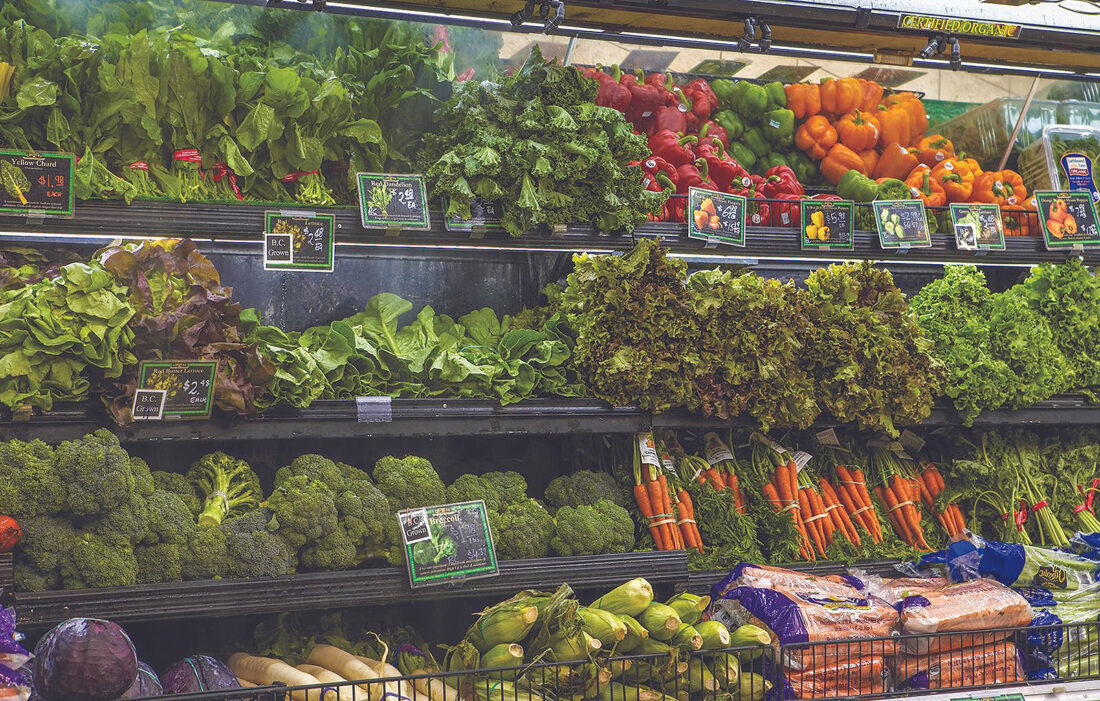
Current results of the Michigan Department of Health and Human Services’ investigation have identified lettuce and other salad greens as a potential source of the recent cyclosporiasis outbreak. (Courtesy photo)
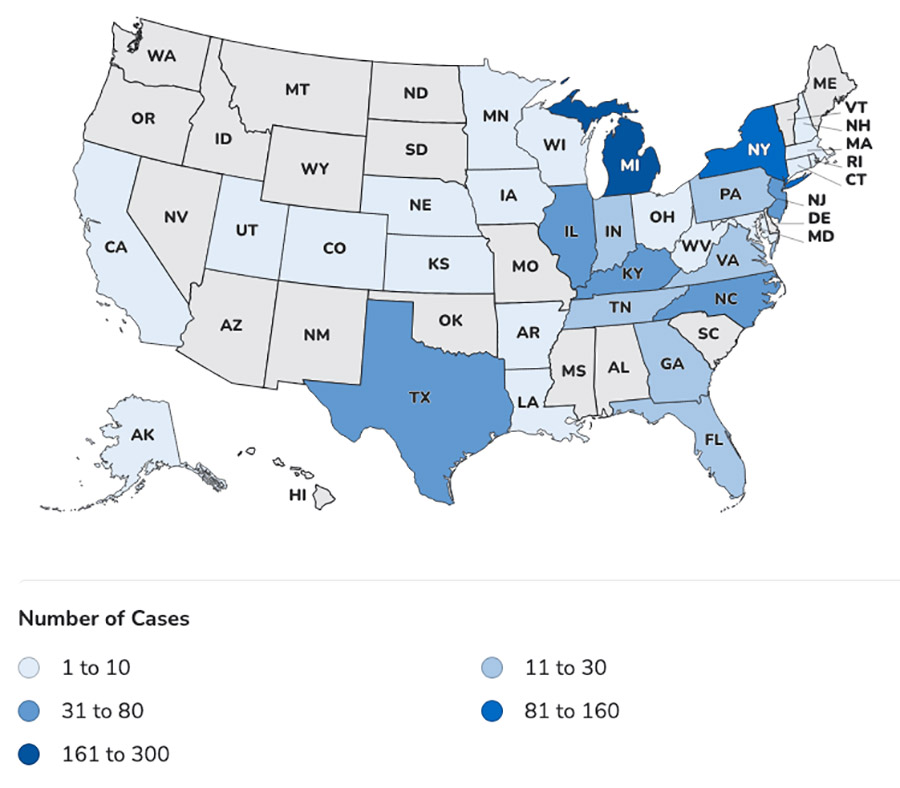
Centers for Disease Control and Prevention map of cyclosporiais cases acquired in the United States since May 1 as of Tuesday. Data are preliminary and subject to change. (Map courtesy of the CDC)
Current results of the Michigan Department of Health and Human Services’ investigation have identified lettuce and other salad greens as a potential source of the recent cyclosporiasis outbreak. (Courtesy photo)
Centers for Disease Control and Prevention map of cyclosporiais cases acquired in the United States since May 1 as of Tuesday. Data are preliminary and subject to change. (Map courtesy of the CDC)
Trending
DELTA COUNTY -- As Michigan continues to grapple with a widespread cyclosporiasis outbreak, health officials have confirmed the Upper Peninsula's first outbreak-related case in Delta County.
The Michigan Department of Health and Human Services and the Michigan Department of Agriculture and Rural Development are investigating an outbreak in the state of cyclosporiasis, a diarrheal illness caused by the parasite Cyclospora cayetanensis.
As of Tuesday, MDHHS reported 3,309 cases of cyclosporiasis in the recent outbreak. By comparison, Michigan typically records 40 to 50 cases of cyclosporiasis in an entire year, according to a MDHHS news release.
The Delta County case was the only outbreak-related case identified in the Upper Peninsula as of Tuesday. According to Jennie Miller, immunization/communicable disease coordinator for Public Health Delta and Menominee Counties, Delta County's case is associated with travel to the outbreak area in southeast Michigan.
"We don't see a lot of cyclospora locally," Miller said. "Since the beginning of 2020, this is our second case."
An earlier case reported in Houghton County was determined to be unrelated to the downstate outbreak, as the individual contracted the parasite while in Mexico.
The recent outbreak spans 31 states in the country, with Michigan reporting the highest number of cyclosporiasis cases, followed by New York, Texas, North Carolina, Kentucky, Illinois and New Jersey, according to the Centers for Disease Control and Prevention.
Current results of the MDHHS' investigation have identified lettuce and other salad greens as a potential source of the outbreak. Other foods have not been ruled out, and no specific type of produce, grower or supplier has been identified as the source.
"Although we do not have a definite product identified as the source of the outbreak, we want to let Michiganders know what we have learned so far so they can take steps to protect their families," Dr. Natasha Bagdasarian, Michigan's chief medical executive, said in a news release.
According to MDHHS, Cyclospora cayetanensis is commonly found in developing countries and is spread through food or water contaminated with feces.
Symptoms typically appear two to 14 days after exposure and can include frequent watery diarrhea, loss of appetite, weight loss, abdominal cramps, bloating, nausea and a low-grade fever. The illness is unlikely to spread from person to person, and it is not known to infect animals, according to the CDC.
There is currently no evidence linking the current outbreak to swimming in lakes or other recreational water activities.
The statewide outbreak was first announced to the public on June 29, when the Monroe County Health Department stated it was investigating a cluster of cases in the area. According to MDHHS, the first reported cases of cyclosporiasis were submitted to the agency June 22.
Since May 1, the CDC has received reports of 1,645 confirmed domestic cases of cyclosporiasis and is aware of more than 5,100 cases that require further analysis to confirm the illness as domestically acquired cyclosporiasis.
So far this year, multiple states have reported an increase in cases in the past two weeks compared with the same period in 2025, the CDC said. The CDC noted states are likely to report higher case counts of cyclosporiasis than reflected in CDC data, and they are working closely with states to update numbers as additional cases are confirmed.
No deaths have been reported as of Tuesday. Sick people ranged in age from 5 to 88 years, with a median age of 44, and 59% were female. The median illness onset date was June 18.
Hospitalization data on the MDHHS website had not been updated since Thursday, but at that time, 44 patients had been hospitalized in Michigan. The CDC reported 141 hospitalizations from the illness as of Tuesday.
Health officials say outbreaks in the United States have historically been linked to contaminated fresh produce, particularly during the summer months. The CDC considers cyclosporiasis season to be May 1 through Aug. 31.
Based on early findings and previous cyclospora outbreaks involving prepackaged salad greens, MDHHS recommends these lettuce-specific safety measures for individuals serving, preparing or consuming lettuce and salad greens in affected counties:
-- Buy whole heads of lettuce rather than bagged, pre-washed lettuce or pre-mixed salad kits.
-- Remove and discard the outer two to three layers of leaves.
-- Thoroughly wash the remaining inner leaves under clean running water. "Pre-washed" does not guarantee safety, and rewashing bagged lettuce is unlikely to remove cyclospora.
-- Prioritize cooking whenever possible. For any greens that can be cooked, cooking to a temperature of at least 158 F (70 C) is the safest option, as the parasite is resistant to routine chemical disinfection and washing alone cannot guarantee its removal.
Previous cyclosporiasis outbreaks in the United States and Canada have also been linked to bagged salad mixes and kits, fresh cilantro, fresh basil, raspberries, snow peas and green onions.
MDARD recommends washing all produce under running water before eating, cutting or cooking them; scrubbing firm produce such as melons and cucumbers with a clean produce brush; cutting away damaged or bruised areas on produce before preparing and eating; and refrigerating cut, peeled or cooked produce promptly.
These recommendations are particularly important for people who have a higher risk of dehydration or weakened immune systems such as patients on chemotherapy, organ transplant recipients, infants, young children and elderly people.
"People experiencing gastrointestinal illness, such as sudden and ongoing diarrhea, are encouraged to contact their health care provider for evaluation," Miller said. "You should call a doctor for diarrhea if you experience severe symptoms, persistent diarrhea lasting more than 24 hours (less than 24 hours for infants and young children) or signs of dehydration."
Anyone experiencing symptoms are encouraged to specifically request testing for cyclospora, as routine stool tests may not detect the parasite. Cyclosporiasis is treated with antibiotics, along with rest and fluids to maintain hydration.
Because symptoms can take up to two weeks to develop and food distribution networks across the state are complex, MDHHS expects the investigation to take some time.
MDHHS continues to work with local, state and federal partners to interview patients testing positive for cyclosporiasis and trace the source of the outbreak.
For more information, go to the MDHHS Infectious Disease Outbreaks web page, https://www.michigan.gov/mdhhs/keep-mi-healthy/infectious-diseases/infectious-disease-outbreaks. Additional information is also available at About Cyclosporiasis | Cyclosporiasis | CDC, https://www.cdc.gov/cyclosporiasis/about/index.html.
———
Sophie Vogelmann can be reached at 906-786-2021 or svogelmann@dailypress.net.