
Standoff over the Strait of Hormuz escalates
Trending
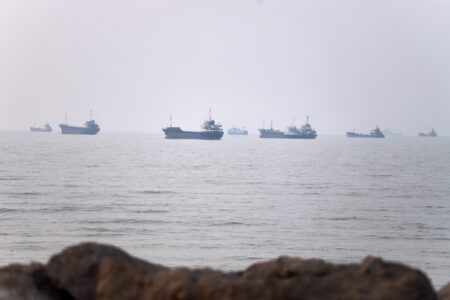
DUBAI, United Arab Emirates (AP) -- The United States launched several waves of strikes on Iran on Sunday over an Iranian attack on a container ship in the Strait of Hormuz that set it ablaze and left a crew member missing earlier in the weekend. Iran responded with attacks on Bahrain, Kuwait, Qatar, Jordan and Oman -- the nation on the other side of the strait that Tehran has pressed to collaborate in managing shipping traffic.
The U.S. military said it was seeking “to degrade” Iran’s “ability to attack commercial ships freely transiting” the strait. The statement came after a third round of strikes late Sunday night and into Monday in Iran.
Iranian state media acknowledged the latest attacks early Monday, describing explosions in several locations.
The first wave of strikes, on Sunday morning, was in response to an Iranian strike on a container ship in the critical waterway the day before. In response, Iran hit Gulf Arab states in an escalating cycle of violence that left the negotiations between Tehran and Washington to end the war at the edge of collapse.
The U.S. struck again later Sunday. The governor of Qeshm Island near the strait told Iran’s state-run IRNA news agency that projectiles were fired at military targets, with no casualties. Explosions were also heard in the coastal city of Bandar Abbas and Hajiabad city to the north.
A U.S. official said a few strikes targeted missile and air defense systems and paramilitary Revolutionary Guard boats. The official spoke on condition of anonymity because they were not authorized to publicly discuss military operations.
Iran and the U.S. are nearly at the midway point of the 60-day period of their interim deal aimed at reaching a permanent end to the war. The strait, a key route for the global supply of oil and natural gas and long considered an international waterway, has become a sticking point in negotiations that seem in danger of collapse.
“A return to full-scale hostilities would have catastrophic consequences,” United Nations Secretary-General António Guterres said, according to a statement.
The U.S. military earlier Sunday said it hit some 140 targets, including missile and drone launch sites, ammunition dumps, communication equipment and other sites.
The attacks were heavier than in recent days. The U.S. has launched three rounds of airstrikes targeting Iran in the past week over attacks on ships heading through the strait using a route off Oman, seeking to avoid the Islamic Republic’s territorial waters.
“We bombed the hell out of them last night,” President Donald Trump told NBC’s “Meet the Press.”
Semiofficial Iranian news agencies reported that a navy officer was killed. Iran retaliated by attacking nations in the region hosting U.S. military forces, while insisting it alone must control the strait and potentially charge vessels for traveling through it.
“The era of one-sided deals is OVER,” Mohammad Bagher Qalibaf, the speaker of Iran’s parliament and a main negotiator, wrote. “We told you: keep your word or pay the price. Reality is knocking.”
Iran said the strait was closed until calm is restored, and Tehran would consider targeting “additional enemy bases in the region” if it faced more attacks. The U.S. military and Trump asserted that the strait remained open.