
Spotted fawn will need some luck
Northwoods Notebook
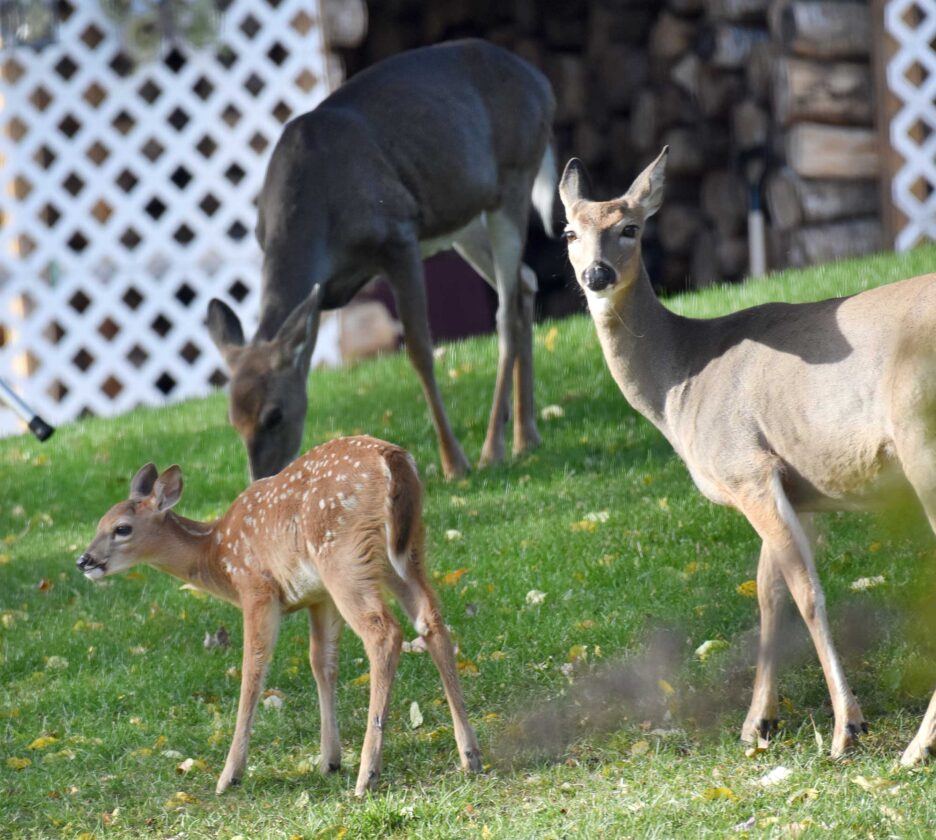
This fawn at Six Mile Lake was apparently born in mid-summer. If the winter is mild, it might survive. But it will need to shift soon to a winter coat. (Betsy Bloom/Daily News photos)
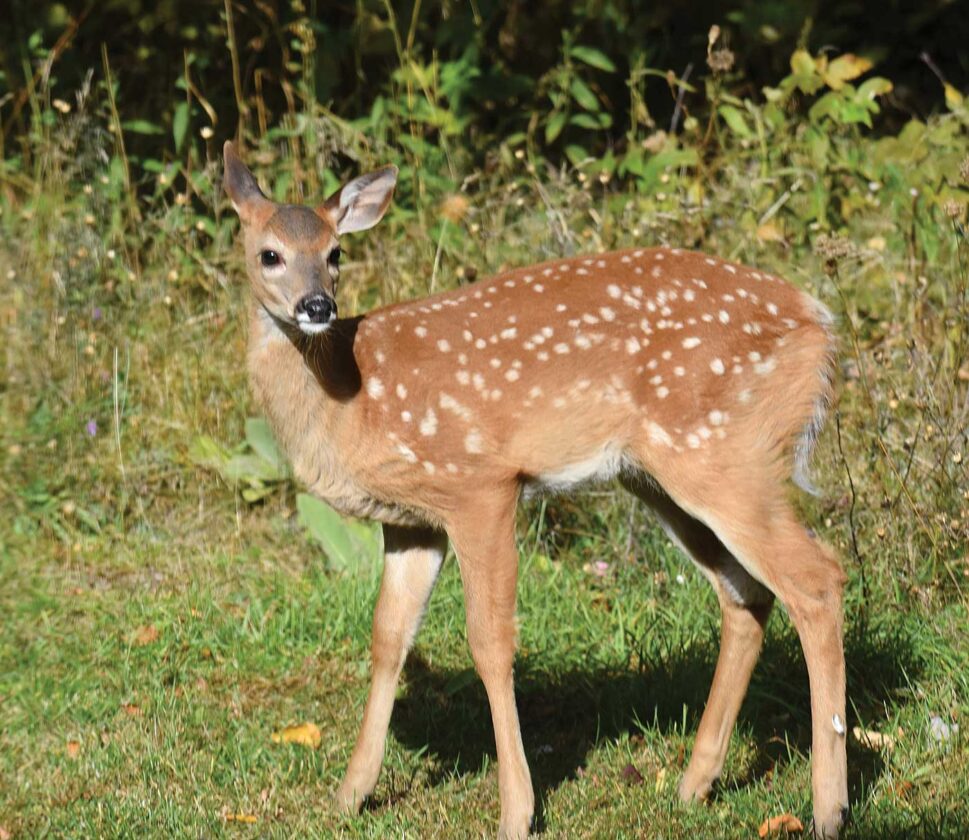
A fawn this young faces long odds to get through winter without a reliable food source.
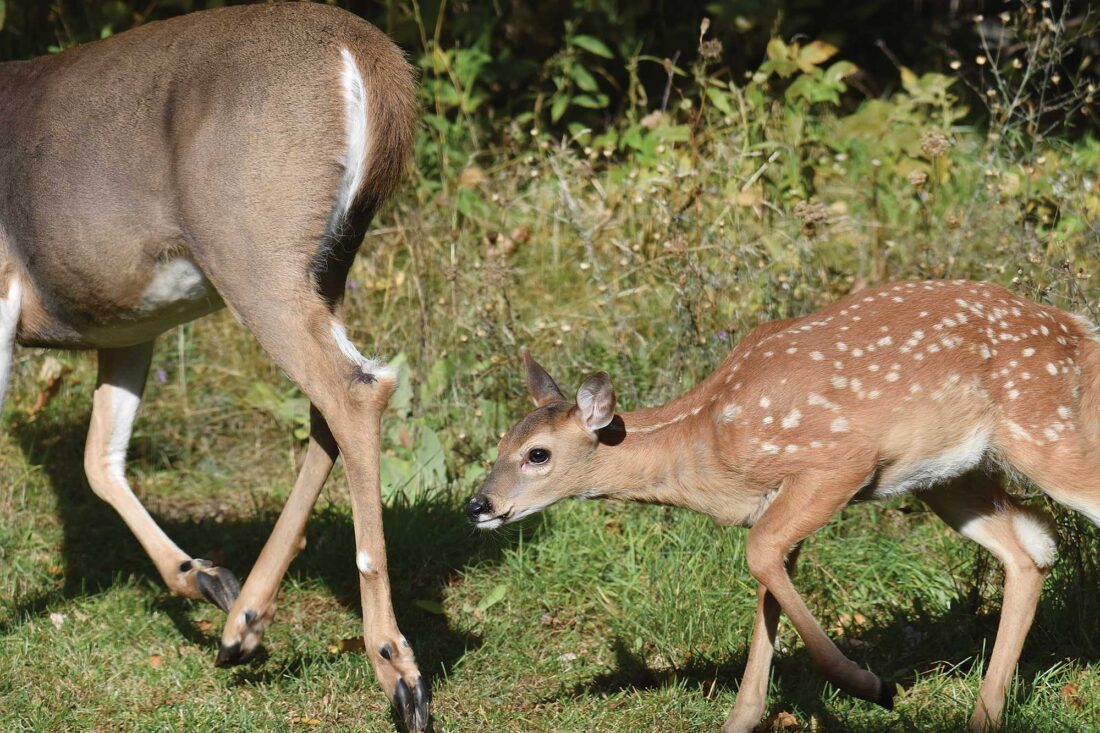
This fawn at Six Mile Lake was apparently born in mid-summer. If the winter is mild, it might survive. But it will need to shift soon to a winter coat. (Betsy Bloom/Daily News photos)
A fawn this young faces long odds to get through winter without a reliable food source.
Trending
Watching the year's young fawns roam around the yard normally is among the many delights of life on Six Mile Lake.
But not in early October. Not seeing one this small, with spots still vivid, while all other deer around it sported the solid gray coats better suited for the coming winter.
It appeared healthy, in good flesh, and was moving easily, grazing along with its mom. Yet it looked no larger than most fawns in late summer.
Brian Roell, a Michigan Department of Natural Resources wildlife biologist in Marquette, said it's one of the latest-born fawns he's had reported, though some hunters do say they've had spotted fawns come past during deer season.
"It's pretty odd," he said of having one this young in October.
While he couldn't provide an exact age based on appearance, he speculated the fawn had been born mid- to late July, roughly two months to six weeks behind the majority of the year's fawn crop, which usually comes in late May and early June.
What could lead to such an immature fawn? Some does may not take in a fall breeding so will cycle again, getting pregnant later in the season. Some doe fawns from late year may mature enough in winter to be bred, again late.
I wondered about the latter, given she is a smallish doe that still had a faint hint of spotting along its shoulder blades and spine. First-year does, too, usually have single fawns, as this one does. But Roell said the shadow spotting on the doe is just variations in pelt and not an indicator of age.
Unfortunately, the prospects are "not good" that a fawn this small and immature can survive the winter, Roell said. The rust color and spots that provide camouflage in the summer now stand out and will even more if snow takes hold, so it might draw predators.
But the bigger issue is finding enough food through the lean winter months, especially since the fawn hasn't had much time to build up reserves in its body, as its energy has been focused on growing.
However, if the winter proves mild, it might beat the odds, especially if it has access to a reliable food source, such as a food plot or other human assistance, Roell said.
Which both doe and fawn appear to have figured out early. They have been regulars under the apple trees, in the yard and at our bird feeder, though mom for now seems to be the only one munching on the black oil sunflower seeds. It makes me wonder if she came out of one of the past groups of fawns from the deer herd that congregates in our yard during the winter, using the seeds to supplement their diet.
So food may not be much of a concern, even for a late fawn.
But cold -- especially cold and wet -- could be.
With fall apparently accelerating into winter, this season's fawns should have transitioned to that longer, gray-colored coat, which has hollow guard hairs and a softer insulating undercoat that holds warmth close to the skin. This one, still in its spots and rust, remains better dressed for summer.
If it can't mature enough to make the switch before real winter weather sets in, it may perish from exposure to the cold. As is, a good portion of its resources in even these current near-freezing and wet conditions will be expended on keeping warm, which could hinder growth.
In a December 2015 article for Woods-n-Water News, Richard P. Smith wrote that he'd observed does on Marquette's Presque Island drop fawns in August 2014 and September of that year. The August fawns did not make it through the winter, so he reasoned the September one would not as well.
But one born in July 2015 was "doing well," he noted in the article, as it grew its fall coat during October.
So it will be a race for this little fawn to mature quickly to gain that winter coat. One that gained more urgency as a wet snow began to fly Friday.
As I left for work in the afternoon, doe and spotted fawn went bounding across the road into the woods, after munching on windfall apples.
Here's hoping this baby can beat the odds. I'll provide regular updates as often as I can.
Betsy Bloom can be reached at 906-774-2772, ext. 240, or bbloom@ironmountaindailynews.com.