
Visiting deer show distinct traits as winter presses on
Northwoods notebook
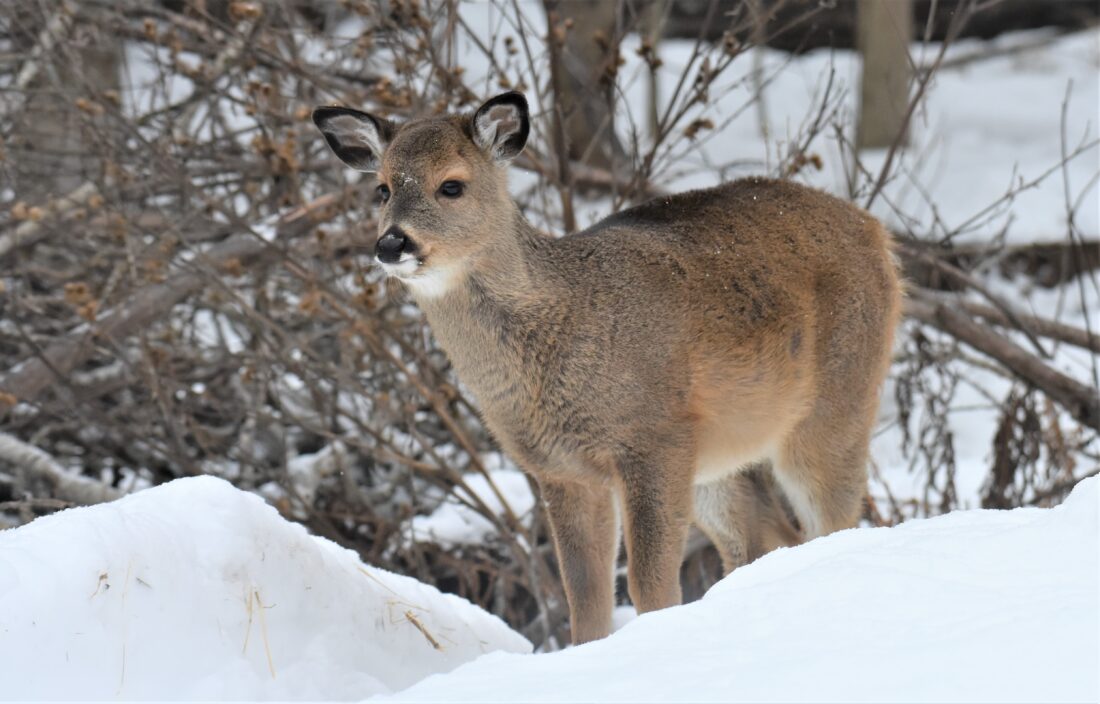
A fawn born this summer near Six Mile Lake in northern Dickinson County has grown a woolly coat, but remains undersized. (Betsy Bloom/Daily News photos)
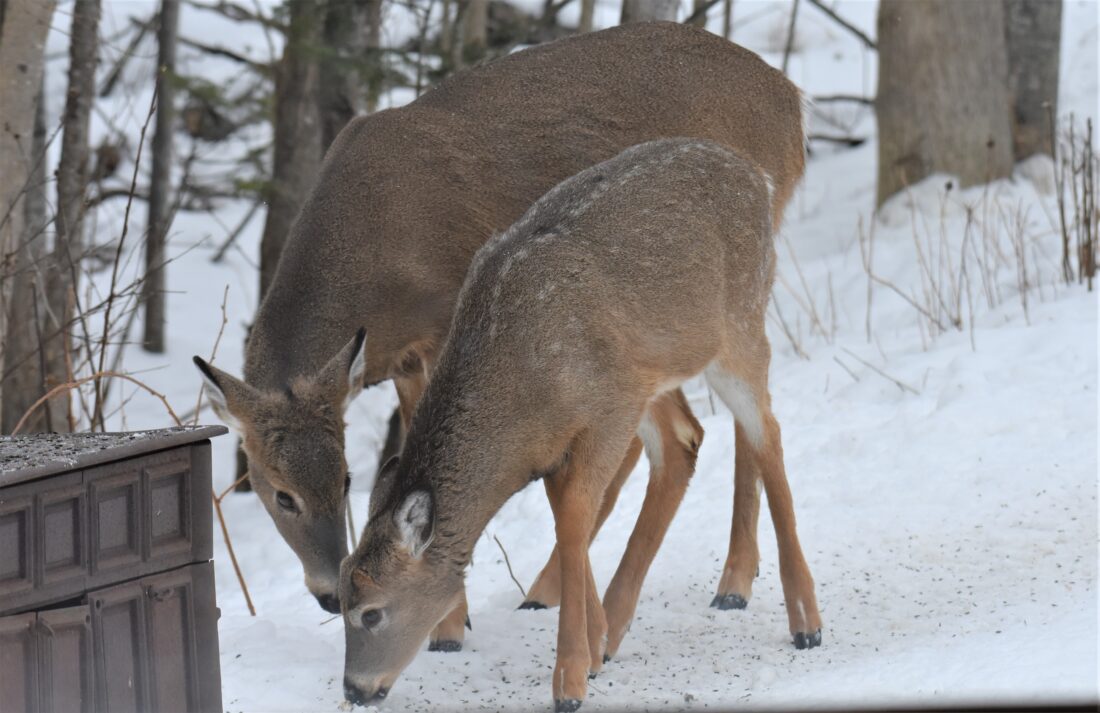
The fawn in the foreground of this photo at Six Mile Lake is well-grown, even though it’s retained many of its spots.
A fawn born this summer near Six Mile Lake in northern Dickinson County has grown a woolly coat, but remains undersized. (Betsy Bloom/Daily News photos)
The fawn in the foreground of this photo at Six Mile Lake is well-grown, even though it’s retained many of its spots.
Trending
Continuing with updating some of the stories of 2022, this week will look back on a fawn that had to overcome a late start to life.
The still-spotted fawn featured in October, thought to have not been born until mid- to late July rather than the usual late May to early June, did manage to develop a more proper winter pelt before the snow seriously began to fly and temperatures dropped.
But it remains distinctive from the other fawns this winter by being smaller, shorter-faced-- this "brachycephalic" trait is common to younger mammals and thought to trigger a care response -- and having a more reddish cast to what ended up to be a very woolly coat. It seems to have retained the tipping from its younger days in October.
It still is a regular at our bird feeders at Six Mile Lake, along with its mom, which must have some status among the does, as this visibly smaller fawn not only gets decent access to the black oil sunflower seeds and peanuts in the shell, it is confident enough to challenge and drive away larger deer. With no button buds on its brow, I'm guessing it's a female that, in time, may become a dominant doe itself if able to reach maturity.
While undersized, it appears in good shape -- no visible ribs or spine -- and continuing to grow despite the lean season. Still, it's tough to tell whether being born weeks behind will leave it permanently stunted.
Again, we'll try to provide as much support as we can. It's pretty bold about coming into the yard. My only concern is it remains vulnerable to even some of the smaller predators, such as bobcat or coyote.
Surprisingly, another spotted fawn recently has appeared among the herd. It's almost the opposite of the late fawn -- well-grown, a normal gray winter coat -- but somehow has retained much of its spots, faint yet distinct, like fat snowflakes fell along its back. It even has two string-of-pearls lines down its back -- my mom says it's like stripes on a skunk.
A few deer species -- the fallow in Europe and Asia, the chital or axis of India and neighboring countries and the sika and related Philippine spotted in east Asia -- still have spots to varying degrees as adults but none are native to North or South America.
We've had deer that showed some shadow spots after transitioning to their winter look but not to this degree. So it's been a unique winter with the two fawns -- one small and no longer spotted, the other large and dappled. It'll be interesting to see how long each retains its distinct traits that make them stand out among the local deer herd.
Betsy Bloom can be reached at 906-774-2772, ext. 240, or bbloom@ironmountaindailynews.com.