
Northwoods notebook: Waterfowl take advantage of ice-free Six Mile
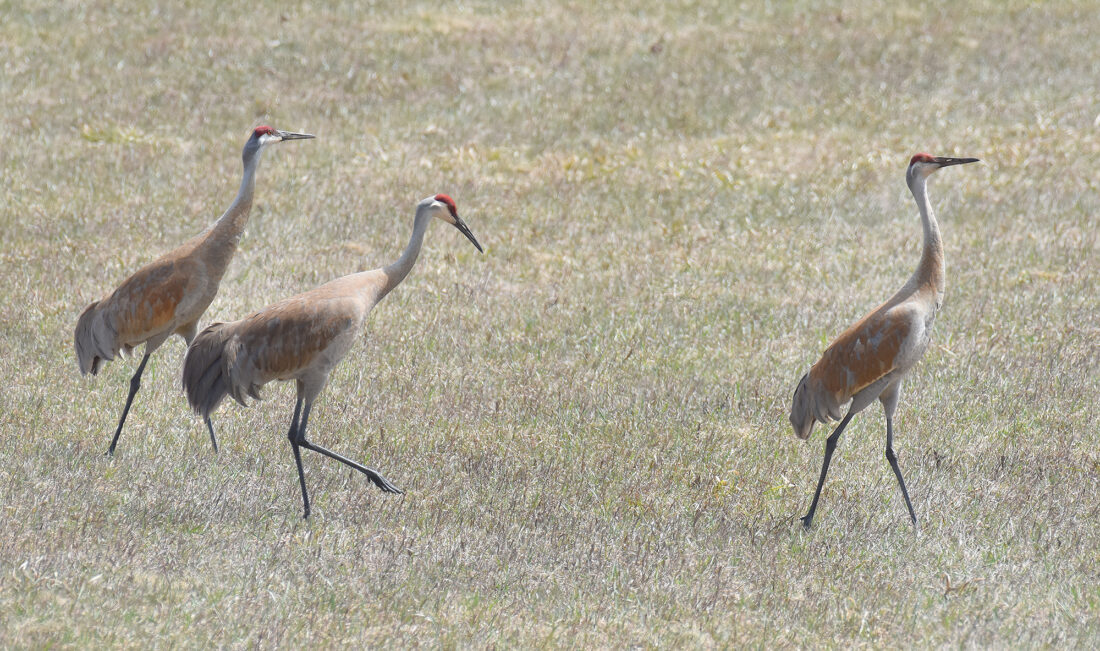
Three of five sandhill cranes stroll Thursday through a field along Six Mile Lake Road. In the end, three of the cranes — one of which appeared to be a juvenile — left the field to a single pair.
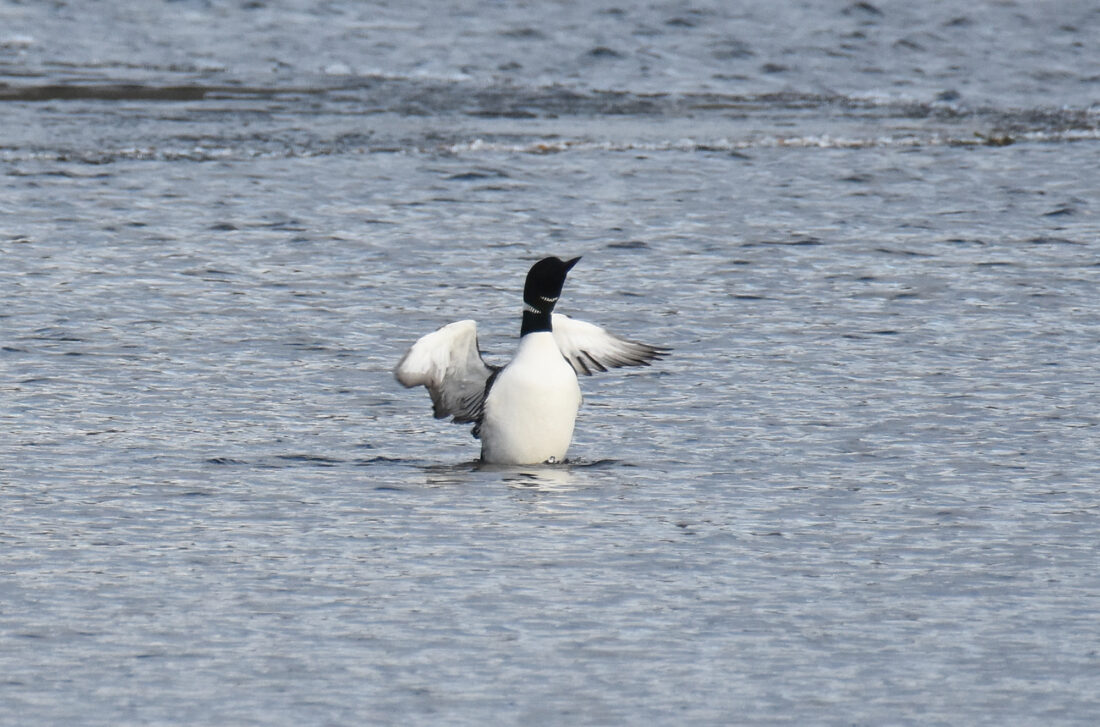
A common loon was back at Six Mile Lake by last weekend. The last of the ice behind the bird was gone by week's end. (Betsy Bloom/Daily News photos)
Three of five sandhill cranes stroll Thursday through a field along Six Mile Lake Road. In the end, three of the cranes — one of which appeared to be a juvenile — left the field to a single pair.
A common loon was back at Six Mile Lake by last weekend. The last of the ice behind the bird was gone by week's end. (Betsy Bloom/Daily News photos)
Trending
The ice is finally completely gone on Six Mile Lake -- I suspect the rains early Friday took away the last remnants that had been hanging on in the center of the lake.
This past week seemed to bring a host of waterfowl: more common and hooded mergansers, even one male red-breasted merganser, a type with a ragged crest and rusty chest; wood ducks; ring-necked ducks, which should be called ring-billed, as that’s a more prominent identification mark; buffleheads, little black-and-white diving ducks with feathering and white patch that makes its head look oversized; and, of course, mallards and Canada geese.
The red-breasted merganser was a welcome sight, not only because it’s not as common on the lake as the other two but the only one I’d been able to photograph before in May 2022 appeared to have avian influenza, paddling mechanically along the lakefront until it was snatched up by a bald eagle that likely contracted the disease as well from its easy meal.
All the waterfowl so far this year, thankfully, looked and acted healthy. There had been some concern about a surge of highly pathogenic avian influenza, or HPAI, during spring migration.
A couple pied-billed grebes fished off shore as well this week. But the species I’d love to see -- horned grebes -- continue to elude me.
While I thought a pair passed by our dock earlier in the week, I’ve since only seen one loon. If it holds, that would make it unlikely for a repeat of last year’s successful nesting, though the chick did not appear to make it past a week or two.
After saying the sandhill cranes had been conspicuously absent, five were mingling together Thursday in a large field along a curve on Six Mile Lake Road. One was visibly smaller, which made me wonder if it was a chick from last year. The other four strode around, sometimes in synch, and did some chasing but no dancing before two finally lifted off toward the west, sent off with a rattling call from the pair that remained. The smaller crane soon flew away as well.
I could hear the “witchety-witchety-witchety” call of the common yellowthroat warbler in the backyard, though the bird itself went unseen. A yellow warbler, too, revealed its presence with song by the boat launch on Six Mile Lake. From the growing chorus, I’m sure other warblers and small songbirds are back as well, I’m just not as familiar with their calls.
Perhaps more from wishful thinking than need, I put up a hummingbird feeder with only a little fresh-made nectar, enough that any first individual would have something to sip.
The Hummingbird Central website map at https://www.hummingbirdcentral.com did list one U.P. report Thursday in Mathias Township in southwest Alger County. Door County in Wisconsin had a couple sightings as well, and Gillett, Wis., in Oconto County.
As for the other late migrants that like feeders -- orioles, rose-breasted grosbeaks and indigo buntings -- a post Friday on Birding Wisconsin Facebook page had a male Baltimore oriole as far north as Barron County, while others reported grosbeaks in Menasha, Janesville and Sun Prairie.
More insects seem to be emerging -- moths, butterflies, wasps, flies. I haven’t seen any bees yet, but the willow catkins now have an ample supply of pollen ready for them.
As always, I welcome reports on what people are seeing as spring progresses.
Betsy Bloom can be reached at 906-774-2772, ext. 85240, or bbloom@ironmountaindailynews.com.