
Northwoods notebook: Life cycles through a too-fast summer
Northwoods Notebook
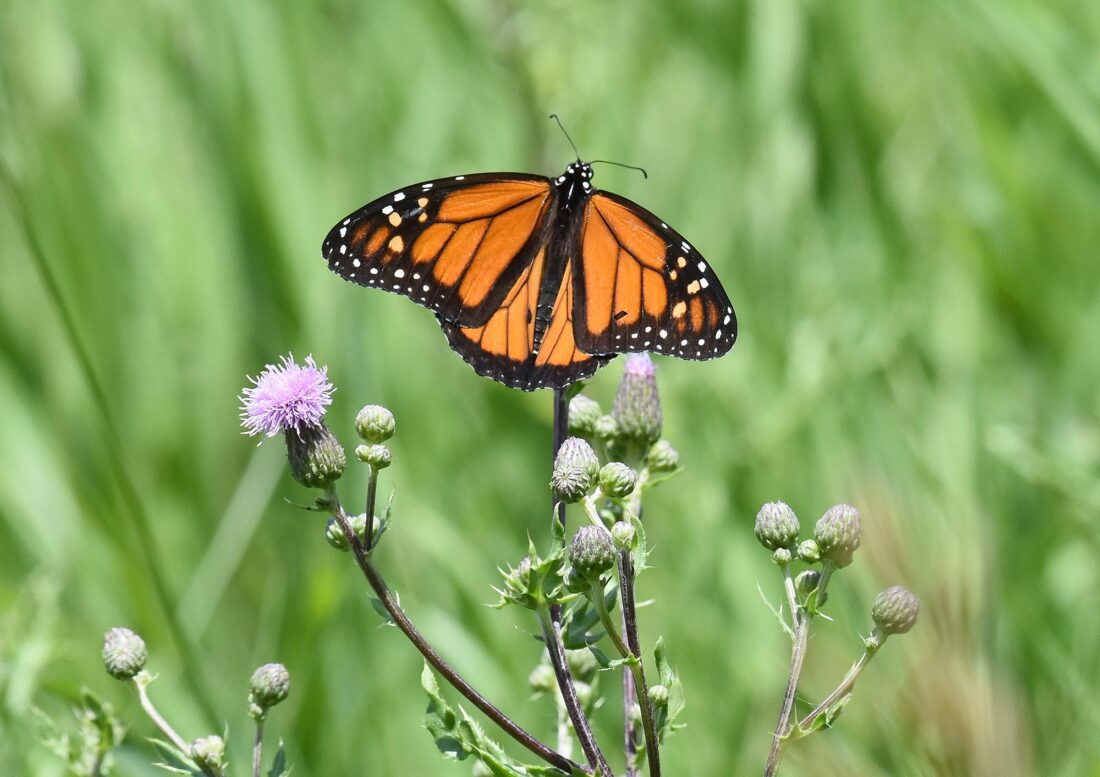
A male monarch butterfly feeds on a thistle near a stand of milkweed along Six Mile Lake Road in northern Dickinson County. It was among three that stuck close to the milkweed, perhaps watching for a female to come by. (Betsy Bloom/Daily News photo)
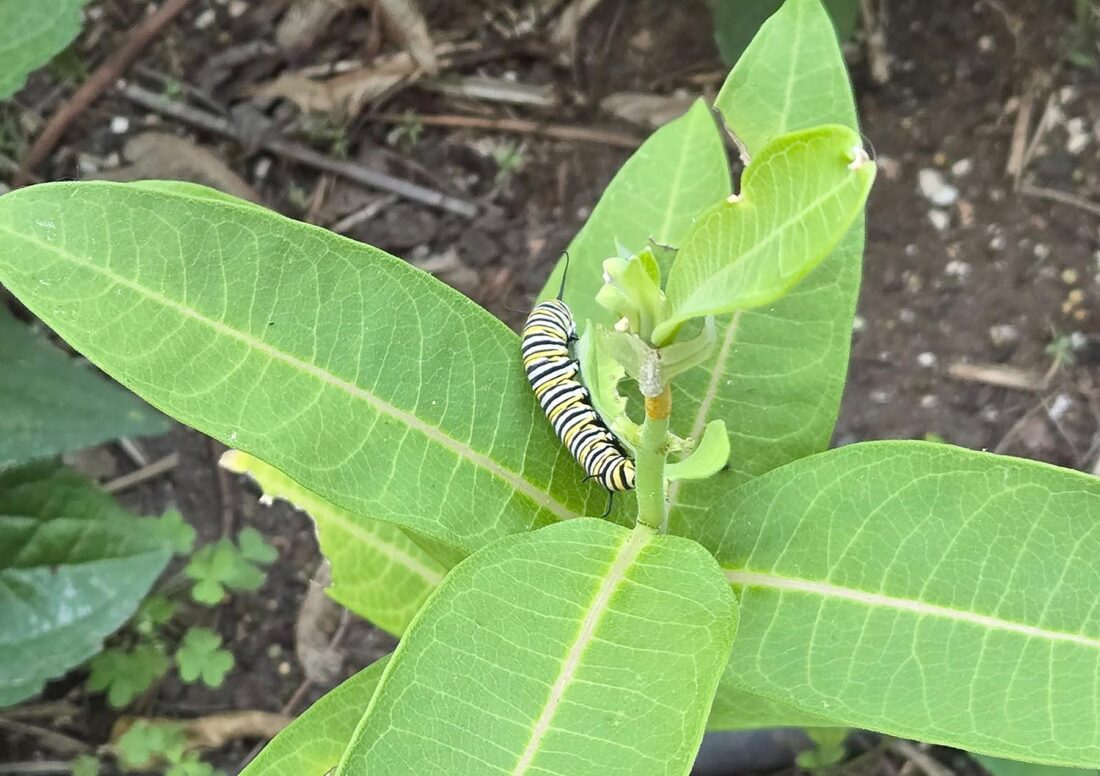
The monarch caterpillar that developed on a single milkweed plant in Phyllis Carlson's garden in Quinnesec. It has since disappeared — to complete the transition to adult butterfly, Carlson hopes. (Phyllis Carlson photo)
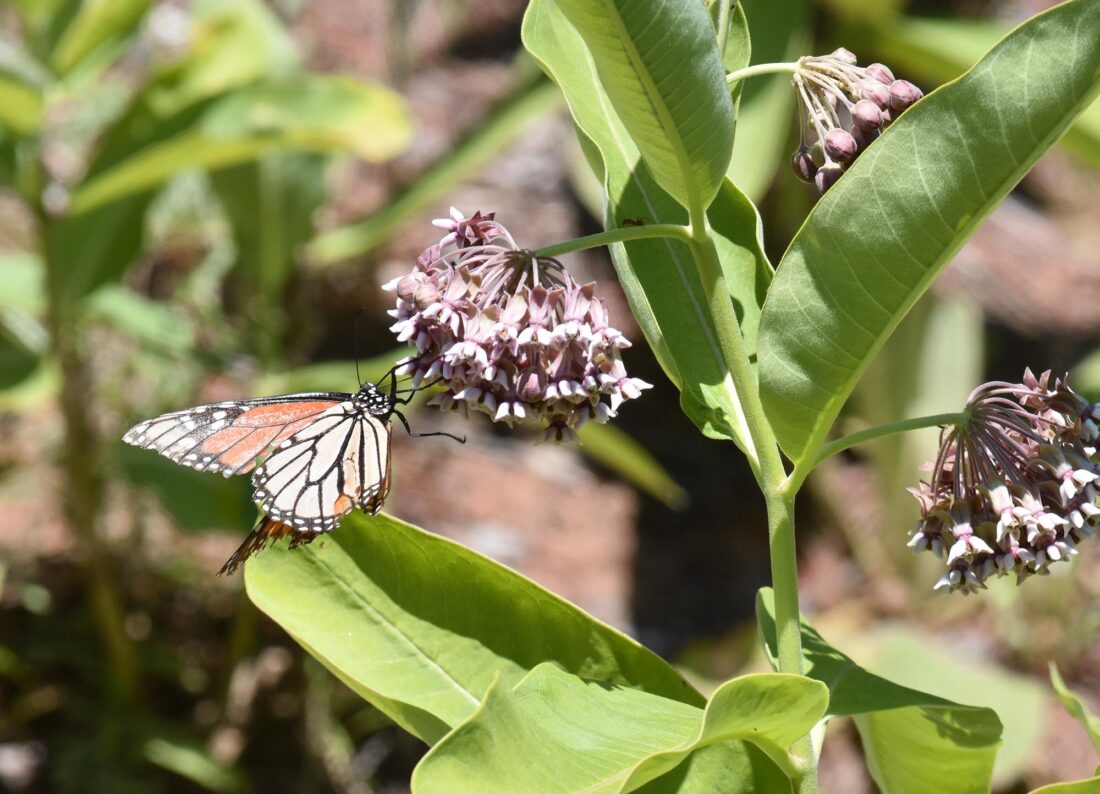
A well-worn monarch sips from the blooming milkweed that also acts as host plant for its caterpillars. (Betsy Bloom/Daily News photo)
A male monarch butterfly feeds on a thistle near a stand of milkweed along Six Mile Lake Road in northern Dickinson County. It was among three that stuck close to the milkweed, perhaps watching for a female to come by. (Betsy Bloom/Daily News photo)
The monarch caterpillar that developed on a single milkweed plant in Phyllis Carlson's garden in Quinnesec. It has since disappeared — to complete the transition to adult butterfly, Carlson hopes. (Phyllis Carlson photo)
A well-worn monarch sips from the blooming milkweed that also acts as host plant for its caterpillars. (Betsy Bloom/Daily News photo)
Trending
It's already midsummer. One of the few drawbacks of living in the Northwoods is summer seems all too fleeting, the June frenzy of nesting and births quickly passing by July.
Yet a few creatures still are looking to create another generation while the time is ripe.
Some are on a second round. Our eastern phoebes have already raised a first batch above the pole barn door light and have two new hatchlings after switching to the light on my mom's quilt shop. American robins and some other songbirds are on a second nesting as well.
And for several species, high summer is the ideal time to start a family.
American goldfinches don't nest until July and even August, when plants such as thistle and coneflower have produced seeds to feed their young. Same with cedar waxwings, though they delay until early fruit like chokecherries began to ripen.
The butterflies indicate the passing months as well. The Canadian tiger swallowtails that dominated June have faded, though a few individuals remain. Their caterpillars this summer -- hatched on deciduous trees such as birch, aspen, willow and black cherry -- will develop into pupae that overwinters in leaf litter to hatch next spring.
Some places to the south may have the larger Eastern tiger swallowtails; it is less cold-tolerant than the Canadian but may have two to three broods in a year in warmer climates and continue to be seen through October.
Areas where the two overlap now can have a third variety, dubbed the Midsummer tiger swallowtail, because it is still flying through July and early August when the Canadian has long since vanished.
The offspring of the commas and mourning cloaks that overwintered as adults should soon be emerging, the next generation that in fall will find a rock crevice, hollow tree or woodpile as shelter to hibernate through the next winter, giving them an extremely long lifespan for a northern butterfly.
Phyllis Carlson in recent weeks has documented on Facebook a monarch caterpillar growing up on a lone volunteer milkweed plant in her garden. It has since disappeared, leaving well-chewed stems behind, but Carlson hopes it's in the garden "becoming a butterfly."
Migrating monarch butterflies supposedly returned to the region in late May, according to online reports. They normally take a month to go from egg to adult, so this could be the first or even second brood this summer. I have been scanning the stands of milkweed but have yet to spot a caterpillar, though did see three adults at the same time, feeding on the newly opening blooms.
The first two generations of monarch adults produced in the north will last only two to six weeks, but the third group that emerges in late summer to early fall will be the one that makes the famous migration to Mexico, according to the U.S. Fish and Wildlife Service. There they'll survive eight to nine months until it can head into the southern U.S. and give rise to the first generation of 2027, starting the cycle again.
The Xerces Society for Invertebrate Conservation posted in March that eastern monarch butterfly numbers overwintering in Mexico did increase this year but are still down from past levels seen for the species. The full article can be read at https://www.xerces.org/press/eastern-monarch-butterfly-numbers-increase-but-remain-below-historic-levels.
The amount of overwintering habitat occupied by monarch butterflies in central Mexico increased 64% from 2025, according to the annual census released by World Wildlife Fund-Mexico and partners, the March 17 article states.
The butterflies were found covering an area of 7.24 acres, which means the eastern monarch population that migrates between Canada and Mexico each year showed an improvement from last winter's area of 4.42 acres. The annual survey measures the area of forest in which monarch butterflies hibernate each winter, providing a reliable indicator of the eastern monarch's population status.
"While an increase is great news, the numbers in Mexico are still well below historic norms," Scott Black, director of the Xerces Society for Invertebrate Conservation, said in the article. "With the western monarch population that overwinters in California seeing the third worst year on record, we urgently need better protections for this beloved butterfly."
So let's hope the group now here has a good summer to send the next generation south again. As Carlson's example shows, sparing the milkweed from the mower or weed-whacker can help.
Betsy Bloom can be reached at 906-774-2772, ext. 85240, or bbloom@ironmountaindailynews.com.