
Bird count welcomes all participants
Northwoods Notebook
Trending
The arrival of February means it's almost time for the 26nd annual Great Backyard Bird Count, set to take place worldwide Feb. 17-20.
It's easy to participate in this count, as it can be done by watching from a window in the warm comfort of home if you so choose. Unlike the Christmas Bird Count, numbers and species seen don't have to be relayed through a coordinator. The information can be personally entered online.
The Great Backyard Bird Count is an inter-organizational effort between the Cornell Lab of Ornithology, National Audubon Society and Birds Canada. "We work together to bring the joys of bird watching to our members," the Cornell Lab states on its Great Backyard Bird Count website, https://www.birdcount.org/.
The effort provides a snapshot avian census of sorts that can help researchers better gauge how bird species and populations are faring throughout the world.
The event asks that participants spend at least 15 minutes on one or more of those four days noting each bird species and numbers seen, at home or wherever they might feel inclined to count. That data then can be entered at birdcount.org.
This is a great and easy way to play "citizen scientist"; school classes in particular are encouraged to join in the effort. All, from beginning bird watchers to experts, are welcome to participate.
This could be a good year for monitoring those backyard feeders or fruit trees and shrubs, as the winter already has seen some noteworthy seasonal birds in the region -- such as evening and pine grosbeaks and Bohemian waxwings -- though it's unclear how many of these nomadic visitors remain.
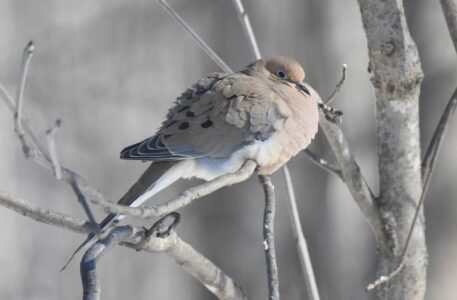
Organizers also encourage participants who enjoy photographing birds to share their best shots from the count.
For more information and details on how to be part of the effort, go to the National Audubon Society website at https://www.audubon.org/conservation/about-great-backyard-bird-count; or the Cornell Lab of Ornithology's Great Backyard Bird Count website at https://www.birdcount.org/.
In connection with the count, experts from Audubon, Birds Canada and the Cornell Lab of Ornithology will share tips for making birdwatching easier and more enjoyable for people of all ages and abilities during a webinar from 1 to 2 p.m. Eastern time Wednesday, Feb. 15. "Get your questions answered about bird ID, counting birds, and more -- you'll leave confident and ready to be part of this fun event!" The www.birdcount.org site has a link for registering for this webinar and submitting questions for the session. An American Sign Language interpreter will be translating this event and closed captioning will be provided.
-- -- --
A short note on the other well-known annual birding event in the area, the Christmas Bird Count. Though done for decades in the Iron Mountain area in mid-December, this past year's will be the last, coordinator Phyllis Carlson announced late last month.
Because the count area didn't cover a 15-mile "circle," it did not qualify to be included the National Audubon Society's results, Carlson explained. But numbers still could be submitted to Michigan Audubon for inclusion in its annual tally, she wrote in an email in late January.
However, she said, Michigan Audubon has decided to no longer fund the compilation and printing of the in-state counts.
"This is sad because our current area counts have been done for a very long time and contain a lot of historical data that will no longer have new data added," Carlson said.
To rejoin the national Christmas Bird Count, the local group would have to create a new 15-mile circle within Dickinson County that does not cross into Wisconsin or Menominee County and does not primarily rely on watching feeders, which is how most people in the area did their counts, Carlson said. It would require at least 10 people to drive within this area for a longer period of time that day to meet the national specifications.
Given the challenges and long-term commitment, Carlson was unwilling to try to develop a new circle or round up enough people to keep the count going in the future.
"So unless there is someone here that would like to take this task on," Carlson wrote, "our CBC days are over."
She noted the upcoming Great Backyard Bird Count as one of the ways local residents still can help provide figures on how species are doing in their area, adding, "Looking at the bird data world Cornell Lab seems to be overtaking Audubon in the field of bird population data collecting. Also more and more bird data collection is moving toward being entered with apps like Ebird or Merlin instead of human compilers."
Betsy Bloom can be reached at 906-774-2772, ext. 240, or bbloom@ironmountaindailynews.com.