
Another severe winter hampers UP deer herd
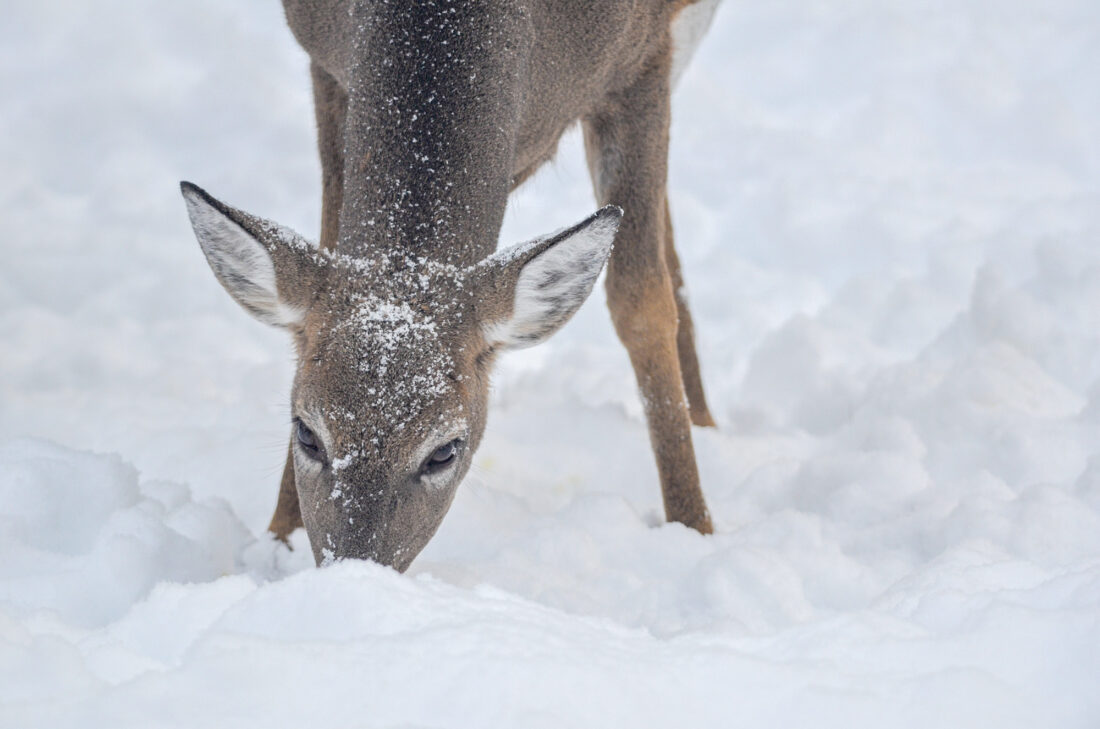
A white-tailed deer tries to feed through snow in Marquette County. (Michigan Department of Natural Resources)
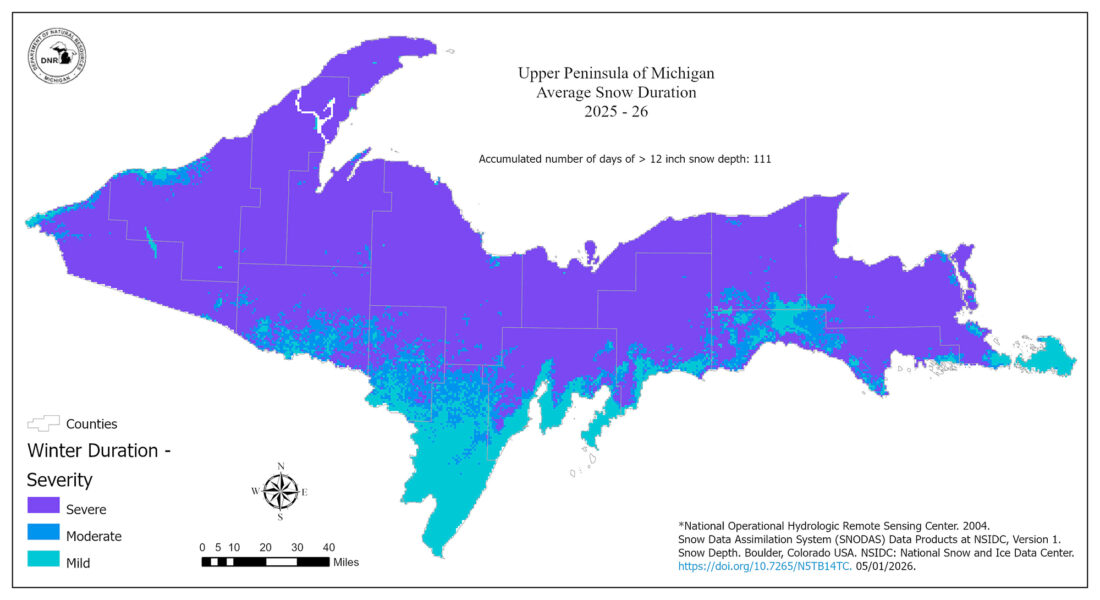
The Michigan Department of Natural Resources uses specialized technology to monitor snow depth. This chart shows snow depths this past winter.
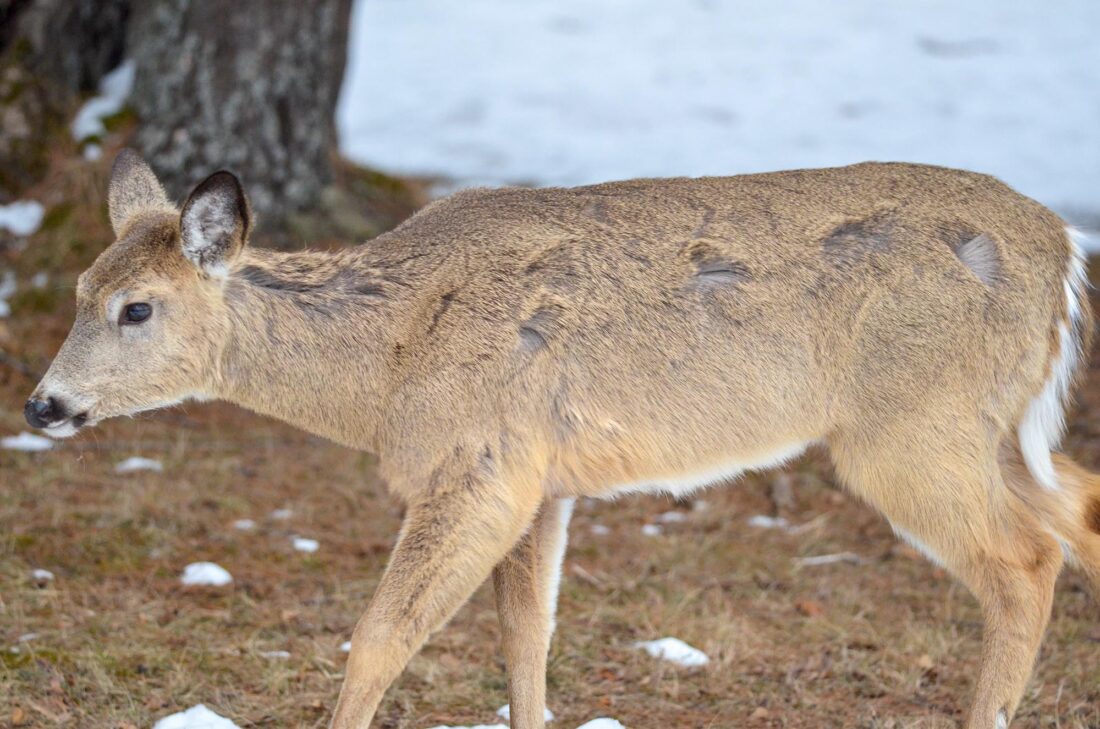
A white-tailed deer is shown in springtime after a long winter in the Upper Peninsula. (Michigan Department of Natural Resources)
A white-tailed deer tries to feed through snow in Marquette County. (Michigan Department of Natural Resources)
The Michigan Department of Natural Resources uses specialized technology to monitor snow depth. This chart shows snow depths this past winter.
A white-tailed deer is shown in springtime after a long winter in the Upper Peninsula. (Michigan Department of Natural Resources)
Trending
This past winter, with its heavy snowfall, marks the third severe winter in Michigan's Upper Peninsula in the past five years and could significantly affect the peninsula's white-tailed deer population.
Wildlife biologists from the Michigan Department of Natural Resources conducted field necropsies of vehicle-killed deer in late winter and spring and documented widespread signs of starvation.
Biologists look inside leg bones of deer to examine bone marrow fat as an indicator of nutritional status. Deer that are exhibiting a red, gelatinous marrow have no fat reserves and often succumb to starvation.
The U.P. logged 111 days with at least 12 inches of snow on the ground this winter, making it one of the harshest seasons in the past quarter-century for the deer herd.
Mid-March blizzards dumped 3 feet of snow on parts of the U.P. in two days, adding to the already prodigious snowpack, and lingering snow on the ground persisted into mid-May.
The DNR uses cutting-edge technology called the Snow Data Assimilation System, or SNODAS, to monitor snow depth as part of the agency's extensive deer management.
This winter severity index, which measures snow depth from Nov. 1 to April 30, is a product of the National Snow and Ice Data Center, which is part of the National Oceanic and Atmospheric Administration.
Biologists characterize a severe winter as one with 90 or more days with a U.P.-wide average snow depth of at least 1 foot.
Deep snowpack makes food scarce for deer, hinders their movement and causes them to use up the fat reserves they built up over the late summer and fall.
"Generally, the longer the duration of deep snow, the more impacting the winter is likely to be on wildlife," said David Jentoft, a DNR wildlife biologist in Sault Ste. Marie. "And a longer, persisting winter -- for example, deep snow present in April -- tends to have a strong negative impact on deer survival."
Two or more severe winters in a row are particularly hard on deer.
The winter of 2025-26 was the fourth-most severe winter since 2003.
The previous winter, 2024-25, was classified, overall, as moderate across the U.P., yet large portions of the peninsula saw severe winter conditions, meaning deer in these areas have now experienced two severe winters in a row.
And while the winter of 2023-24 was extremely mild, the two winters before that - 2021-22 and 2022-23 - were also severe.
Brian Roell, a DNR wildlife biologist based in Marquette, conducted many field necropsies on deer in the U.P. earlier this year and found extensive signs of starvation.
Roell said many people believe that once the snow melts, deer are safe, but the reality is that deer continue dying from starvation in April and even into May.
When a deer's bone marrow fat gets dangerously low, the animal cannot recover, even when it has access to food. The deer continues to get weaker and slower until it dies on its own or from predation.
"It's going to hit the fawns first," Roell said. "They're younger; they're weaker."
In addition, malnourished does may not be able to give birth, and if they do, fawn weights could be dangerously low. That means fewer deer joining the herd.
"At that point, the does will be giving birth to fawns that are compromised," Roell said. "And mom doesn't have the milk to sustain them."
The DNR launched its first winter severity index nearly six decades ago, in 1968. That system measured several factors, including snow depth, compaction, crust formation and temperature.
Eventually, snow was identified as the primary variable used to explain winter impact on deer. In 2005, the DNR transitioned to a total accumulated snow model. This improved efficiency by limiting data collection to one variable - snow depth - which was collected at 14 sites across the U.P.
In 2018, the DNR switched to using the SNODAS technology, the most efficient method.
The system takes data from satellites and assimilated ground observations (2003-present) to provide daily snapshots over the entire region. Other states using SNODAS include Minnesota, Colorado and California.
"This process allows us to monitor snow conditions through the winter and ultimately compare winters to get a better idea of the what the season's influence on wildlife may be," said Caleb Eckloff, a DNR wildlife technician in Marquette.
According to SNODAS data, six of the past nine winters in the U.P. have been classified as severe, which has negatively affected the deer herd.
Since 2003, the most severe winter was in 2013-14, with 128 days - or four solid months - with snow depth of at least a foot.
A severe winter generally leads to a less successful buck harvest the next hunting season, according to DNR deer harvest surveys. On the flip side, a mild winter generally leads to a more successful buck harvest the next season.
Since 2012, the U.P. has experienced three severe winters in a row twice -- during the winters ending in 2013, '14 and '15 and again during the winters ending in 2018, '19 and '20. The buck hunter success rate decreased somewhat significantly after each of those severe winters, hitting a 23-year low of 20% in 2015.
Hunter surveys and the snow depth-monitoring technology both help inform the DNR's deer management efforts. Hunting is the primary tool used to manage the size and distribution of the deer population in both the Upper and Lower peninsulas.
Managing deer habitat is also critical. The DNR's Wildlife Division works with landowners, businesses and organizations to improve habitat for deer in the U.P.
To survive severe winters in northern latitudes, deer migrate to forest landscapes called deer wintering complexes or deer yards. These areas generally consist of dense stands of conifer trees, such as cedar and hemlock, that provide shelter and above-ground food, or "browse."
The DNR owns and manages dozens of deer wintering complexes in the U.P. and works with timber companies and private landowners to manage other lands that deer use as winter range. About 80% of deer wintering area is private land, making this collaboration imperative.
"Quality winter habitat is crucial to helping deer survive winter in the U.P.," said Kristie Sitar, a DNR wildlife biologist in Newberry. "Wildlife staff work to ensure that important shelter is maintained in these complexes and that timber harvesting is scheduled for winter periods so deer can browse the buds off the tops left behind during harvest."
Citizens and organizations can do their part by getting involved in efforts to improve deer habitat. Through one collaborative grant program, the DNR awards grant funding each year to applicants who improve deer habitat on private lands in the U.P.
In 2025, one such grant was successfully authored by Will Paul, a 16-year-old bow hunter whose family had moved to Burt Township in the eastern U.P. from the Flint area. Paul and his classmates used the grant funding to plant native trees and shrubs that will ultimately provide deer with cover and food.
"We have really low numbers of deer in Alger County and the Upper Peninsula," said Paul, who worked with the Alger Conservation District to land the grant. "That's part of hunting -- having a good habitat. I figured this would be a good way to bring those deer numbers up a bit."
By employing the latest SNODAS technology to monitor severe winter conditions across the U.P., DNR wildlife biologists have one of the best tools at hand to help better understand the conditions deer are facing.
This understanding can lead to related habitat and management decisions intended to aid the deer herd in the region now and into the future.
Learn more about deer hunting at Michigan.gov/Deer.