
Outdoors report: Public asked to report summer bat roosts
Trending
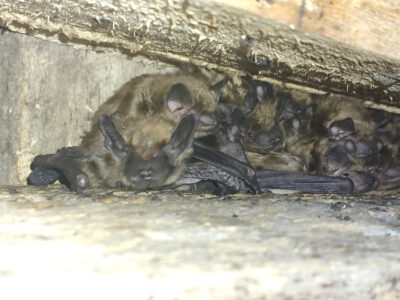
IRON MOUNTAIN -- The Michigan Department of Natural Resources and Michigan Natural Features Inventory are asking the public to report bat roost locations to help researchers identify where bats are raising young and sheltering during the summer months.
An online form can be found at https://www.michigan.gov/dnr/education/michigan-species/mammals/bats.
Michigan is home to nine bat species, five of which are listed as threatened or endangered in the state. Bat populations declined sharply after the arrival of white-nose syndrome, a disease that has killed millions of bats across North America.
"Summer bat roosts are critical places where bats rest, raise pups and shelter during the season," said DNR bat specialist John DePue. "However, these are some of the least understood parts of the bat's life cycle. By learning more about where bats are roosting, we can better support conservation and management efforts for these species."
While many people associate bats with caves, summer roosts are often found in trees, bat houses, barns, bridges and other structures. Around sunset, people may notice bats repeatedly flying in and out of the same location as they leave to feed on insects.
Through the Michigan Bat Roost Monitoring Program, providing the information is easy. The online form asks for basic information such as the date and time when you saw bats using the roost, whether the location is on public or private land, the type of structure (house, barn, bat box, etc.), and how many bats you observed using the roost. There also is an opportunity to share photos.
Bats typically use summer roosts through August or early September. As temperatures cool in the fall, many species move to winter roosts, called hibernacula, where they hibernate until spring, the DNR notes.
Reports of summer roosts can be submitted at any time, even if the observation occurred earlier in the year.
During the first year of the program, community members submitted over 130 bat roost observations from 52 counties across the state.
Bats play an important role in Michigan ecosystems and agriculture by consuming large numbers of insects, including mosquitoes and agricultural pests.
The DNR advises that if bats are found in an attic or other building, report the observation but please hold off on trying to move or exclude them during the summer maternity season, when young bats may be unable to fly. Instead, the DNR suggests, wait until late summer to install a one-way exclusion devicethat allows the bats to leave on their own but prevents their return to that location.
Learn more about Michigan bats and report roost locations at Michigan.gov/Bats.
***
Wells State Park in Menominee County will hold its annual Christmas in July celebration later this month. The dates are Friday and Saturday, July 24-25.
Campers are invited to decorate their campsites with festive flair. The event features a campfire carol sing-along, Christmas-themed crafts, family-friendly games, holiday treats and a special appearance by Santa Claus.
The 700-acre park -- 30 miles south of Escanaba along Lake Michigan -- is home to a modern campground, a swim beach, a picnic area, rustic cabins and a trail with three shelters.
***
The Michigan DNR is reconstructing the aging Net River Dam in southern Baraga County. Work is expected to be completed in the fall.
The dam, built in the early 1960s, and the 200-acre wetlands impoundment it creates are part of the DNR-managed Net River Flooding State Wildlife Management Area. During construction, the parking area and boating access site are closed.
Bill Scullon, DNR field operations manager for the western Upper Peninsula, said water levels in the impoundment area have been drawn down to accommodate construction. The wild rice beds on Net River will not be accessible this summer and fall due to the low water levels.
The restoration is a cooperative venture between the DNR's Wildlife and Parks and Recreation divisions, Keweenaw Bay Indian Community, GEI Consultants and MJO Contracting.
The Net River Dam partially failed in 2022 after a corroded water control structure in the middle of the dam collapsed, creating a sinkhole and washing out a road. Upstream and downstream embankments continued to retain water as designed.
Once the project is completed, Scullon said water levels will be restored to their normal levels and management of the wetland habitat, as well as wild rice resources, will be enhanced.
***
Upper Peninsula Power Company has temporarily closed the public fishing platform at Dam 3 Reservoir on the Escanaba River. The platform sustained damage last weekend, said Dan Freeborn, UPPCO manager of Communications and External Affairs.
The closure is limited to the wooden fishing platform and does not affect operation of the hydroelectric facility.
A timeline for reopening has not yet been set.
“While this temporary closure is disappointing, public safety comes first,” Freeborn said.
***
Anglers trolling in Lake Michigan near Marinette, Wis., saw an increase of catches this week, mainly for Chinook salmon with the occasional brown trout or rainbow trout as well, the Wisconsin DNR said.
Chambers Island, Green Island and most areas deeper than 60 feet were holding fish. Spoons and flasher and fly combos were catching fish. Most of the salmon were averaging 8 to 12 pounds. Surface temperatures were in the upper 60s.
The Michigan DNR reported this U.P. activity:
Little Bay de Noc: Anglers targeting walleye reported a tough bite, with lower harvest numbers. Some anglers traveled to the outer regions of Little Bay de Noc. Minneapolis Shoal and Portage Point were mentioned by some anglers, who reported marking fish and catching a few larger walleye. Yellow perch anglers reported slow fishing with an inconsistent bite and difficulty locating schools of perch. The head of the bay continued to produce some fish, as did areas near the Escanaba River, though fishing remained notably slow. Worms were the preferred live bait.
Manistique: Fishing for Chinook salmon remained good. Anglers caught good numbers of fish using spoons and flies, typically while fishing in 100 feet of water or deeper. The spoons used were primarily larger, magnum-sized presentations, while flies were typically green or blue. Lake trout and steelhead were also caught mixed in with Chinook salmon catches.
Marquette: Anglers targeting lake trout had to fish deeper to find fish. Most anglers trolled north of White Rocks toward the area north of Granite Rock in 160 to 220 feet of water. Those who caught fish reported finding them deeper in the water column, rather than closer to the surface. No reports of coho salmon, brown trout or steelhead were received.
Munising: Boat anglers caught a few lake trout trolling and jigging around Grand Island and Wood Island, with a few splake mixed in. Anglers reported a slow bite on Chinook salmon and coho salmon. There was low fishing pressure at the Anna River mouth.
Keweenaw Bay/Huron Bay: Anglers reported fair numbers of coho salmon being caught while trolling spoons and flasher/fly combinations in the top 60 to 80 feet of the water column. Anglers also caught Chinook salmon, though in smaller quantities and sizes compared to previous weeks. Those targeting lake trout were successful, reporting a fair bite while jigging natural and artificial presentations in around 180 feet of water.
Traverse Bay/Portage Entry: Anglers trolling near structure in 60 to 100 feet of water reported good numbers of lake trout and a few smaller Chinook salmon while using spoons and flasher/fly combinations. Anglers jigging for lake trout reported a poor to fair bite using natural and artificial baits, with most fish being caught between 140 to 180 feet.
Ontonagon River: Angler reports suggested that walleye were caught in good numbers. Boat anglers had success both trolling and jigging. Shore anglers reported catching walleye, rock bass, and the occasional yellow perch in low to fair numbers. The fish cleaning station located at the Ontonagon Marina remained closed.
Ontonagon/Silver City/Union Bay: Effort from Ontonagon continued to be more prominent, with many fishing parties reporting successful trips. These reports included catches of lake trout in fair numbers, along with less frequent catches of coho salmon. Trolling continued to produce the best results for boat anglers.
Black River Harbor:Angler reports consisted of catches of lake trout and coho salmon in fair numbers. Trolling continued to be the most effective method for catching these fish. On occasion, anglers reported having to shift their efforts to deeper water to locate fish.
Grand Marais: The lake trout bite was good for boat anglers trolling and jigging, with a few reports of coho salmon caught trolling as well. Fishing pressure off the breakwall was low.
St. Ignace: At the Pine River, fishing success varied from day to day. Some anglers only caught undersized fish, while others successfully caught up to three walleye. Daily catches also included yellow perch, northern pike and bullheads. Shore anglers near the M-134 overpass bridge and DNR boat launch had success drifting jigs and leeches. Boat anglers found success trolling nightcrawler harnesses. Northern pike were caught exclusively on nightcrawler harnesses. The most productive colors were orange and green, as well as red and gold.