
Northwoods notebook: Colorful visitors arrive in the rush of spring
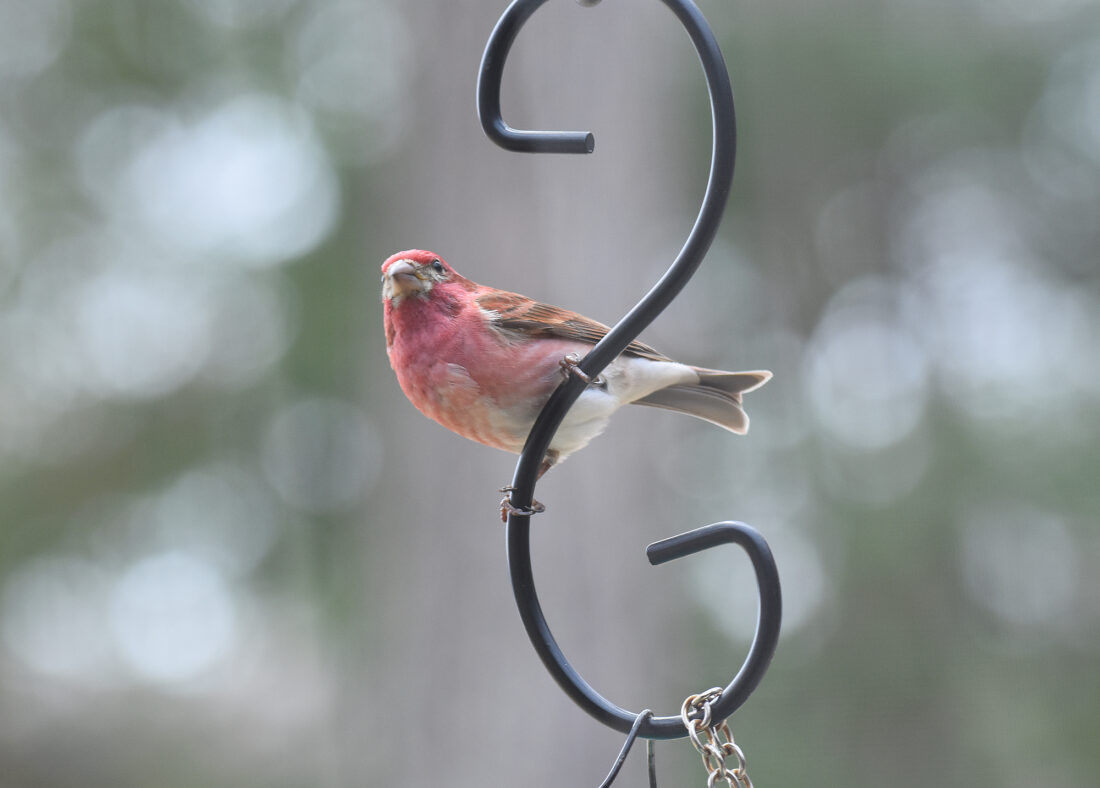
This male purple finch was the first seen in the yard at Six Mile Lake for 2026. (Betsy Bloom/Daily News)
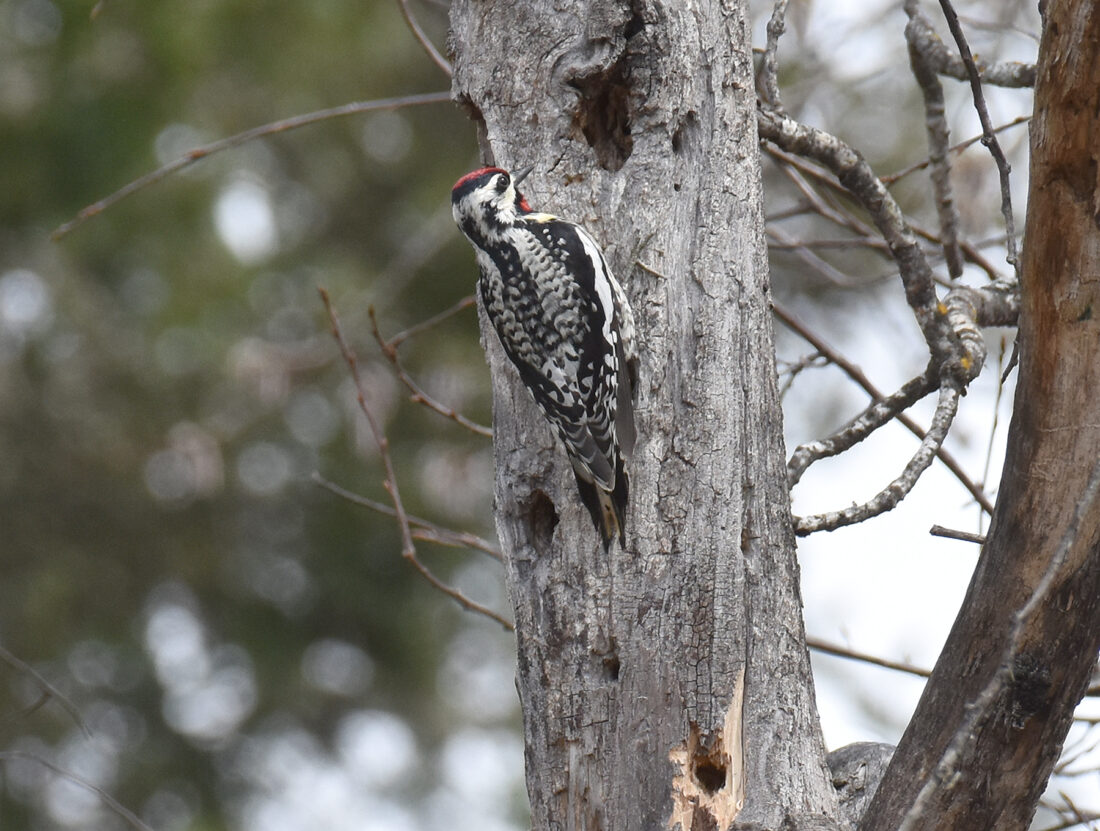
The yellow-bellied sapsuckers have begun drumming and courting on the trees at Six Mile Lake. (Betsy Bloom/Daily News)
This male purple finch was the first seen in the yard at Six Mile Lake for 2026. (Betsy Bloom/Daily News)
The yellow-bellied sapsuckers have begun drumming and courting on the trees at Six Mile Lake. (Betsy Bloom/Daily News)
Trending
As predicted, the birds expected to re-appear in mid-April have made it back.
Our regular eastern phoebes not only showed up last Saturday, they seem to have decided the nest needs renovation and have pulled down the grass and lichen portions to get it down to the mud foundation. We'll have to keep the light on the quilt shop turned off, an annual sign of spring.
In the backyard again are yellow-bellied sapsucker and northern flicker woodpeckers. Belted kingfishers are back on the power lines about three properties down.
Tree swallows and eastern bluebirds are competing to claim the nest boxes at the field where Six Mile Lake Road goes from public to private.
And by late Thursday night, a few spring peeper frogs had begun calling.
Even insects have begun stirring. The first Compton's tortoiseshell butterfly flitted up Thursday from the dirt part of Six Mile Lake Road. I was mildly surprised it wasn't a mourning cloak, though it could be I'd just missed them. Mourning cloaks, velvet brown with cream trim on the wings, can emerge even as the snow drifts remain from where they've spent the winter as adults under leaves or in cracks and crevices. Like the spring peepers, they are capable of producing an antifreeze-like compound that keeps their cells able to withstand sub-zero temperatures without damage.
The first darner dragonfly darted across the backyard Friday, no doubt ushered in by the relatively strong southern winds. It might be caught out by the colder temperatures expected for the weekend.
Willows catkins have budded out and soon will offer pollen for the first emerging insects looking for such a food source, such as bumble bee queens that will establish the next generation.
Poplars have catkins -- actually a cluster of "flowers" -- dangling from branches. These come out just before the new leaves and will yield tufted, cottony seeds.
The ice on Six Mile Lake is fading fast. The expanding amounts of water have drawn common and hooded mergansers, mallards, wood ducks.
The tree sparrows -- a deceptive name, given they nest in the treeless tundra -- that spent the winter here seem to have departed. Replacing them for now have been song sparrows. Fox sparrows likely will show up soon, if not already here. Chipping sparrows that do nest here are yet to arrive.
American kestrels have taken up the usual posts along M-69. These smallest of falcons in North America have, like a number of other bird species, had an alarming population decline in the past five decades, with its numbers down by about 53%, according to Cornell Lab of Ornithology's All About Birds website, https://www.allaboutbirds.org. But kestrels have reliably returned each year along the open fields on M-69 just east of North Dickinson County School in Felch Township.
So what is absent? Sandhill cranes that had been in fields along Six Mile Lake Road and M-69. I have photos in past years, not yet this year.
Not enough ice has left Six Mile Lake for common loons, though that looks to change in the next week. The main waves of warblers probably is yet to come.
While it's a little early still for hummingbirds, the Hummingbird Central website map at https://www.hummingbirdcentral.com shows reports at several points around Wisconsin Dells, along with the Madison, Milwaukee and Janesville area of Wisconsin. So it might be worth getting a batch of nectar ready.
And if the hummingbirds arrive, the other colorful neotropical migrants that like feeders -- orioles, rose-breasted grosbeaks and indigo buntings -- shouldn't be far behind, especially with a string of sunny days next week and highs in the 60s.
As always, I welcome reports on what people are seeing coming through.
Betsy Bloom can be reached at 906-774-2772, ext. 85240, or bbloom@ironmountaindailynews.com.