
Outdoors report: Vilas County creel survey dates back 80 years
Trending
The Wisconsin Department of Natural Resources today is marking the 80th anniversary of the Northern Highland Fishery Research Area, one of the longest-running fisheries research projects in the world.
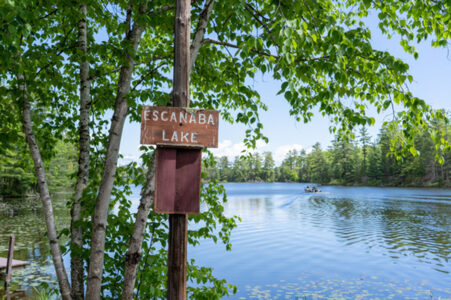
Located in Vilas County and including the Northwoods lakes of Escanaba, Nebish, Pallette, Spruce and Mystery, the NHFRA has has conducted scores of research projects since 1946.
Originally established to better understand the impact of anglers on fish populations, the NHFRA has included a mandatory angler creel survey on all five lakes since its inception. This requirement created a detailed dataset of every angler who has fished the lakes and every fish legally harvested from them, providing an unprecedented record of fish populations and angling trends.
While the required angler creel survey continues, NHFRA projects have expanded in scope in recent years. The lakes have been used to test regulations on length limits, bag limits and gear restrictions for several Wisconsin species.
Current research projects include:
-- Determining how the added habitat of "fish sticks" - trees submerged near the shoreline - may affect fish populations.
-- Testing how the use of forward-facing sonar, a controversial technology, affects harvest and angler behavior.
-- Simulating shifts in seasonal ice coverage to learn how lake ecosystems will respond to anticipated climate changes.
-- Evaluating how fluctuations in water levels may affect walleye habitat and spawning.
-- Investigating how ecosystems adapt in lakes where walleye populations are declining compared with lakes that have stable numbers of walleye.
In addition to conducting scientific research that informs DNR fisheries management and policy, the NHFRA provides skills training and job opportunities for early-career fisheries professionals. The NHFRA also works with colleagues at the Great Lakes Indian Fishing & Wildlife Commission and other regional and national organizations on inland fisheries research.
For more, go to https://dnr.wisconsin.gov/topic/research/projects/NHFRA.
***
Did you catch a marked or tagged fish?
In Michigan, anglers can go to Michigan.gov/TaggedFish to report the catch and help the DNR keep track of fish that have been tagged. The tags provide useful information to fisheries managers.
In Wisconsin, similar information can be found at https://dnr.wisconsin.gov/topic/Fishing/questions/taggedfish#info.
The Michigan DNR reported this Upper Peninsula activity:
Little Bay de Noc: Anglers targeting walleye reported fair to good fishing. Windy conditions and strong west winds during the week limited anglers to the upper bay or areas near the west shoreline. On days when conditions were less restrictive, fishing was generally better, and many anglers caught enough to reach their bag limits. Walleye were caught trolling crankbaits, crawler harnesses, and spoons, while some anglers also had success casting and retrieving near the bottom. Some anglers reported marking alewife in the bay. Smallmouth bass anglers reported good fishing, with topwater bites occurring at dawn and dusk when winds subsided.
Munising: Boat anglers trolling reported a slower bite but still picked up a few Chinook salmon and coho salmon in the bay and around Grand Island. Boat anglers targeting lake trout had success both trolling and jigging.
Keweenaw Bay/Huron Bay: Anglers reported catching good numbers of coho salmon while trolling spoons and flasher-fly combinations in the upper 40 to 60 feet of the water column. Anglers also caught Chinook salmon and rainbow trout while trolling, although in smaller numbers. Anglers also reported catching lake trout while trolling in waters deeper than 150 feet; those jigging were successful using both artificial and natural baits.
Traverse Bay/Portage Entry: Anglers trolling near structure reported catching fair to good numbers of lake trout and a few rainbow trout while using spoons and flasher-fly combinations. Anglers targeting lake trout reported a fair bite while jigging with natural and artificial baits in more than 100 feet of water, with the greatest success occurring in waters deeper than 160 feet.
Ontonagon River: Angler reports indicated that walleye were caught in low to fair numbers. Boat anglers experienced most of their success while trolling, although jigging also proved productive for some anglers. Shore anglers reported catching walleye as well, but in relatively low numbers.
Black River Harbor: Boat anglers caught coho salmon and lake trout in low numbers, with trolling being the most effective method for locating fish. Fishing within the harbor remained slow, although shore anglers occasionally reported catching northern pike.